doi: 10.1088/1478-3975/aa9768.
Bottom-up synthetic biology: modular design for making artificial platelets
Affiliations
- PMID: 29091050
- PMCID: PMC5832603
- DOI: 10.1088/1478-3975/aa9768
Item in Clipboard
Bottom-up synthetic biology: modular design for making artificial platelets
Phys Biol.
.
Abstract
Engineering artificial cells to mimic one or multiple fundamental cell biological functions is an emerging area of synthetic biology. Reconstituting functional modules from biological components in vitro is a challenging yet an important essence of bottom-up synthetic biology. Here we describe the concept of building artificial platelets using bottom-up synthetic biology and the four functional modules that together could enable such an ambitious effort.
Figures
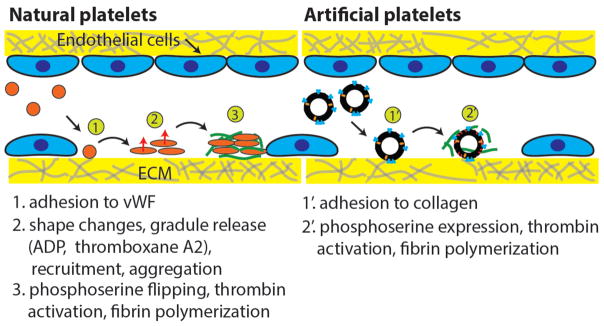
Comparison of natural platelet and artificial platelet functions.
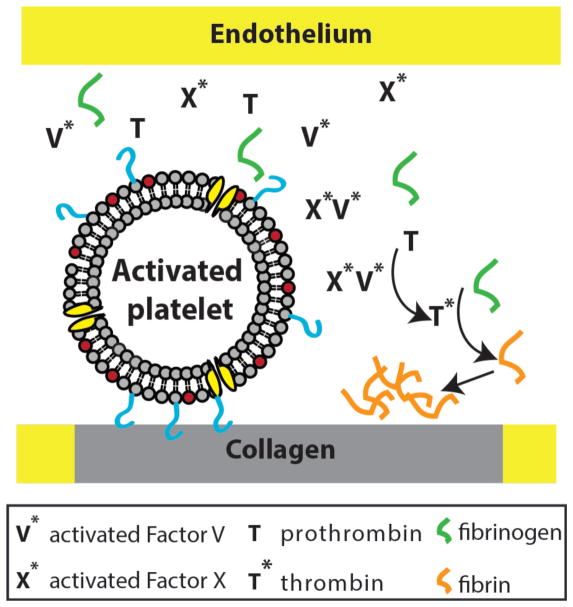
‘Smart’ lipid bilayer vesicles as artificial platelets for clot initiation. Artificial platelets can mediate fibrin clot formation via activated Factor V and X that converts prothrombin to thrombin. The assembly of activated blood clotting factors depends on PS.
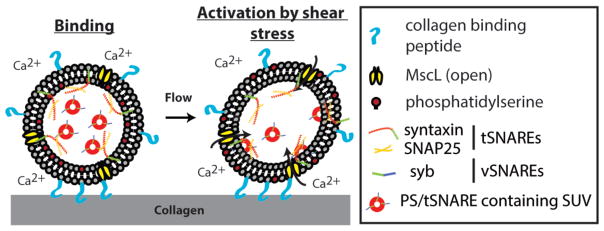
Shear stress-induced activation of artificial platelets. Binding of artificial platelets to exposed collagen leads to increased membrane tension due to shear stress that subsequently opens a mechanosensitive channel. Influx of ‘extracellular’ calcium triggers SNARE-mediated membrane fusion of PS-containing SUVs to deliver PS to the surface of artificial platelets.
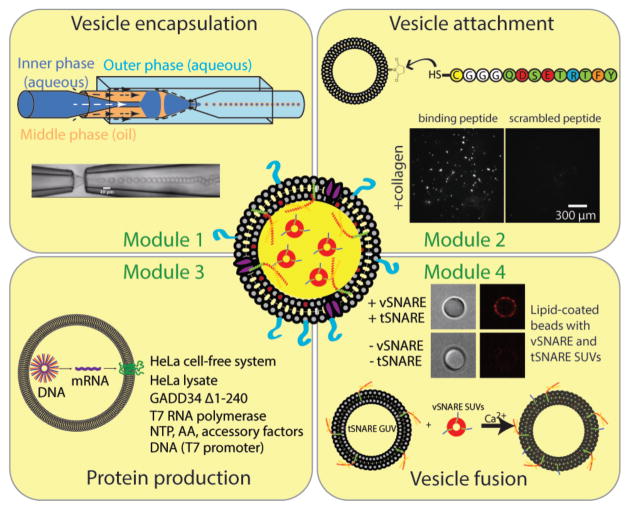
Modular design of artificial platelets consists of four functional modules: 1) vesicle encapsulation; 2) vesicle attachment; 3) protein production; 4) vesicle fusion.
References
-
- Lentz BR. Exposure of platelet membrane phosphatidylserine regulates blood coagulation. Prog Lipid Res. 2003;42(5):423–38. - PubMed
Publication types
MeSH terms
Grants and funding
LinkOut - more resources
Full Text Sources
Other Literature Sources