


Reproducible Bioconductor workflows using browser-based interactive notebooks and containers
- PMID: 29092073
- PMCID: PMC6381817
- DOI: 10.1093/jamia/ocx120
Reproducible Bioconductor workflows using browser-based interactive notebooks and containers
Abstract
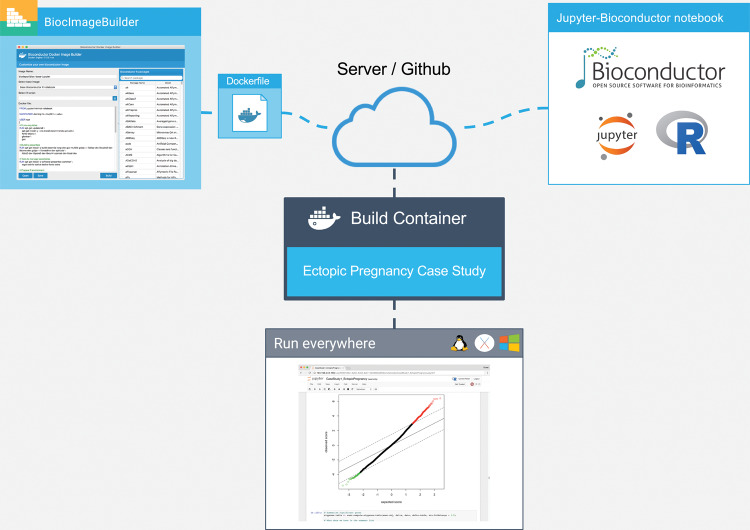
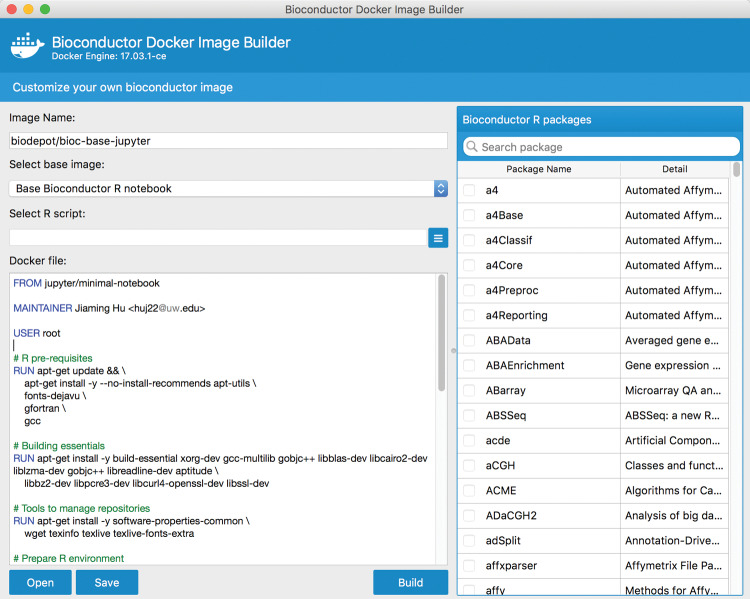
Objective: Bioinformatics publications typically include complex software workflows that are difficult to describe in a manuscript. We describe and demonstrate the use of interactive software notebooks to document and distribute bioinformatics research. We provide a user-friendly tool, BiocImageBuilder, that allows users to easily distribute their bioinformatics protocols through interactive notebooks uploaded to either a GitHub repository or a private server.
Materials and methods: We present four different interactive Jupyter notebooks using R and Bioconductor workflows to infer differential gene expression, analyze cross-platform datasets, process RNA-seq data and KinomeScan data. These interactive notebooks are available on GitHub. The analytical results can be viewed in a browser. Most importantly, the software contents can be executed and modified. This is accomplished using Binder, which runs the notebook inside software containers, thus avoiding the need to install any software and ensuring reproducibility. All the notebooks were produced using custom files generated by BiocImageBuilder.
Results: BiocImageBuilder facilitates the publication of workflows with a point-and-click user interface. We demonstrate that interactive notebooks can be used to disseminate a wide range of bioinformatics analyses. The use of software containers to mirror the original software environment ensures reproducibility of results. Parameters and code can be dynamically modified, allowing for robust verification of published results and encouraging rapid adoption of new methods.
Conclusion: Given the increasing complexity of bioinformatics workflows, we anticipate that these interactive software notebooks will become as necessary for documenting software methods as traditional laboratory notebooks have been for documenting bench protocols, and as ubiquitous.
Keywords: automated; bioconductor workflows; containers; data science; reproducibility.
© The Author 2017. Published by Oxford University Press on behalf of the American Medical Informatics Association. All rights reserved. For Permissions, please email: journals.permissions@oup.com
Figures
References
-
- Peter A, Michael RC, Nebojša T, et al. Common Workflow Language, v 1.0. 2016.
-
- Meiss T, Hung L-H, Xiong Y, Sobie E, Yeung KY. Software solutions for reproducible RNA-seq workflows. bioRxiv. 2017:099028.
-
- Vivian J, Rao A, Nothaft FA, et al. Rapid and efficient analysis of 20,000 RNA-seq samples with Toil. bioRxiv. 2016:062497.
Publication types
MeSH terms
Grants and funding
LinkOut - more resources
Full Text Sources
Other Literature Sources
