


Malnutrition: Modulator of Immune Responses in Tuberculosis
- PMID: 29093710
- PMCID: PMC5651251
- DOI: 10.3389/fimmu.2017.01316
Malnutrition: Modulator of Immune Responses in Tuberculosis
Abstract
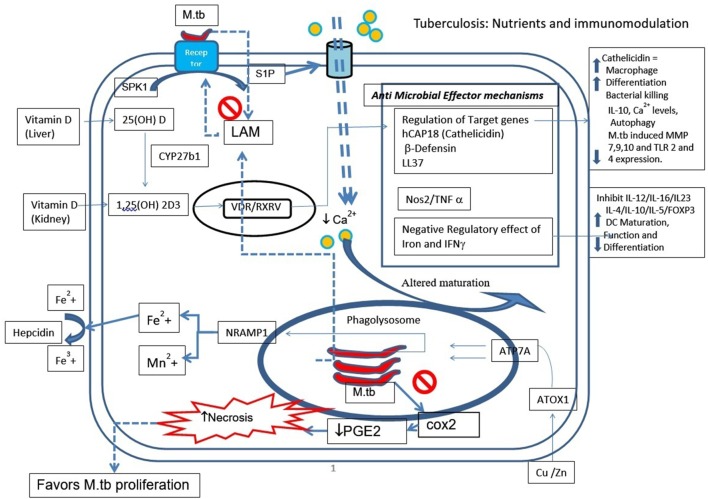
Nutrition plays a major role in the management of both acute and chronic diseases, in terms of body's response to the pathogenic organism. An array of nutrients like macro- and micro-nutrients, vitamins, etc., are associated with boosting the host's immune responses against intracellular pathogens including mycobacterium tuberculosis (M.tb). These nutrients have an immunomodulatory effects in controlling the infection and inflammation process and nutritional deficiency of any form, i.e., malnutrition may lead to nutritionally acquired immunodeficiency syndrome, which greatly increases an individual's susceptibility to progression of infection to disease. This narrative review looks at the various mechanisms by which nutrition or its deficiency leads to impaired cell mediated and humoral immune responses, which in turn affects the ability of an individual to fight M.tb infection or disease. There is very little evidence in the literature that any specific food on its own or a specific quantity can alter the course of TB disease or be effective in the treatment of malnutrition. Further clinical trials or studies will be needed to recommend and to better understand the link between malnutrition, tuberculosis, and impaired immunity.
Keywords: Mycobacterium tuberculosis; food supplementation for tuberculosis; malnutrition and tuberculosis; nutrition and immunity of tuberculosis; sphingolipid; vitamin D.
Figures
References
-
- World Health Organization. Global Tuberculosis Report 2016. World Health Organization; (2017). Available from: http://www.who.int/tb/publications/global_report/en/ (accessed October 6, 2017).
Publication types
LinkOut - more resources
Full Text Sources
Other Literature Sources
