


Recent advances in phosphoproteomics and application to neurological diseases
- PMID: 29094114
- PMCID: PMC5708141
- DOI: 10.1039/c7an00985b
Recent advances in phosphoproteomics and application to neurological diseases
Abstract
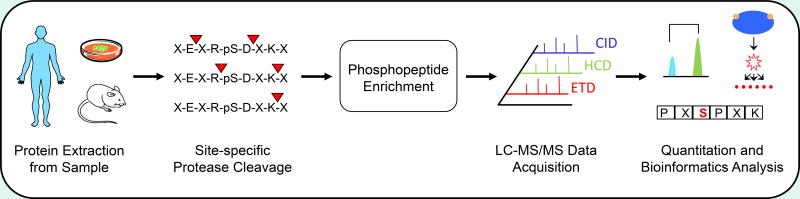
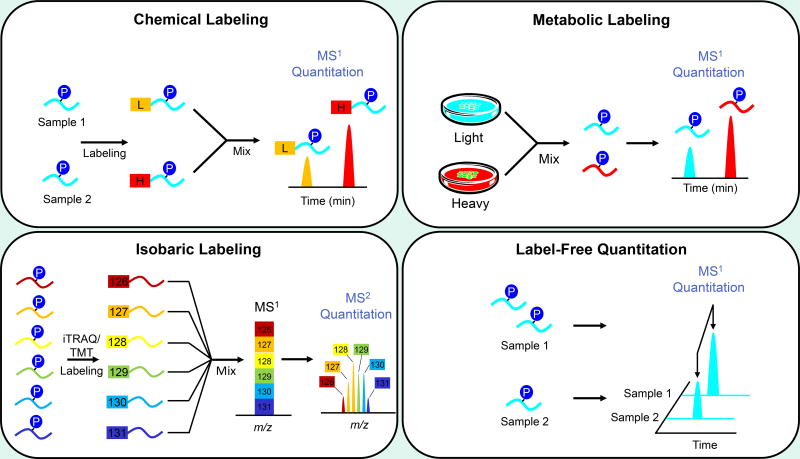
Phosphorylation has an incredible impact on the biological behavior of proteins, altering everything from intrinsic activity to cellular localization and complex formation. It is no surprise then that this post-translational modification has been the subject of intense study and that, with the advent of faster, more accurate instrumentation, the number of large-scale mass spectrometry-based phosphoproteomic studies has swelled over the past decade. Recent developments in sample preparation, phosphorylation enrichment, quantification, and data analysis strategies permit both targeted and ultra-deep phosphoproteome profiling, but challenges remain in pinpointing biologically relevant phosphorylation events. We describe here technological advances that have facilitated phosphoproteomic analysis of cells, tissues, and biofluids and note applications to neuropathologies in which the phosphorylation machinery may be dysregulated, much as it is in cancer.
Figures

References
Publication types
MeSH terms
Substances
Grants and funding
LinkOut - more resources
Full Text Sources
Other Literature Sources
Medical
Molecular Biology Databases
Miscellaneous
