. 2017 Dec;95(6):579-591.
doi: 10.1007/s11103-017-0672-y. Epub 2017 Nov 1.

Substrates of the chloroplast small heat shock proteins 22E/F point to thermolability as a regulative switch for heat acclimation in Chlamydomonas reinhardtii

Affiliations

Substrates of the chloroplast small heat shock proteins 22E/F point to thermolability as a regulative switch for heat acclimation in Chlamydomonas reinhardtii

Mark Rütgers et al. Plant Mol Biol. 2017 Dec.

Abstract

We have identified 39 proteins that interact directly or indirectly with high confidence with chloroplast HSP22E/F under heat stress thus revealing chloroplast processes affected by heat. Under conditions promoting protein unfolding, small heat shock proteins (sHsps) prevent the irreversible aggregation of unfolding proteins by integrating into forming aggregates. Aggregates containing sHsps facilitate the access of Hsp70 and ClpB/Hsp104 chaperones, which in ATP-dependent reactions disentangle individual proteins from the aggregates and assist in their refolding to the native state. Chlamydomonas reinhardtii encodes eight different sHsps (HSP22A to H). The goal of this work was to identify chloroplast-targeted sHsps in Chlamydomonas and to obtain a comprehensive list of the substrates with which they interact during heat stress in order to understand which chloroplast processes are disturbed under heat stress. We show that HSP22E and HSP22F are major chloroplast-targeted sHsps that have emerged from a recent gene duplication event resulting from the ongoing diversification of sHsps in the Volvocales. HSP22E/F strongly accumulate during heat stress and form high molecular mass complexes. Using differential immunoprecipitation, mass spectrometry and a stringent filtering algorithm we identified 39 proteins that with high-confidence interact directly or indirectly with HSP22E/F under heat stress. We propose that the apparent thermolability of several of these proteins might be a desired trait as part of a mechanism enabling Chlamydomonas chloroplasts to rapidly react to thermal stress.

Keywords: Chloroplast; Mass spectrometry; Molecular chaperones; Protein homeostasis; Protein–protein interactions.


Figures
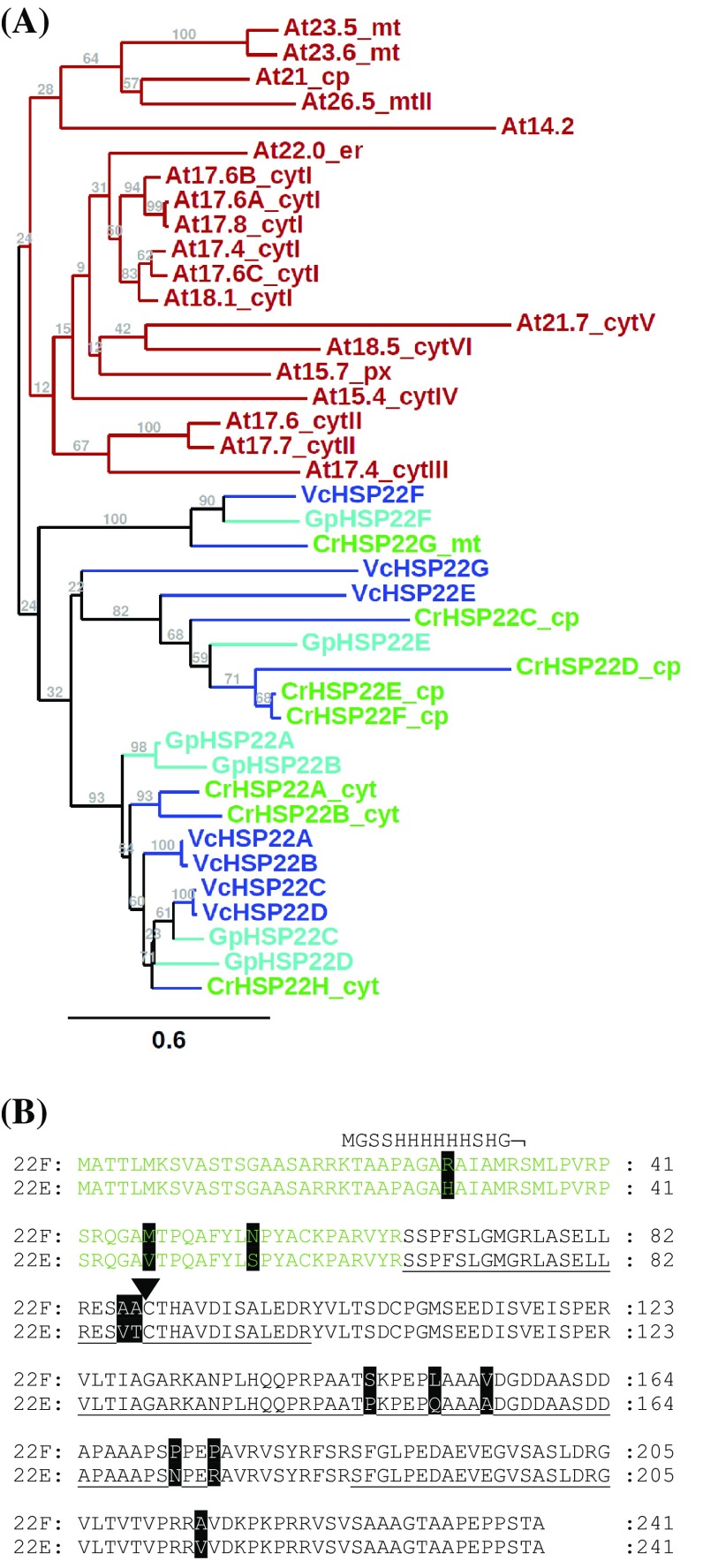
Fig. 1
Fig. 1
Phylogenetic tree of sHsps and comparison of the Chlamydomonas HSP22E and HSP22F amino acid sequences. a Phylogram based on an amino acid sequence alignment of the α-crystalline domains from Arabidopsis thaliana (At) and Volvocales members Chlamydomonas reinhardtii (Cr), Gonium pectorale (Gp) and Volvox carteri (Vc). Protein names are appended by their predicted intracellular localization (cyt cytosol; cp chloroplast; mt mitochondria; er endoplasmic reticulum; px peroxisome) and phylogenetic subfamily (roman numbers) as assigned by Waters et al. (2008) and Schroda and Vallon (2009). Support for the branches is given in bootstrap values based on 1000 NJ bootstrap replicates. b Alignment of HSP22F and HSP22E protein sequences. Underlined sequences indicate peptides identified by LC-MS/MS analysis of the immunoprecipitated proteins (Supplementary Table S3). Sequences shown in green represent the putative chloroplast transit peptide, sequences in black the putative mature protein. The triangle indicates the cleavage site predicted by ChloroP (Emanuelsson et al. 1999). Differences in both sequences are shaded in black. The sequence on top of that of HSP22F shows where the hexahistidine tag is fused to HSP22F in the recombinant protein
Fig. 2
Fig. 2
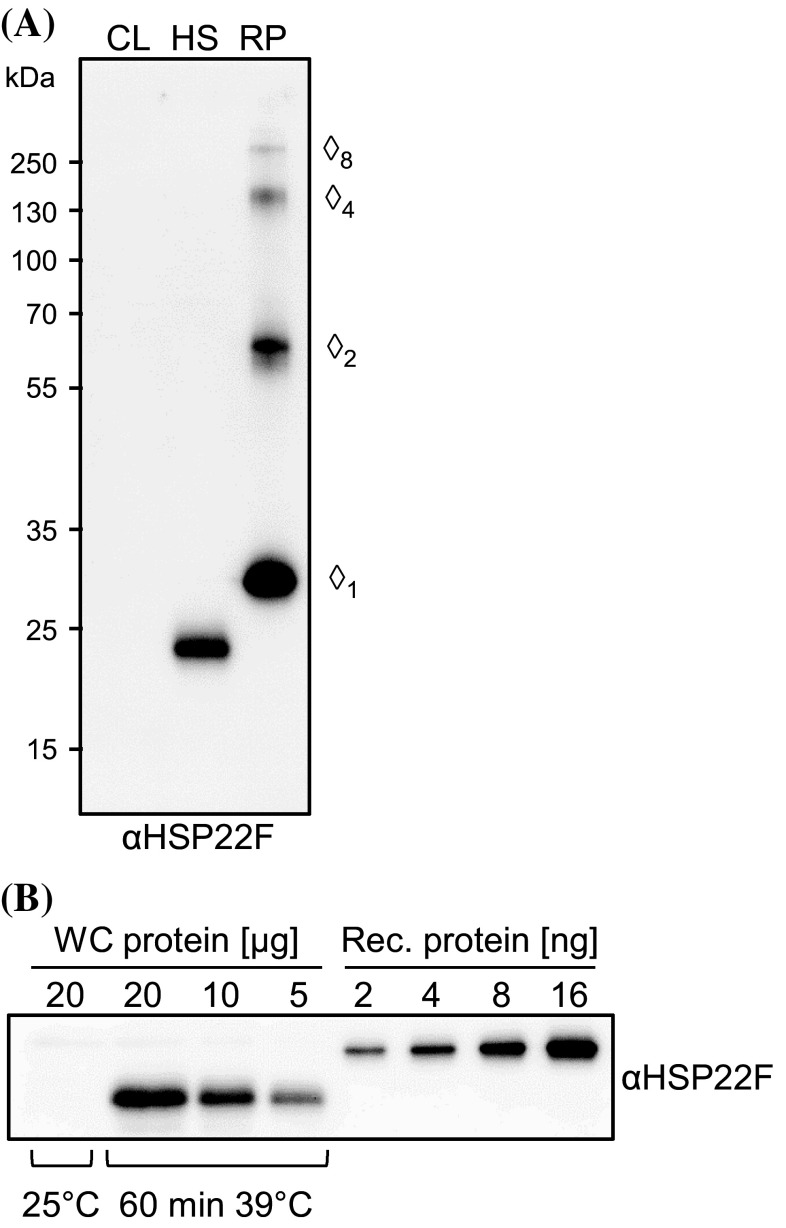
Antibody characterization and analysis of HSP22E/F abundance. a Immunodetection of HSP22E/F in total proteins extracted from cw15-302 cells grown at 25 °C (CL) or exposed to 39 °C for 60 min (HS). Proteins loaded corresponded to 1 µg chlorophyll for total cell protein and to 20 ng for recombinant HSP22F protein (RP). Diamonds indicate monomeric recombinant HSP22F and SDS-resistant oligomers with apparent molecular masses of 29 (monomer), 62 (dimer), 139 (tetramer), and 256 kDa (octamer), respectively. b 2–16 ng of recombinant HSP22F were separated by SDS-PAGE together with 5–20 µg of whole-cell (WC) proteins from cw15-302 cells exposed to 39 °C for 60 min and immunodetected with the antiserum against HSP22F
Fig. 3
Fig. 3
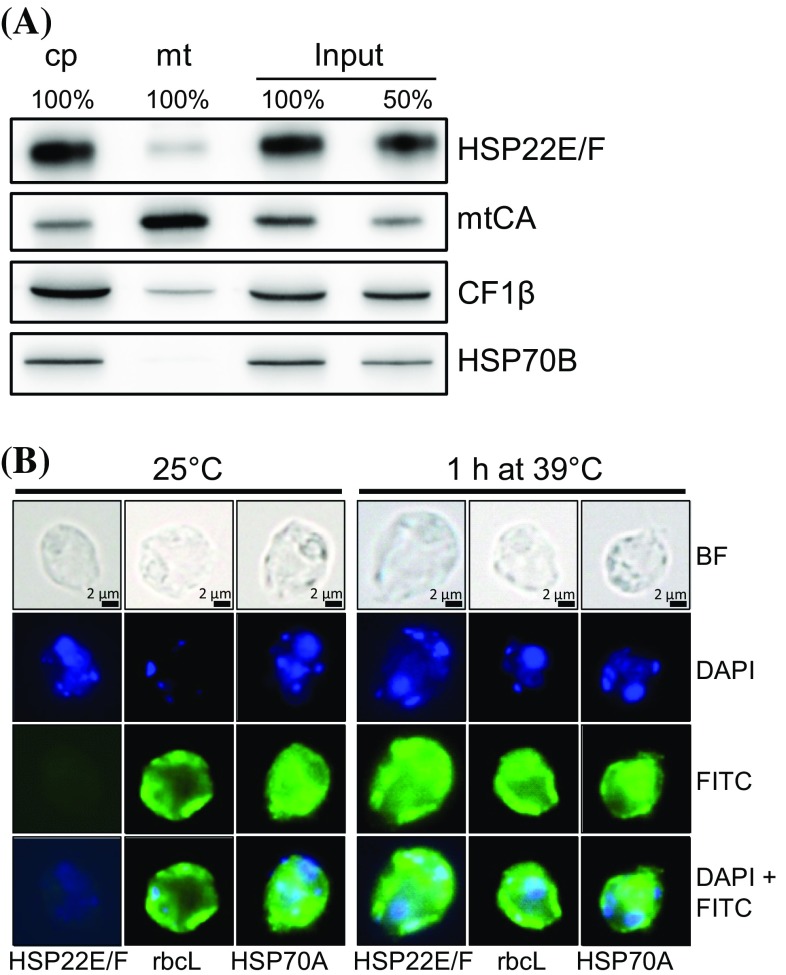
Localization of HSP22E/F to the chloroplast. a Subcellular localization of HSP22E/F by immunoblotting. 10 or 3 µg protein (depending on the antiserum used) from whole cells (input), chloroplasts (cp) and mitochondria (mt) isolated from strain cw15-302 exposed to 39 °C for 60 min were separated by SDS-PAGE and immunodetected with antisera against HSP22F, mitochondrial carboanhydrase (mtCA), extrinsic thylakoid membrane protein CF1β, and stromal HSP70B. b Microscopy images taken from cells of strain cw15-325 that were kept at 25 °C or exposed to 39 °C for 60 min. Shown are from top to bottom: bright field (BF) images, DAPI staining, immunofluorescence (FITC), and the merge of DAPI and FITC. Antisera used for immunofluorescence were against HSP22F, stromal RbcL, and cytosolic HSP70A
Fig. 4
Fig. 4
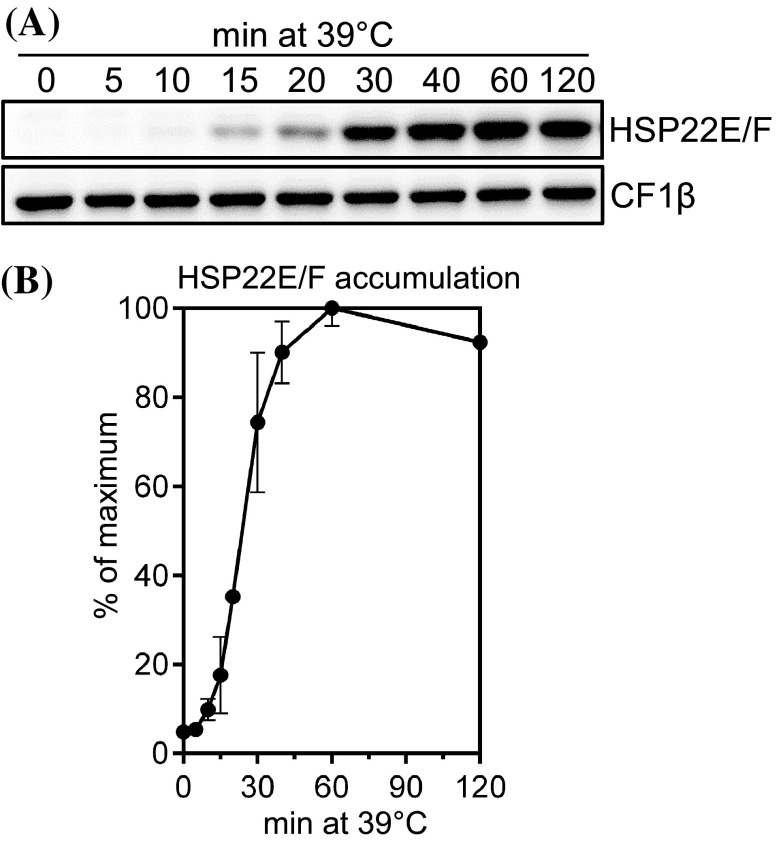
Accumulation of HSP22E/F during heat stress. a Immunoblot analysis of HSP22E/F accumulation during heat stress. cw15-302 cells grown at 25 °C were exposed to 39 °C for 120 min. Total proteins corresponding to 0.25 µg chlorophyll from cells harvested at the time points given were separated by SDS-PAGE and analyzed by immunoblotting using antisera against HSP22F and against CF1β as loading control. b Quantification of HSP22E/F signal intensities from (a). Signals were normalized to the maximal HSP22E/F levels reached during the time course. Error bars represent SD, n = 2
Fig. 5
Fig. 5
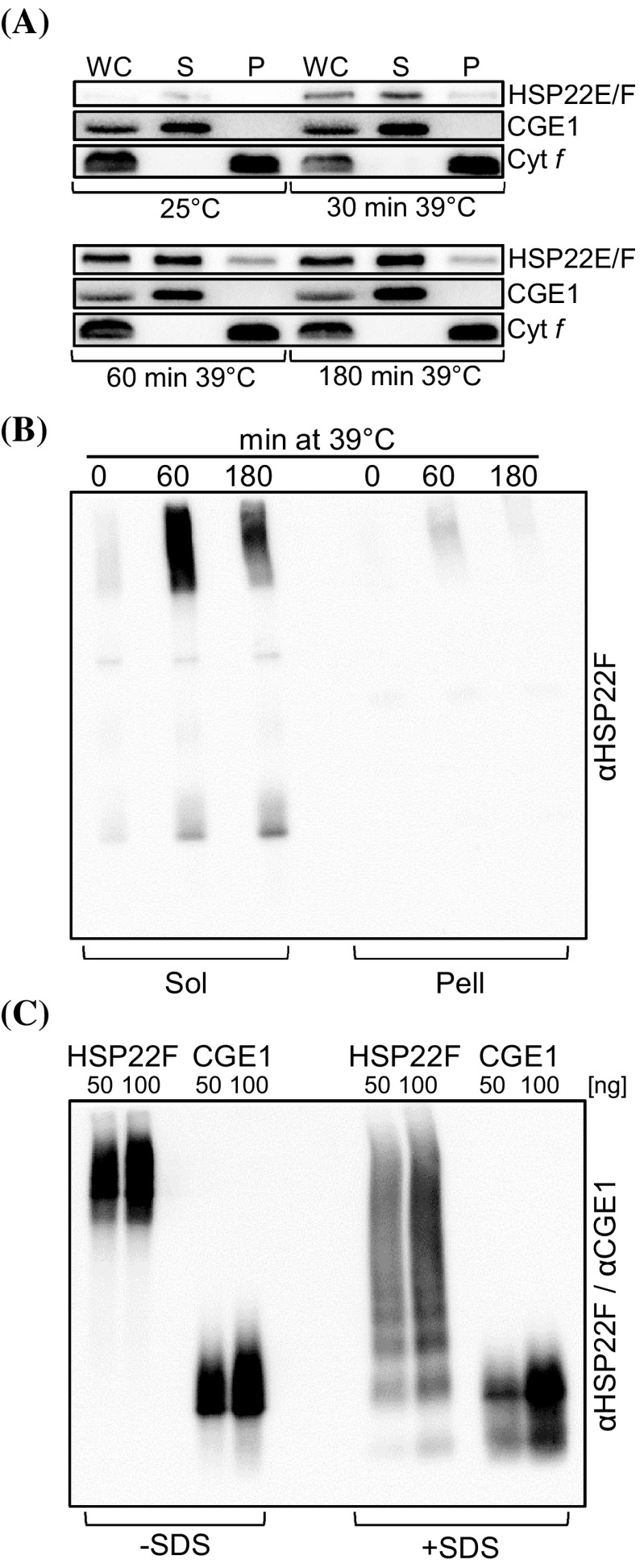
Formation of HSP22E/F high molecular mass complexes during heat stress. a Analysis of the partitioning of HSP22E/F to soluble and insoluble/membrane fractions during heat stress. cw15-302 cells grown at 25 °C were exposed to 39 °C for 180 min. Whole cells collected at the time points given (WC) were separated into soluble (S) and insoluble/membrane fractions (P) by two cycles of freezing/thawing. Proteins were separated by SDS-PAGE and immunodetected with antibodies against HSP22F and against integral membrane protein cytochrome f (Cyt f) or stromal CGE1 as controls. b Analysis of HSP22E/F-containing complexes formed during heat stress. cw15-302 cells were exposed to 39 °C for 180 min and cells harvested at the time points given were fractionated into soluble (Sol) and insoluble/membrane (Pell) proteins by freezing-thawing. Protein complexes were separated on a 5–15% blue-native gel and HSP22E/F was detected by immunoblotting. c Analysis of oligomers formed by recombinant HSP22F and CGE1. 50 and 100 ng recombinant HSP22F and CGE1 were separated on a 5–15% blue-native gel and detected by immunoblotting. Proteins on the right half of the gel were supplemented with SDS at a final concentration of 2% prior to electrophoresis. The ~ 24-kDa CGE1 protein was used as control as it is known to form stable dimers (Willmund et al. 2007)
Fig. 6
Fig. 6
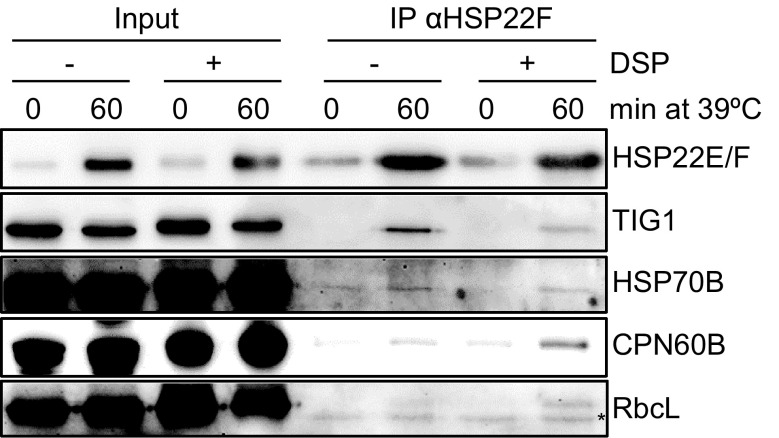
Verification of proteins co-precipitating with HSP22E/F by immunoblot analysis. Total soluble proteins were extracted from cells grown at 25 °C and shifted to 39 °C for 0 or 60 min. Extracts were supplemented with or without the homobifunctional crosslinker DSP prior to the immunoprecipitation of HSP22E/F. 0.3% of the input for immunoprecipitation and 5% of the immunoprecipitates were separated on a 12% SDS–polyacrylamide gel and analyzed by immunoblotting. The asterisk indicates a protein crossreacting with anti-RbcL antibodies
Fig. 7
Fig. 7
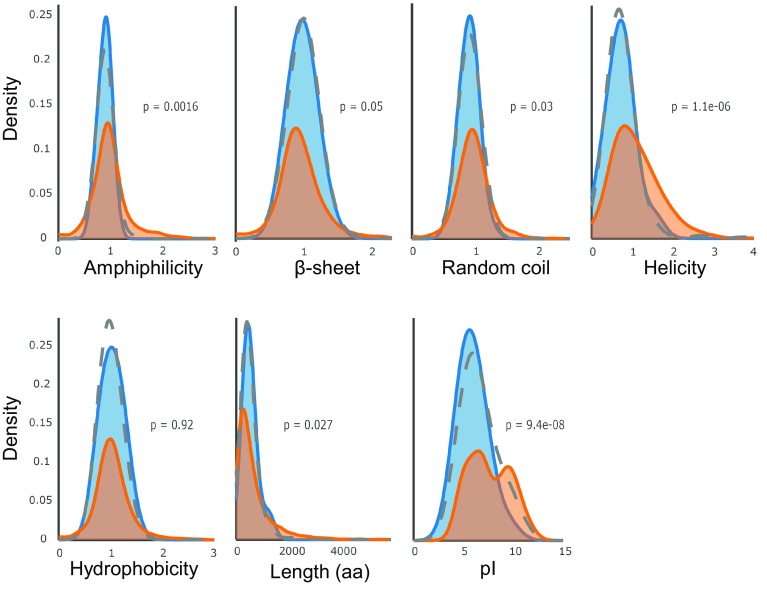
Amino acid sequence property distributions. Kernel density estimation shows the comparison between different sequence property distributions of the 34 high-confidence HSP22E/F interactors excluding sHsps, Hsp70s and Cpn60s (blue) and the 4775 mature chloroplast proteins predicted by ChloroP (orange). The grey dotted line indicates the distribution of all 160 proteins identified in the HSP22E/F immunoprecipitate, excluding sHsps, Hsp70s and Cpn60s

References

    1. Asamizu E, Miura K, Kucho K, Inoue Y, Fukuzawa H, Ohyama K, Nakamura Y, Tabata S. Generation of expressed sequence tags from low-CO2 and high-CO2 adapted cells of Chlamydomonas reinhardtii. DNA Res. 2000;7:305–307. doi: 10.1093/dnares/7.5.305. - DOI - PubMed
    1. Basha E, Lee GJ, Breci LA, Hausrath AC, Buan NR, Giese KC, Vierling E. The identity of proteins associated with a small heat shock protein during heat stress in vivo indicates that these chaperones protect a wide range of cellular functions. J Biol Chem. 2004;279:7566–7575. doi: 10.1074/jbc.M310684200. - DOI - PubMed
    1. Bepperling A, Alte F, Kriehuber T, Braun N, Weinkauf S, Groll M, Haslbeck M, Buchner J. Alternative bacterial two-component small heat shock protein systems. Proc Natl Acad Sci USA. 2012;109:20407–20412. doi: 10.1073/pnas.1209565109. - DOI - PMC - PubMed
    1. Bova MP, Huang Q, Ding L, Horwitz J. Subunit exchange, conformational stability, and chaperone-like function of the small heat shock protein 16.5 from Methanococcus jannaschii. J Biol Chem. 2002;277:38468–38475. doi: 10.1074/jbc.M205594200. - DOI - PubMed
    1. Cashikar AG, Duennwald M, Lindquist SL. A chaperone pathway in protein disaggregation—Hsp26 alters the nature of protein aggregates to facilitate reactivation by Hsp104. J Biol Chem. 2005;280:23869–23875. doi: 10.1074/jbc.M502854200. - DOI - PMC - PubMed

LinkOut - more resources