


Prediction of Ischemic Heart Disease and Stroke in Survivors of Childhood Cancer
- PMID: 29095680
- PMCID: PMC5756324
- DOI: 10.1200/JCO.2017.74.8673
Prediction of Ischemic Heart Disease and Stroke in Survivors of Childhood Cancer
Abstract
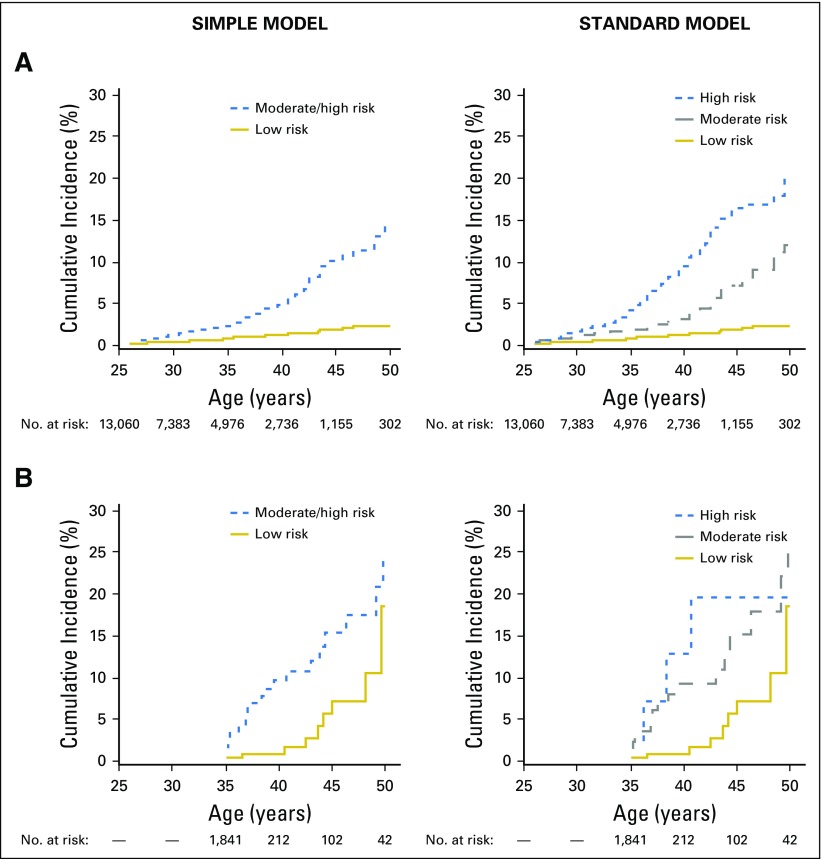
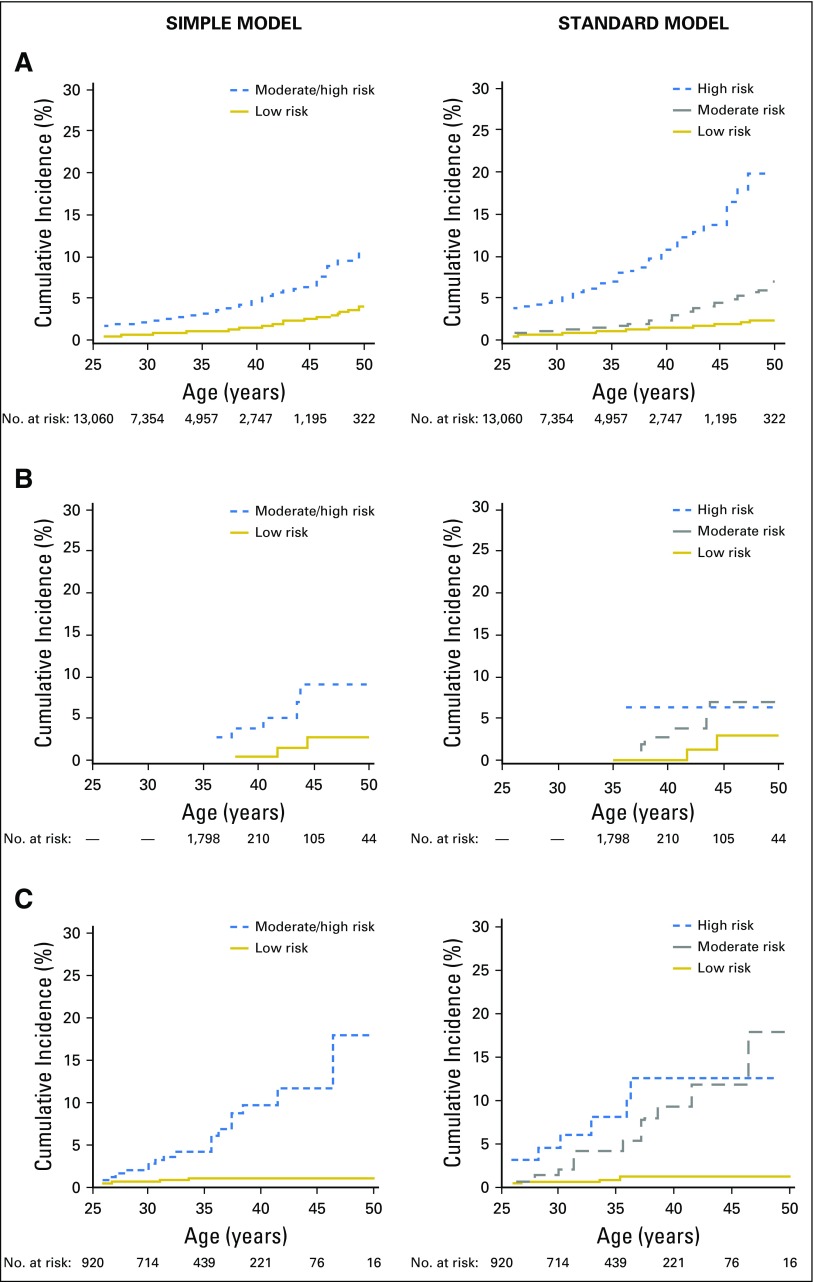
Purpose We aimed to predict individual risk of ischemic heart disease and stroke in 5-year survivors of childhood cancer. Patients and Methods Participants in the Childhood Cancer Survivor Study (CCSS; n = 13,060) were observed through age 50 years for the development of ischemic heart disease and stroke. Siblings (n = 4,023) established the baseline population risk. Piecewise exponential models with backward selection estimated the relationships between potential predictors and each outcome. The St Jude Lifetime Cohort Study (n = 1,842) and the Emma Children's Hospital cohort (n = 1,362) were used to validate the CCSS models. Results Ischemic heart disease and stroke occurred in 265 and 295 CCSS participants, respectively. Risk scores based on a standard prediction model that included sex, chemotherapy, and radiotherapy (cranial, neck, and chest) exposures achieved an area under the curve and concordance statistic of 0.70 and 0.70 for ischemic heart disease and 0.63 and 0.66 for stroke, respectively. Validation cohort area under the curve and concordance statistics ranged from 0.66 to 0.67 for ischemic heart disease and 0.68 to 0.72 for stroke. Risk scores were collapsed to form statistically distinct low-, moderate-, and high-risk groups. The cumulative incidences at age 50 years among CCSS low-risk groups were < 5%, compared with approximately 20% for high-risk groups ( P < .001); cumulative incidence was only 1% for siblings ( P < .001 v low-risk survivors). Conclusion Information available to clinicians soon after completion of childhood cancer therapy can predict individual risk for subsequent ischemic heart disease and stroke with reasonable accuracy and discrimination through age 50 years. These models provide a framework on which to base future screening strategies and interventions.
Figures
References
-
- Lipshultz SE, Adams MJ, Colan SD, et al. : Long-term cardiovascular toxicity in children, adolescents, and young adults who receive cancer therapy: Pathophysiology, course, monitoring, management, prevention, and research directions: A scientific statement from the American Heart Association. Circulation 128:1927-1995, 2013 - PubMed
-
- Oeffinger KC, Mertens AC, Sklar CA, et al. : Chronic health conditions in adult survivors of childhood cancer. N Engl J Med 355:1572-1582, 2006 - PubMed
-
- Reulen RC, Winter DL, Frobisher C, et al. : Long-term cause-specific mortality among survivors of childhood cancer. JAMA 304:172-179, 2010 - PubMed
-
- van der Pal HJ, van Dalen EC, van Delden E, et al. : High risk of symptomatic cardiac events in childhood cancer survivors. J Clin Oncol 30:1429-1437, 2012 - PubMed
Publication types
MeSH terms
Grants and funding
LinkOut - more resources
Full Text Sources
Other Literature Sources
Medical
