


Management of the Febrile Young Infant: Update for the 21st Century
- PMID: 29095773
- PMCID: PMC5679412
- DOI: 10.1097/PEC.0000000000001303
Management of the Febrile Young Infant: Update for the 21st Century
Abstract
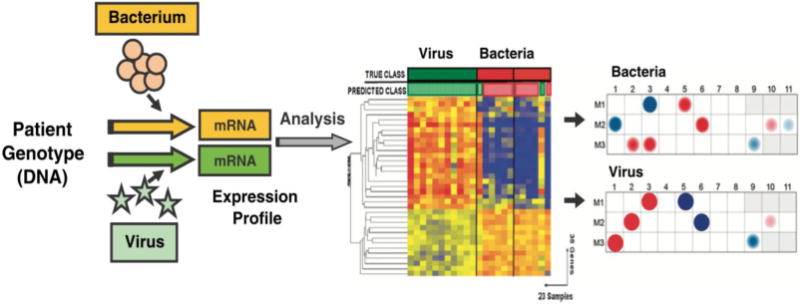
Infants aged 90 days or younger with fever are frequently evaluated in the pediatric emergency department. Physical examination findings and individual laboratory investigations are not reliable to differentiate benign viral infections from serious bacterial infections in febrile infants. Clinical prediction models were developed more than 25 years ago and have high sensitivity but relatively low specificity to identify bacterial infections in febrile infants. Newer laboratory investigations such as C-reactive protein and procalcitonin have favorable test characteristics compared with traditional laboratory studies such as a white blood cell count. These novel biomarkers have not gained widespread acceptance because of lack of robust prospectively collected data, varying thresholds to define positivity, and differing inclusion criteria across studies. However, C-reactive protein and procalcitonin, when combined with other patient characteristics in the step-by-step approach, have a high sensitivity for detection of serious bacterial infection. The RNA biosignatures are a novel biomarker under investigation for detection of bacterial infection in febrile infants.
Conflict of interest statement
Figures
References
-
- Krauss BS, Harakal T, Fleisher GR. The spectrum and frequency of illness presenting to a pediatric emergency department. Pediatr Emerg Care. 1991;7:67–71. - PubMed
-
- Nelson DS, Walsh K, Fleisher GR. Spectrum and frequency of pediatric illness presenting to a general community hospital emergency department. Pediatrics. 1992;90:5–10. - PubMed
-
- Huppler AR, Eickhoff JC, Wald ER. Performance of low-risk criteria in the evaluation of young infants with fever: review of the literature. Pediatrics. 2010;125:228–233. - PubMed
-
- Greenhow TL, Hung YY, Herz AM, Losada E, Pantell RH. The changing epidemiology of serious bacterial infections in young infants. Pediatr Infect Dis J. 2014;33:595–599. - PubMed
Publication types
MeSH terms
Substances
Grants and funding
LinkOut - more resources
Full Text Sources
Other Literature Sources
Medical
Research Materials
