


Multi-categorical deep learning neural network to classify retinal images: A pilot study employing small database
- PMID: 29095872
- PMCID: PMC5667846
- DOI: 10.1371/journal.pone.0187336
Multi-categorical deep learning neural network to classify retinal images: A pilot study employing small database
Abstract
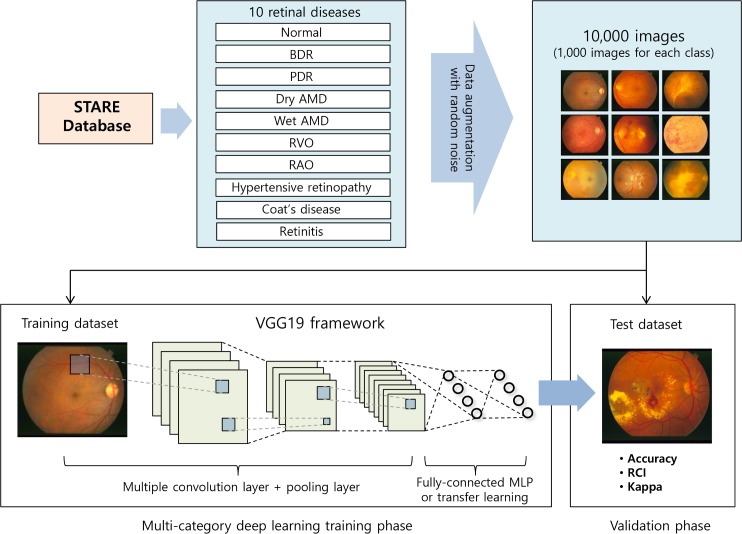
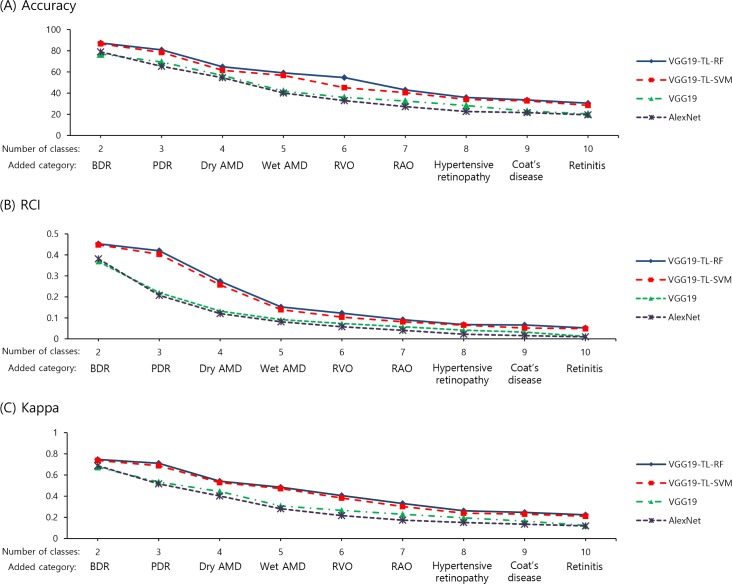
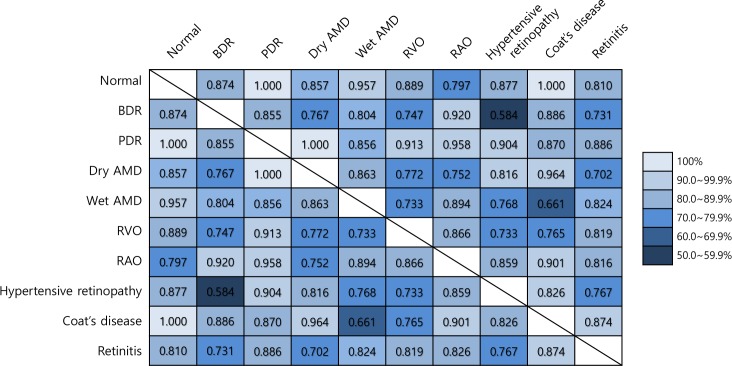
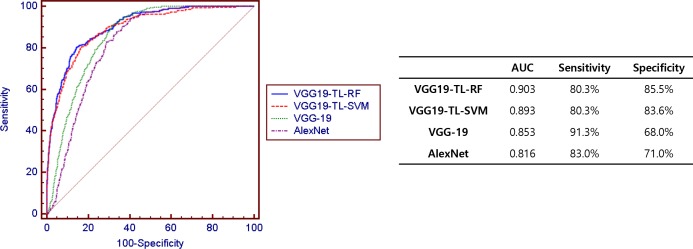
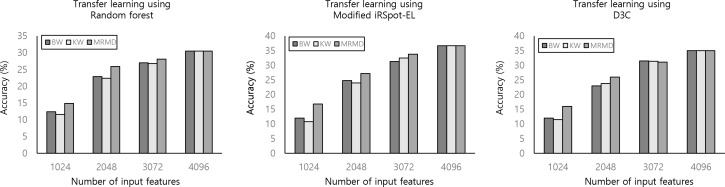
Deep learning emerges as a powerful tool for analyzing medical images. Retinal disease detection by using computer-aided diagnosis from fundus image has emerged as a new method. We applied deep learning convolutional neural network by using MatConvNet for an automated detection of multiple retinal diseases with fundus photographs involved in STructured Analysis of the REtina (STARE) database. Dataset was built by expanding data on 10 categories, including normal retina and nine retinal diseases. The optimal outcomes were acquired by using a random forest transfer learning based on VGG-19 architecture. The classification results depended greatly on the number of categories. As the number of categories increased, the performance of deep learning models was diminished. When all 10 categories were included, we obtained results with an accuracy of 30.5%, relative classifier information (RCI) of 0.052, and Cohen's kappa of 0.224. Considering three integrated normal, background diabetic retinopathy, and dry age-related macular degeneration, the multi-categorical classifier showed accuracy of 72.8%, 0.283 RCI, and 0.577 kappa. In addition, several ensemble classifiers enhanced the multi-categorical classification performance. The transfer learning incorporated with ensemble classifier of clustering and voting approach presented the best performance with accuracy of 36.7%, 0.053 RCI, and 0.225 kappa in the 10 retinal diseases classification problem. First, due to the small size of datasets, the deep learning techniques in this study were ineffective to be applied in clinics where numerous patients suffering from various types of retinal disorders visit for diagnosis and treatment. Second, we found that the transfer learning incorporated with ensemble classifiers can improve the classification performance in order to detect multi-categorical retinal diseases. Further studies should confirm the effectiveness of algorithms with large datasets obtained from hospitals.
Conflict of interest statement
Figures
References
-
- Klein R, Klein BEK. The prevalence of age-related eye diseases and visual impairment in aging: current estimates. Invest Ophthalmol Vis Sci. 2013;54: ORSF5–ORSF13. doi: 10.1167/iovs.13-12789 - DOI - PMC - PubMed
-
- Wong WL, Su X, Li X, Cheung CMG, Klein R, Cheng C-Y, et al. Global prevalence of age-related macular degeneration and disease burden projection for 2020 and 2040: a systematic review and meta-analysis. Lancet Glob Health. 2014;2: e106–116. doi: 10.1016/S2214-109X(13)70145-1 - DOI - PubMed
-
- Cheung N, Mitchell P, Wong TY. Diabetic retinopathy. The Lancet. 2010;376: 124–136. doi: 10.1016/S0140-6736(09)62124-3 - DOI - PubMed
-
- Jain S, Hamada S, Membrey WL, Chong V. Screening for age-related macular degeneration using nonstereo digital fundus photographs. Eye Lond Engl. 2006;20: 471–475. doi: 10.1038/sj.eye.6701916 - DOI - PubMed
-
- Chan CKW, Gangwani RA, McGhee SM, Lian J, Wong DSH. Cost-Effectiveness of Screening for Intermediate Age-Related Macular Degeneration during Diabetic Retinopathy Screening. Ophthalmology. 2015;122: 2278–2285. doi: 10.1016/j.ophtha.2015.06.050 - DOI - PubMed
MeSH terms
LinkOut - more resources
Full Text Sources
Other Literature Sources
