


Seasonal proteinuria changes in IgA nephropathy patients after proteinuria remission
- PMID: 29095887
- PMCID: PMC5667876
- DOI: 10.1371/journal.pone.0187607
Seasonal proteinuria changes in IgA nephropathy patients after proteinuria remission
Abstract
Background: Proteinuria is a powerful prognostic factor for end-stage renal disease in IgA nephropathy (IgAN) patients. However, it is not known whether proteinuria exacerbations are related to seasonal changes.
Methods: We retrospectively enrolled consecutive patients diagnosed with IgAN by kidney biopsy at our hospital between 2002 and 2014. Proteinuria remission was defined as urinary protein <0.3 g/gCr in two consecutive outpatient urinalyses and exacerbation as urinary protein ≥0.75 g/gCr. Four seasons were defined: spring (March-May), summer (June-August), autumn (September-November), and winter (December-February). We performed a multivariate analysis to identify factors associated with the second remission following a proteinuria exacerbation.
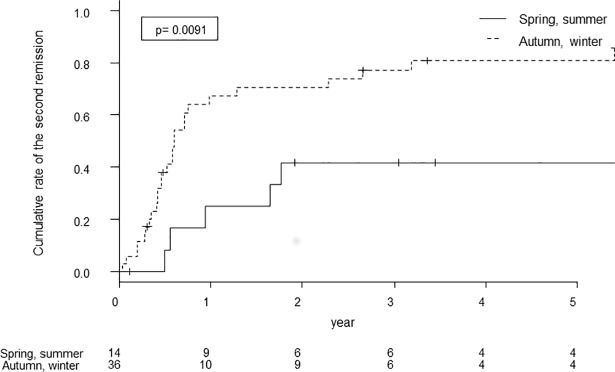
Results: We analyzed 116 patients. Proteinuria remission and exacerbation occurred in 77, and 43 patients, respectively. The incidence of proteinuria exacerbation was significantly higher in autumn and winter than in spring and summer (p = 0.040). The cumulative second remission rate was significantly higher in patients with autumn and winter proteinuria exacerbation than in patients with spring and summer exacerbations (p = 0.0091). In multivariate analyses, exacerbation onset in autumn and winter (hazard ratio [HR], 3.51; 95% confidence interval [CI], 1.41-8.74) and intensive therapy (HR, 2.26; 95% CI, 1.05-4.88) were significantly associated with a second proteinuria remission.
Conclusion: In IgAN patients in proteinuria remission, proteinuria exacerbation frequently occurred in autumn and winter. Exacerbations occurring in autumn and winter tended to remit early.
Conflict of interest statement
Figures
References
-
- D’Amico G. The commonest glomerulonephritis in the world: IgA nephropathy. Q J Med. 1987; 64: 709–27. - PubMed
-
- Sugiyama H, Yokoyama H, Sato H, Saito T, Kohda Y, Nishi S, et al. Japan Renal Biopsy Registry: the first nationwide, web-based, and prospective registry system of renal biopsies in Japan. Clin Exp Nephrol. 2011; 15: 493–503. doi: 10.1007/s10157-011-0430-4 - DOI - PubMed
-
- Koyama A, Igarashi M, Kobayashi M. Natural history and risk factors for immunoglobulin A nephropathy in Japan. Research Group on Progressive Renal Diseases. Am J Kidney Dis. 1997; 29: 526–32 - PubMed
-
- Eiro M, Katoh T, Kuriki M, Asano K, Watanabe K, Watanabe T. The product of duration and amount of proteinuria (proteinuria index) is a possible marker for glomerular and tubulointerstitial damage in IgA nephropathy. Nephron. 2002; 90: 432–41 - PubMed
-
- Pozzi C, Bolasco PG, Fogazzi GB, Andrulli S, Altieri P, Ponticelli C, et al. Corticosteroids in IgA nephropathy: a randomised controlled trial. Lancet. 1999; 353: 883–7. - PubMed
MeSH terms
LinkOut - more resources
Full Text Sources
Other Literature Sources
Miscellaneous
