


Antibiotic prophylaxis for episiotomy repair following vaginal birth
- PMID: 29096053
- PMCID: PMC6485970
- DOI: 10.1002/14651858.CD012136.pub2
Antibiotic prophylaxis for episiotomy repair following vaginal birth
Abstract
Background: Bacterial infections occurring during labour, childbirth, and the puerperium may be associated with considerable maternal and perinatal morbidity and mortality. Antibiotic prophylaxis might reduce wound infection incidence after an episiotomy, particularly in situations associated with a higher risk of postpartum perineal infection, such as midline episiotomy, extension of the incision, or in settings where the baseline risk of infection after vaginal birth is high. However, available evidence is unclear concerning the role of prophylactic antibiotics in preventing infections after an episiotomy.
Objectives: To assess whether routine antibiotic prophylaxis before or immediately after incision or repair of episiotomy for women with an uncomplicated vaginal birth, compared with either placebo or no antibiotic prophylaxis, prevents maternal infectious morbidities and improves outcomes.
Search methods: We searched the Cochrane Pregnancy and Childbirth's Trials Register, LILACS, ClinicalTrials.gov, and the WHO International Clinical Trials Registry Platform (ICTRP) on 24 July 2017, and screened reference lists of retrieved studies.
Selection criteria: We considered randomised controlled trials, quasi-randomised trials, and cluster-randomised trials that compared the use of routine antibiotic prophylaxis for incision or repair of an episiotomy for women with otherwise normal vaginal births, compared with either placebo or no antibiotic prophylaxis.
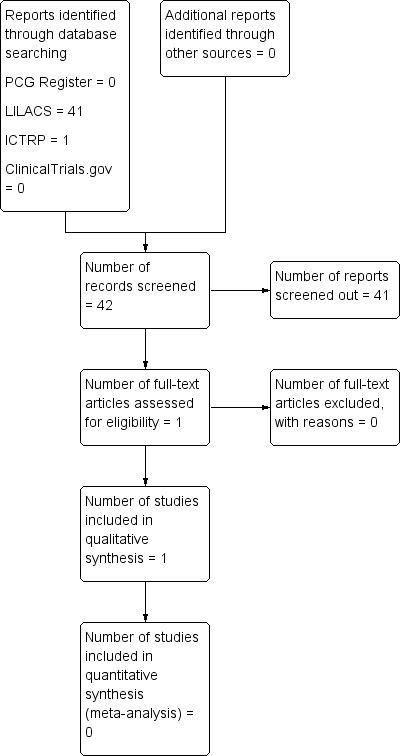
Data collection and analysis: Two review authors independently assessed trials for inclusion and risk of bias, extracted data, and checked them for accuracy. We only found one quasi-randomised trial that met the inclusion criteria and was included in the analysis, therefore, we did not perform a meta-analysis.
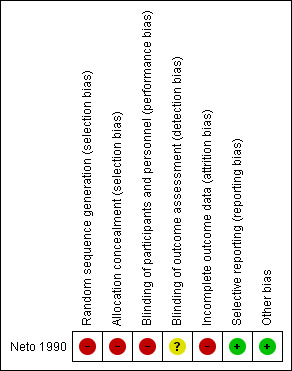
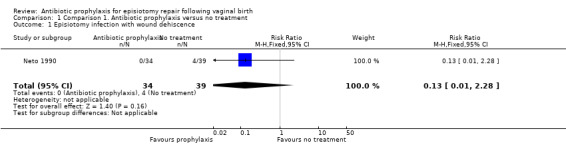
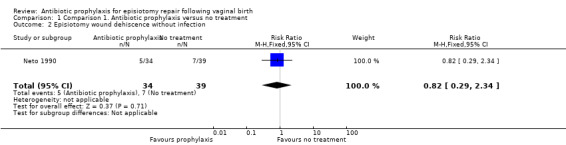
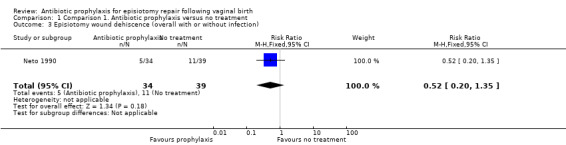
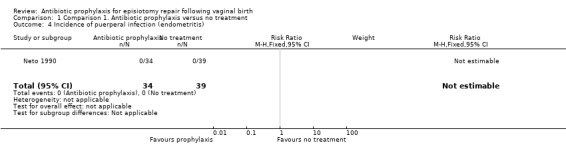
Main results: We included one quasi-RCT (with data from 73 women) in the review. The trial, which was conducted in a public hospital in Brazil, compared oral chloramphenicol 500 mg four times daily for 72 hours after episiotomy repair (N = 34) and no treatment (N = 39). We assessed most of the domains at high risk of bias because women were randomised according to even and odd numbers, allocation concealment was based on protocol number, there was no treatment or placebo administered in the control group, we were unclear about the blinding of outcome assessments, and outcomes were incompletely reported. We considered the other domains to be at low risk of bias. We downgraded the quality of the evidence for very serious design limitations (related to lack of random sequence generation, allocation concealment, and blinding) and imprecision of effect estimates (small sample sizes and wide confidence intervals (CI) of effect estimates).We found very low-quality evidence, from one trial of 73 women, that there was no clear indication that prophylactic antibiotics reduced the incidence of episiotomy wound dehiscence with infection (risk ratio (RR) 0.13, 95% CI 0.01 to 2.28), or without infection (RR 0.82, 95% CI 0.29 to 2.34). No cases of other puerperal infections (e.g. endometritis) were reported in either the antibiotic or control group.The trial did not report on any of the secondary outcomes of interest for this review, including severe maternal infectious morbidity, discomfort or pain at the episiotomy wound site, sexual function postpartum, adverse effects of antibiotics, costs of care, women's satisfaction with care, and individual antimicrobial resistance.
Authors' conclusions: There was insufficient evidence to assess the clinical benefits or harms of routine antibiotic prophylaxis for episiotomy repair after normal birth. The only trial included in this review had several methodological limitations, with very serious limitations in design, and imprecision of effect estimates. In addition, the trial tested an antibiotic with limited application in current clinical practice. There is a need for a careful and rigorous assessment of the comparative benefits and harms of prophylactic antibiotics on infection morbidity after episiotomy, in well-designed randomised controlled trials, using common antibiotics and regimens in current obstetric practice.
Conflict of interest statement
Mercedes Bonet: none known.
Erika Ota: none known.
Chioma E Chibueze contribution to this review was financially supported by a grant from the National Center for Child Health and Development, Japan 27B‐10, 26A‐5.
Olufemi T Oladapo: none known.
Figures
Update of
References
References to studies included in this review
Neto 1990 {published data only}
-
- Neto S, Goncalves JA, Andrade LF. Clinical evaluation of the chloramphenicol use as a prophylactic antibiotic in the vaginal delivery with episiotomy [Avaliacao clinica do emprego do cloranfenicol como antibiotico profilatico no parto normal com episiotomia]. ACM: Arquivos Catarinenses de Medicina 1990;19(2):97‐102.
Additional references
ACOG 2011
-
- American College of Obstetricians and Gynecologist. ACOG Practice Bulletin No. 120: Use of prophylactic antibiotics in labor and delivery. Obstetrics and Gynecology 2011;117(6):1472‐83. [PUBMED: 21606770] - PubMed
Bonet 2016a
Buppasiri 2014a
Carroli 2009
EURO‐PERISTAT 2013
-
- EURO‐PERISTAT Project with SCPE and EUROCAT. European Perinatal Health Report. The health and care of pregnant women and babies in Europe in 2010. www.europeristat.com (accessed 2015) 2013.
Friedman 2015
-
- Friedman AM, Ananth CV, Prendergast E, D' Alton ME, Wright JD. Variation in and factors associated with use of episiotomy. JAMA 2015;313(2):197‐9. [PUBMED: 25585333] - PubMed
Graham 2005
-
- Graham ID, Carroli G, Davies C, Medves JM. Episiotomy rates around the world: an update. Birth (Berkeley, Calif.) 2005;32(3):219‐23. [PUBMED: 16128977] - PubMed
Gravett 2012
Hartmann 2005
-
- Hartmann K, Viswanathan M, Palmieri R, Gartlehner G, Thorp J Jr, Lohr KN. Outcomes of routine episiotomy: a systematic review. JAMA 2005;293(17):2141‐8. [PUBMED: 15870418] - PubMed
Higgins 2011
-
- Higgins JPT, Green S, editor(s). Cochrane Handbook for Systematic Reviews of Interventions Version 5.1.0 (updated March 2011). The Cochrane Collaboration, 2011. Available from www.handbook.cochrane.org.
Hussein 2010
-
- Hussein J, Walker L. Chapter 8. Puerperal sepsis in low‐ and middle‐income settings: past, present and future. Maternal and Infant Deaths: Chasing Millennium Development Goals 4 & 5. London: RCOG Press, 2010:131‐47.
Kalis 2012
-
- Kalis V, Laine K, Leeuw JW, Ismail KM, Tincello DG. Classification of episiotomy: towards a standardisation of terminology. BJOG: an international journal of obstetrics and gynaecology 2012;119(5):522‐6. [ PubMed: 22304364] 2012;119(5):522‐6. [PUBMED: 22304364] - PubMed
Kamel 2014
-
- Kamel A, Khaled M. Episiotomy and obstetric perineal wound dehiscence: beyond soreness. Journal of Obstetrics and Gynaecology 2014;34(3):215‐7. [PUBMED: 24484355] - PubMed
Kettle 2010
Kettle 2012
Kropp 2005
-
- Kropp N, Hartwell T, Althabe F. Episiotomy rates from eleven developing countries. International Journal of Gynaecology and Obstetrics 2005;91(2):157‐9. [PUBMED: 16169552] - PubMed
Liabsuetrakul 2014
Newton 2008
-
- Newton ER. Antibiotics in Maternal‐Fetal Medicine. www.glowm.com/section_view/heading/Antibiotics%2520in%2520Maternal‐Fetal... (accessed 23 February 2016) 2008.
NICE 2014
-
- National Institute for Health and Care Excellence. Intrapartum care: care of healthy women and their babies during childbirth. (Clinical Guideline 109). www.nice.org.uk/guidance/cg190 (accessed 2015) 2014.
RevMan 2014 [Computer program]
-
- The Nordic Cochrane Centre, The Cochrane Collaboration. Review Manager 5 (RevMan 5). Version 5.3. Copenhagen: The Nordic Cochrane Centre, The Cochrane Collaboration, 2014.
Say 2014
-
- Say L, Chou D, Gemmill A, Tuncalp O, Moller AB, Daniels J, et al. Global causes of maternal death: a WHO systematic analysis. Lancet. Global Health 2014;2(6):e323‐33. [PUBMED: 25103301] - PubMed
Schünemann 2013
-
- Schünemann H, Brożek J, Guyatt G, Oxman A (editors), The GRADE Working Group. GRADE Handbook for Grading Quality of Evidence and Strength of Recommendations. Available from gdt.guidelinedevelopment.org/app/handbook/handbook.html Updated October 2013.
Sharma 2008
-
- Sharma JB, Gupta N, Aggarwal P, Mittal S. A survey of obstetricians' practice of using prophylactic antibiotics in vaginal deliveries and caesarean sections. Journal of the Indian Medical Association 2008;106(3):147‐9. [PUBMED: 18712132] - PubMed
Thacker 1983
-
- Thacker SB, Banta HD. Benefits and risks of episiotomy: an interpretative review of the English language literature, 1860‐1980. Obstetrical & Gynecological Survey 1983;38(6):322‐38. [PUBMED: 6346168] - PubMed
Tharpe 2008
-
- Tharpe N. Postpregnancy genital tract and wound infections. Journal of Midwifery & Women's Health 2008;53(3):236‐46. [PUBMED: 18455098] - PubMed
Van Dillen 2010
-
- Dillen J, Zwart J, Schutte J, Roosmalen J. Maternal sepsis: epidemiology, etiology and outcome. Current Opinion in Infectious Diseases 2010;23(3):249‐54. [PUBMED: 20375891] - PubMed
Van Schalkwyk 2010
Viswanathan 2005 (AHRQ)
-
- Viswanathan M, Hartmann K, Palmieri R, Lux L, Swinson T, Lohr KN, et al. The use of episiotomy in obstetrical care: a systematic review. Evidence Report/Technology Assessment No. 112. (Prepared by the RTI‐UNC Evidence‐based Practice Center, under Contract No. 290‐02‐0016). AHRQ Publication No. 05‐E009‐2. Rockville, MD: Agency for Healthcare Research and Quality 2005. - PMC - PubMed
WHO 2001
-
- World Health Organization. WHO Global Strategy for Containment of Antimicrobial Resistance. 2001. www.who.int/drugresistance/WHO_Global_Strategy_English.pdf (accessed 21 January 2016).
WHO 2005
-
- World Health Organization. The World Health Report 2005: Make every mother and child count. apps.who.int/iris/bitstream/10665/43131/1/9241562900.pdf (accessed 21 January 2016).
WHO 2014
-
- World Health Organization. Antimicrobial Resistance Global Report on Surveillance. 2014. apps.who.int/iris/bitstream/10665/112642/1/9789241564748_eng.pdf. Geneva: WHO, (accessed 21 January 2016).
WHO 2015
-
- World Health Organization. WHO Recommendations for Prevention and Treatment of Maternal Peripartum Infections. 2015. apps.who.int/iris/bitstream/10665/186171/1/9789241549363_eng.pdf (accessed 21 January 2016). - PubMed
Publication types
MeSH terms
Substances
Grants and funding
LinkOut - more resources
Full Text Sources
Other Literature Sources
Medical
Miscellaneous
