. 2018 Apr:14:474-484.
doi: 10.1016/j.redox.2017.10.016. Epub 2017 Oct 20.

Mitochondrial dysfunction in Parkinsonian mesenchymal stem cells impairs differentiation

Affiliations

Mitochondrial dysfunction in Parkinsonian mesenchymal stem cells impairs differentiation

Plamena R Angelova et al. Redox Biol. 2018 Apr.

Abstract

Sporadic cases account for 90-95% of all patients with Parkinson's Disease (PD). Atypical Parkinsonism comprises approximately 20% of all patients with parkinsonism. Progressive Supranuclear Palsy (PSP) belongs to the atypical parkinsonian diseases and is histopathologically classified as a tauopathy. Here, we report that mesenchymal stem cells (MSCs) derived from the bone marrow of patients with PSP exhibit mitochondrial dysfunction in the form of decreased membrane potential and inhibited NADH-dependent respiration. Furthermore, mitochondrial dysfunction in PSP-MSCs led to a significant increase in mitochondrial ROS generation and oxidative stress, which resulted in decrease of major cellular antioxidant GSH. Additionally, higher basal rate of mitochondrial degradation and lower levels of biogenesis were found in PSP-MSCs, together leading to a reduction in mitochondrial mass. This phenotype was biologically relevant to MSC stemness properties, as it heavily impaired their differentiation into adipocytes, which mostly rely on mitochondrial metabolism for their bioenergetic demand. The defect in adipogenic differentiation was detected as a significant impairment of intracellular lipid droplet formation in PSP-MSCs. This result was corroborated at the transcriptional level by a significant reduction of PPARγ and FABP4 expression, two key genes involved in the adipogenic molecular network. Our findings in PSP-MSCs provide new insights into the etiology of 'idiopathic' parkinsonism, and confirm that mitochondrial dysfunction is important to the development of parkinsonism, independent of the type of the cell.

Keywords: Mesenchymal stem cells; Parkinsonism; Progressive supranuclear palsy.


Figures

fx1
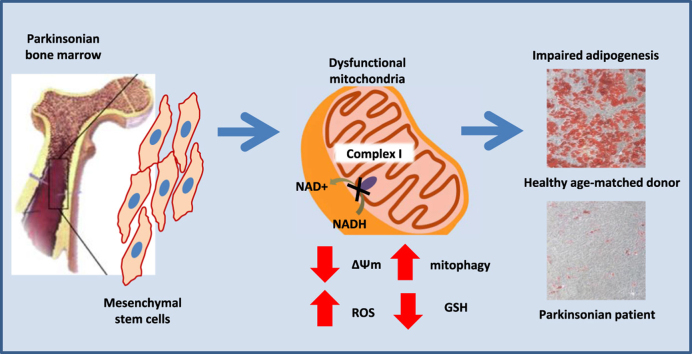
Graphical abstract
Fig. 1
Fig. 1
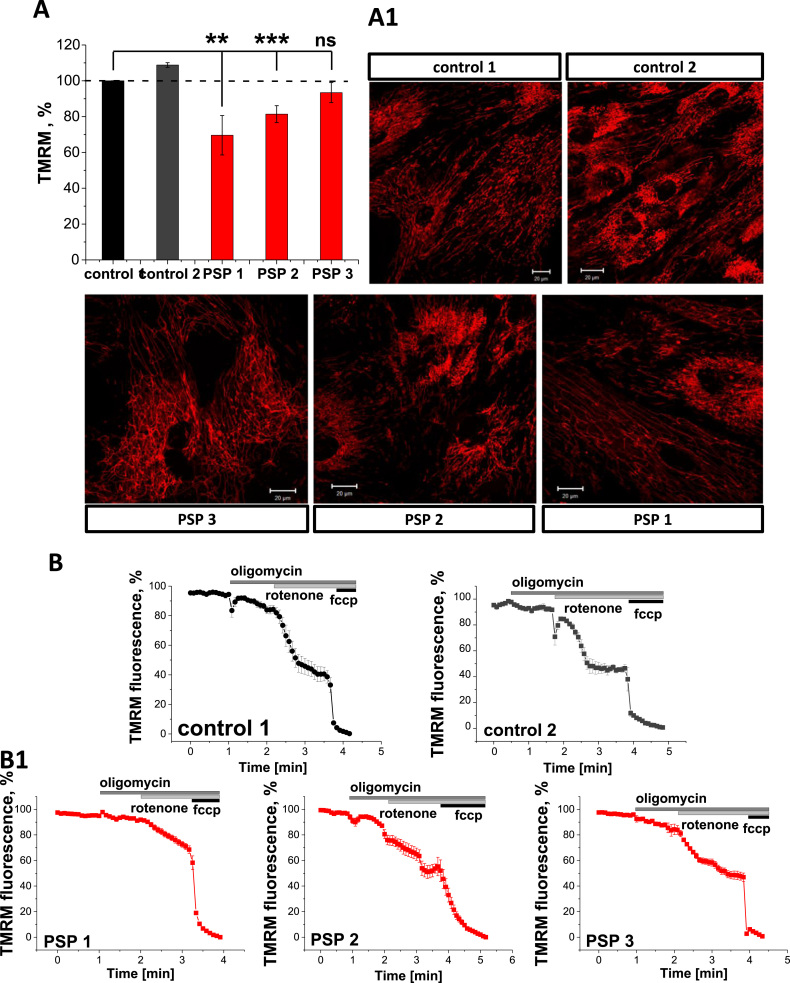
Mitochondrial membrane potential is affected in PSP-MSCs. A. Histogram comparing the ΔΨm values of control (black, dark grey) and patients (red) MSC. A1. Images show mitochondrial networks in control and patient MSCs. ΔΨm was assessed with TMRM (red). Assessment of the mitochondrial respiratory chain function and the maintenance of ΔΨm in control (B) and patient (B1) MSCs. (For interpretation of the references to color in this figure legend, the reader is referred to the web version of this article.)
Fig. 2
Fig. 2
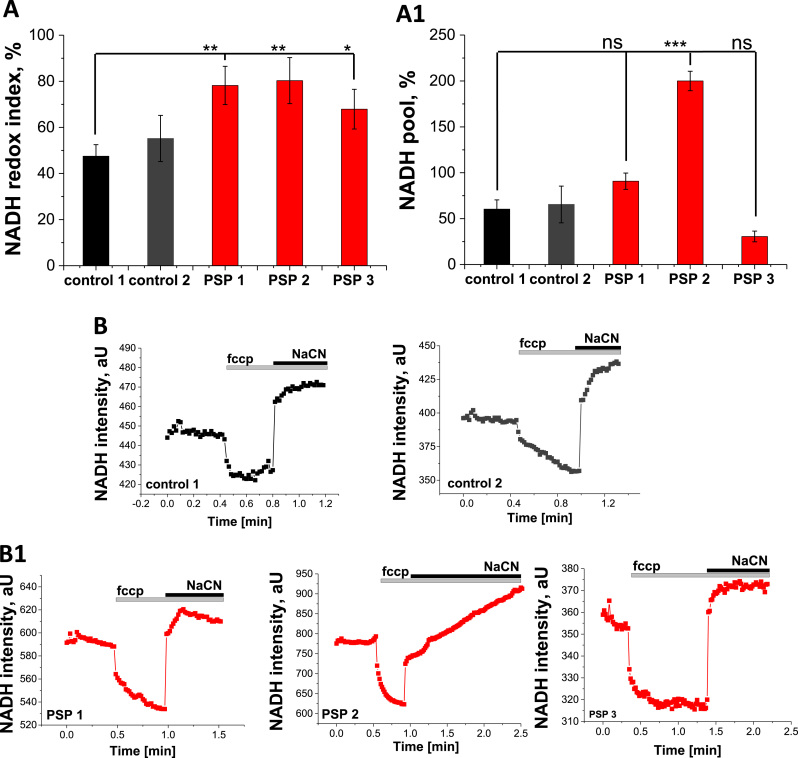
PSP leads to inhibition of NADH-dependent respiration. A. Quantification of the NADH redox index from control (black, dark grey) and patient MSCs (red). A1. NADH pool, calculated from control (black, dark grey) and patient MSCs (red). Representative traces from control (black traces, B) or patient MSCs (red traces, B1) NADH autofluorescence. Application of 1 µM fccp maximizes respiration and addition of 1 mM NaCN fully inhibits mitochondrial respiration. (For interpretation of the references to color in this figure legend, the reader is referred to the web version of this article.)
Fig. 3
Fig. 3
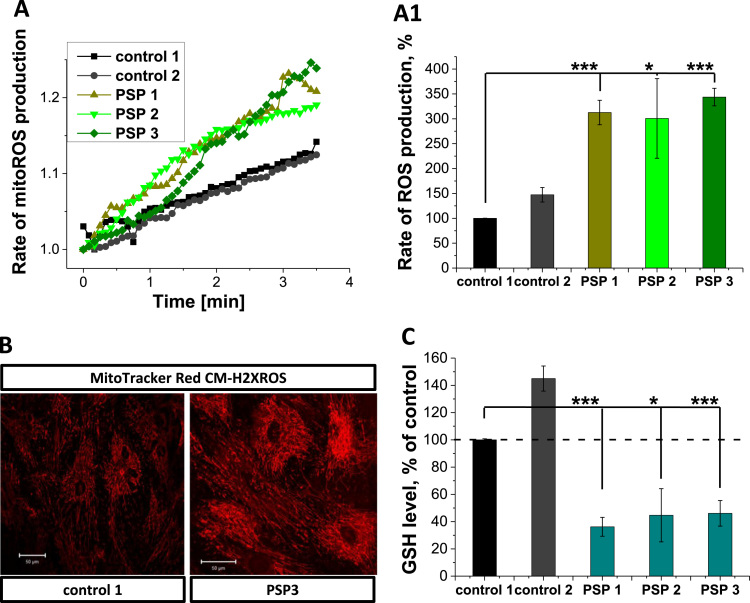
Increased ROS production and decreased GSH levels in PSP-MSCs. Representative traces for the rate of mitochondrial reactive oxygen species (ROS) generation (A.) and quantification of these experiments (A1.) in patient (light green, green, olive) and control (black, dark grey) MSCs. B. Representative images of control and patient MSCs, labeled with MitoTracker Red CM-H2XROS. B1. Levels of Glutathione (GSH), assessed by MCB fluorescence- controls (black, dark grey) and patient MSCs (teal). (For interpretation of the references to color in this figure legend, the reader is referred to the web version of this article.)
Fig. 4
Fig. 4
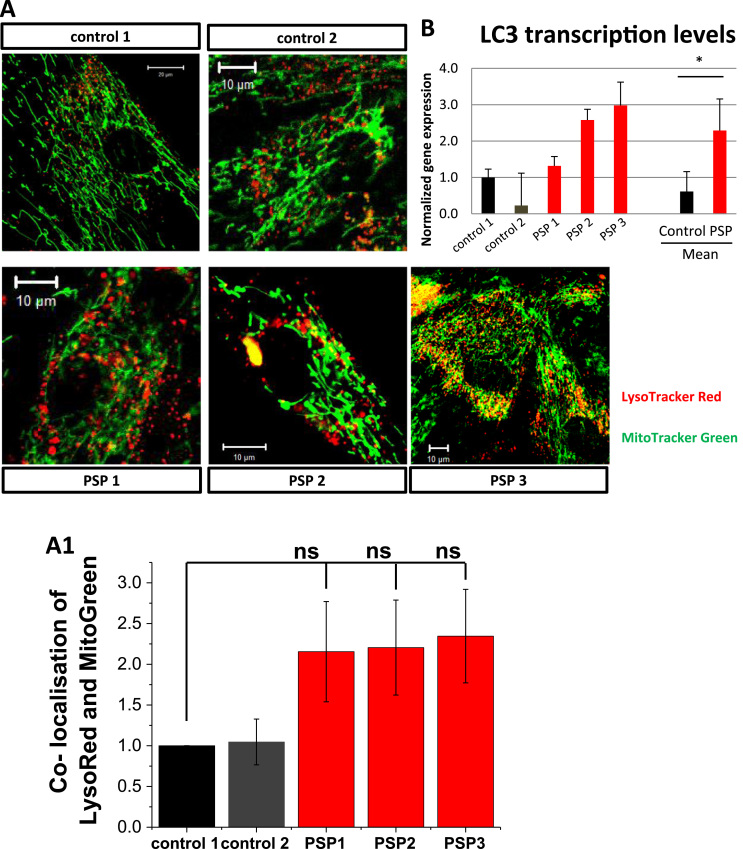
Basal mitophagy rate is increased in PSP-MSCs. A. Representative images of lysosomes labeled with LysoTracker Red (red) and mitochondria with MitoTracker Green (green). Merging of both signals is counted as a mitophagy event. A1. Histogram showing co-localization of LysoTracker Red with MitoTracker Green in control (black, dark grey) and patient (red) MSCs, as a sign of early mitophagy. B. Transcription levels of LC3 in control and PSP patient's MSCs. (For interpretation of the references to color in this figure legend, the reader is referred to the web version of this article.)
Fig. 5
Fig. 5
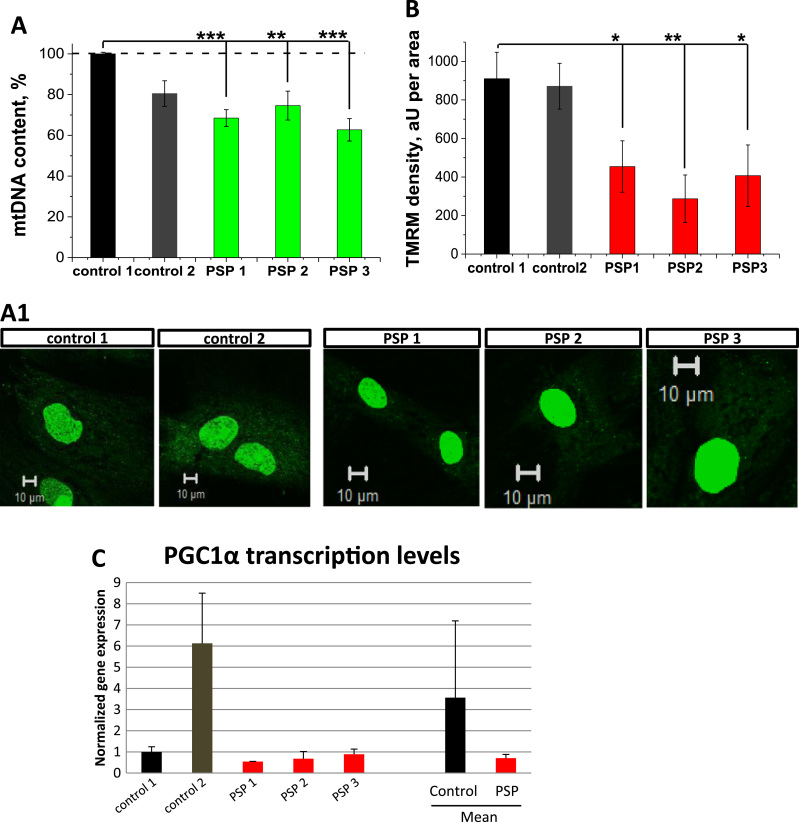
Mitochondrial biogenesis is decreased or insufficient in PSP-MSCs. A. Mitochondrial DNA content was decreased as measured by PicoGreen fluorescence. A1 Representative images of the mtDNA content in control and patient MSCs. B. Mitochondrial mass is significantly reduced in patient MSCs. C. transcription levels of the PGC1α in control and PSP patient's MSCs.
Fig. 6
Fig. 6
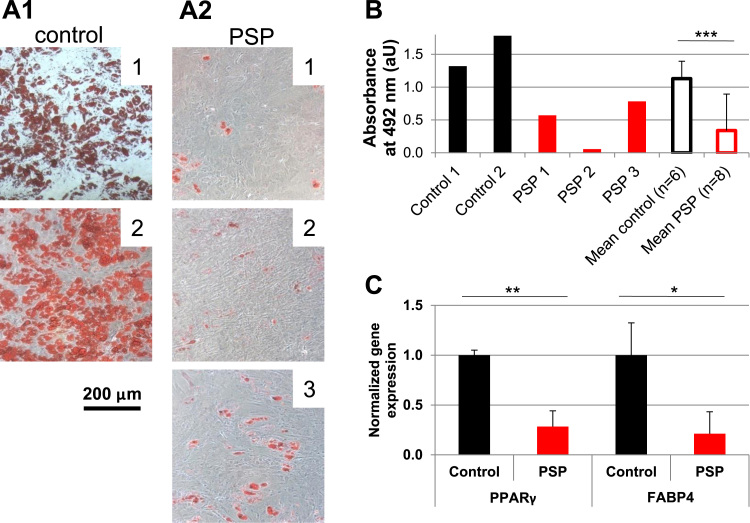
Differentiation potential is impaired in PSP-MSCs. A1. Oil Red O-positive adipocytes in MSCs from healthy donors. A2. Lack of abundant adipogenic differentiation in PSP-MSCs, as evidenced by fewer Oil Red O-positive cells. B. Biochemical quantification of incorporated Oil Red O in control and PSP-MSCs. Absorbance values measured at 492 nm expressed as arbitrary units (aU). C. PSP-MSCs express significantly lower levels of adipogenesis-related PPARγ and FABP4 transcripts compared to age-matched controls; gene expression in normalized to control MSCs. Control, healthy MSCs; PSP, PSP-MSCs.

References

    1. Nalls M.A., Saad M., Noyce A.J., Keller M.F., Schrag A., Bestwick J.P. Genetic comorbidities in Parkinson's disease. Hum. Mol. Genet. 2014;23:831–841. - PMC - PubMed
    1. Klein C., Westenberger A. Genetics of Parkinson's disease. Cold Spring Harb. Perspect. Med. 2012;2:a008888. - PMC - PubMed
    1. Jankovic J. International classification of diseases, tenth revision: neurological adaptation (ICD-10 NA): extrapyramidal and movement disorders. Mov. Disord. 1995;10:533–540. - PubMed
    1. Dickson D.W. Parkinson's disease and parkinsonism: neuropathology. Cold Spring Harb. Perspect. Med. 2012:2. - PMC - PubMed
    1. Karakaya T., Fusser F., Prvulovic D., Hampel H. Treatment options for tauopathies. Curr. Treat. Options Neurol. 2012;14:126–136. - PubMed

MeSH terms