


Comparison between flipped classroom and lecture-based classroom in ophthalmology clerkship
- PMID: 29096591
- PMCID: PMC5678346
- DOI: 10.1080/10872981.2017.1395679
Comparison between flipped classroom and lecture-based classroom in ophthalmology clerkship
Erratum in
-
Erratum.Med Educ Online. 2017;22(1):1406198. doi: 10.1080/10872981.2017.1406198. Med Educ Online. 2017. PMID: 29173130 Free PMC article. No abstract available.
Abstract
Background: In recent years, the flipped classroom method of teaching has received much attention in health sciences education. However, the application of flipped classrooms in ophthalmology education has not been well investigated.
Objective: The goal of this study was to investigate the effectiveness and acceptability of the flipped classroom approach to teaching ophthalmology at the clerkship level.
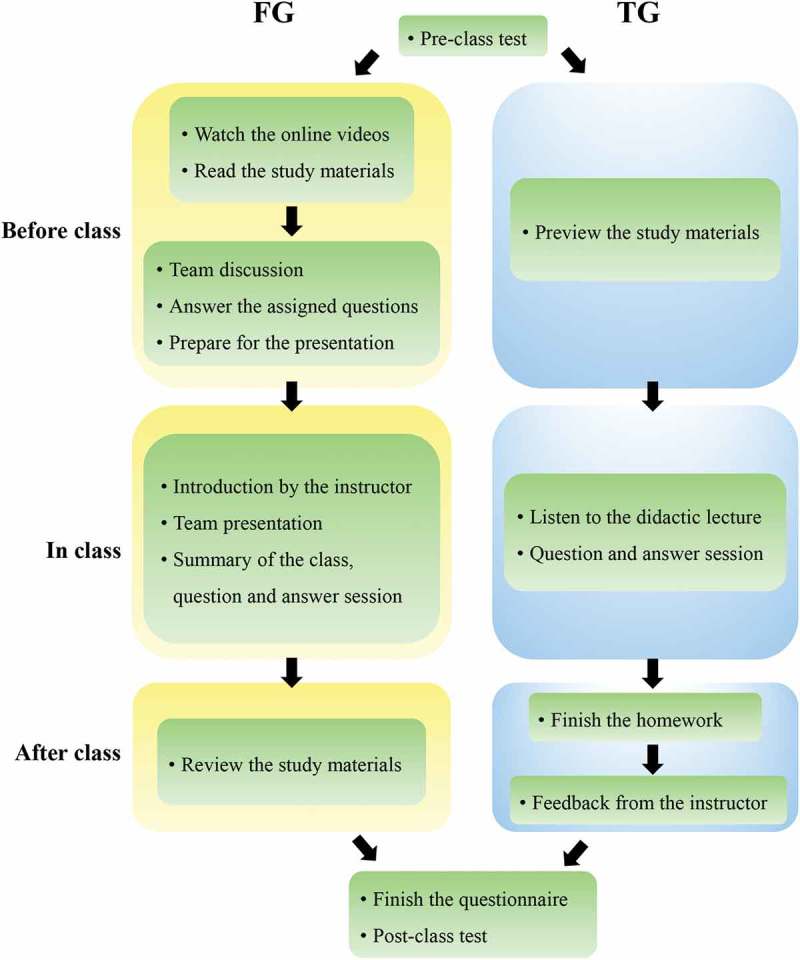
Design: Ninety-five fourth year medical students in an ophthalmology clerkship were randomly divided into two groups. An ocular trauma module was chosen for the content of this study. One group (FG (flipped group), n = 48) participated in flipped classroom instruction and was asked to watch a recorded lecture video and to read study materials before a face-to-face class meeting. They used the in-class time for discussion. The other group (TG (traditional group), n = 47) was assigned to traditional lecture-based instruction. These students attended a didactic lecture and completed assigned homework after the lecture. Feedback questionnaires were collected to compare students' perspectives on the teaching approach they experienced and to evaluate students' self-perceived competence and interest in ocular trauma. Pre- and post-tests were performed to assess student learning of the course materials.
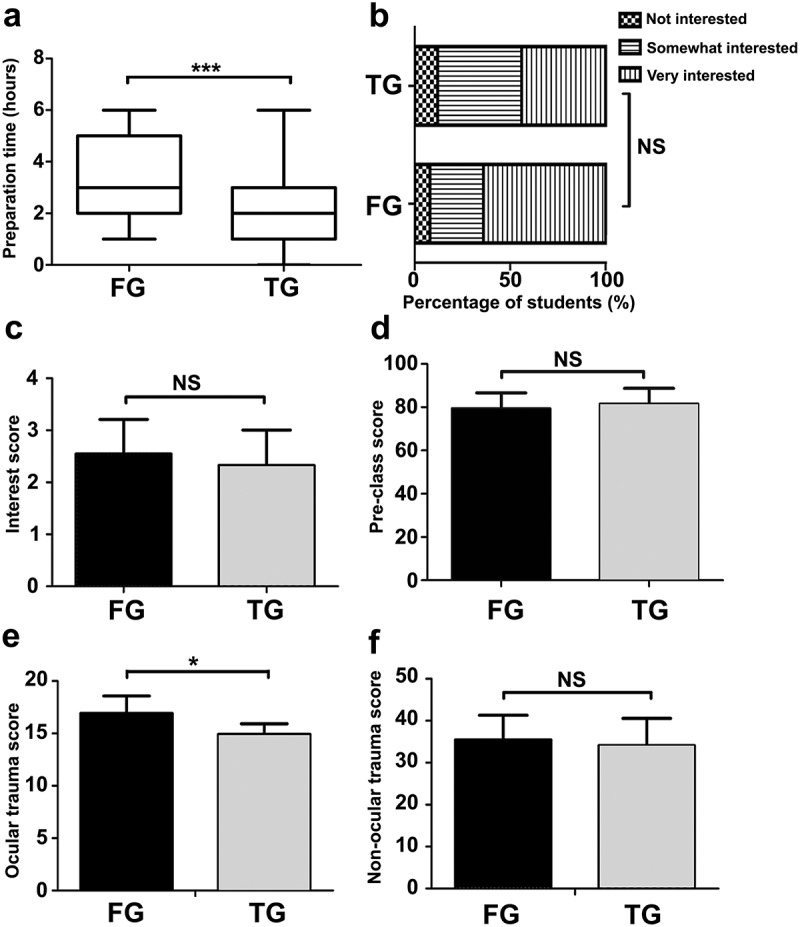
Results: More students in the FG agreed that the classroom helped to promote their learning motivation, improve their understanding of the course materials, and enhance their communication skill and clinical thinking. However, students in the FG did not show a preference for this method of teaching, and also reported more burden and pressure than those from the TG. Students from the FG performed better on the post test over the ocular trauma-related questions when compared to those from the TG.
Conclusions: The flipped classroom approach shows promise in ophthalmology clerkship teaching. However, it has some drawbacks. Further evaluation and modifications are required before it can be widely accepted and implemented. Abbreviations FG: Flipped classroom group; TG: Traditional lecture-based classroom group; TBL: Team-based learning; PBL: Problem-based learning; ZOC: Zhongshan Ophthalmic Center.
Keywords: Medical education; clerkship; flipped classroom; lecture-based classroom; ophthalmology.
Conflict of interest statement
No potential conflict of interest was reported by the authors.
Figures
References
-
- Succar T, Grigg J, Beaver HA, et al. A systematic review of best practices in teaching ophthalmology to medical students. Surv Ophthalmol. 2016;61(1):83–9. - PubMed
-
- Akpek EK, Smith RA.. Overview of age-related ocular conditions. Am J Manag Care. 2013;19(5 Suppl):S67–S75. - PubMed
-
- Tan X, Lin H, Li Y, et al. Cataract screening in a rural area of Southern China: a retrospective cohort study. Lancet. 2016;388(Suppl 1):S53.
Publication types
MeSH terms
LinkOut - more resources
Full Text Sources
Other Literature Sources
Miscellaneous
