


The effects of yoga versus stretching and resistance training exercises on psychological distress for people with mild-to-moderate Parkinson's disease: study prxotocol for a randomized controlled trial
- PMID: 29096672
- PMCID: PMC5667474
- DOI: 10.1186/s13063-017-2223-x
The effects of yoga versus stretching and resistance training exercises on psychological distress for people with mild-to-moderate Parkinson's disease: study prxotocol for a randomized controlled trial
Abstract
Background: Psychological distress is prevalent among people with Parkinson's disease (PD) and aggravates their motor symptoms, thereby leading to increased disability, high healthcare costs, and poor health-related quality of life (HRQoL). The under-recognition and adverse effects of the pharmacological management of anxiety and depression among the PD population are considerable. Thus, adopting a Complementary and Alternative Management (CAM) approach to address this problem is important. Yoga, one of the most common "mind-body" CAM therapies, can improve the psychological wellbeing of people with chronic illnesses. However, limited research on the effects of yoga in people with PD has been conducted. This study will determine the effects of yoga on the psychological wellbeing of people with mild-to-moderate PD and will compare these effects with those of stretching and resistance training exercises.
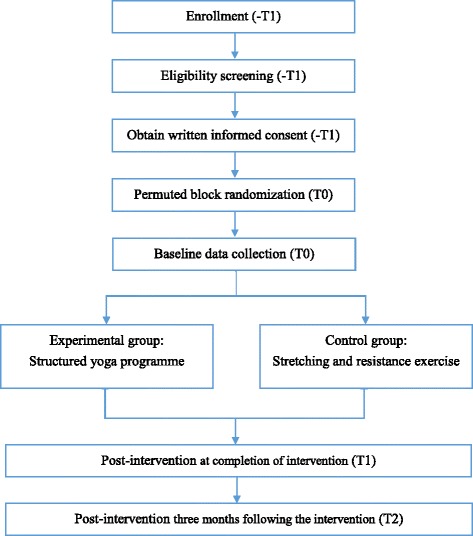
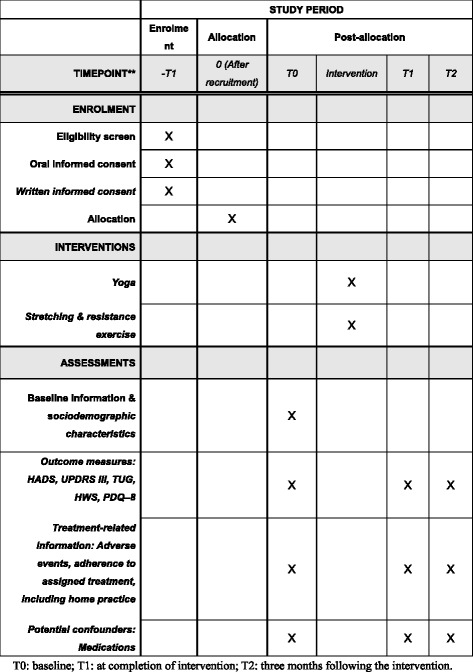
Methods: A community-based, single-blind, randomized trial will be conducted. A total of 126 subjects will be recruited and randomly divided into yoga (n = 63) or stretching and resistance exercise (n = 63) groups. For 8 weeks, the yoga group will receive a weekly 90-min session of yoga, and the control group will receive a weekly 60-min session of stretching and resistance exercises. The primary outcome will be the level of psychological distress measured using the Hospital Anxiety and Depression Scale. The secondary outcomes will include the severity of motor symptoms measured by the Movement Disorders Society - Unified Parkinson's Disease Scale - Part III Motor Examination; mobility, balance, and fall risk measured by the Timed Up and Go test; spiritual wellbeing measured by the Holistic Wellbeing Scale; and HRQoL measured by the Parkinson's Disease Questionnaire-8. Assessment will be conducted at baseline, 8th, and 20th weeks of follow-ups.
Discussion: This study will be the first randomized trial to compare the effect of yoga versus stretching and resistance training exercises in a PD population. Results will contribute to the value of yoga as a therapeutic option for managing psychological distress in PD patients. Multiple outcomes including psychological, physiological, and spiritual and HRQoL will also be measured to elucidate the potential mechanisms of yoga. The effect of yoga on people with chronic illnesses will further be elucidated. This information should contribute to future research, practice, and policy related to PD management.
Trial registration: WHO Primary Registry - Chinese Clinical Trials Registry (ChiCTR): CUHK_CCRB00522 Registered on 8 October 2016; date of approval 19 August 2016.
Keywords: Anxiety; CAM; Depression; Exercise; Mind-body intervention; Mindfulness; Parkinson’s disease; Randomized controlled trial; Study protocol; Yoga.
Conflict of interest statement
Ethics approval and consent to participate
Ethics approval was obtained from The Joint Chinese University of Hong Kong – New Territories East Cluster Clinical Research Ethics Committee (2016.323–T). Written informed consent will be obtained from eligible participants before any assessment or intervention.
Consent for publication
Not applicable
Competing interests
The authors declare that they have no competing interests.
Publisher’s Note
Springer Nature remains neutral with regard to jurisdictional claims in published maps and institutional affiliations.
Figures
References
Publication types
MeSH terms
LinkOut - more resources
Full Text Sources
Other Literature Sources
Medical
