


Acylated ghrelin treatment normalizes skeletal muscle mitochondrial oxidative capacity and AKT phosphorylation in rat chronic heart failure
- PMID: 29098797
- PMCID: PMC5700435
- DOI: 10.1002/jcsm.12254
Acylated ghrelin treatment normalizes skeletal muscle mitochondrial oxidative capacity and AKT phosphorylation in rat chronic heart failure
Abstract
Background: Chronic heart failure (CHF) is associated with skeletal muscle abnormalities contributing to exercise intolerance, muscle loss, and negative impact on patient prognosis. A primary role has been proposed for mitochondrial dysfunction, which may be induced by systemic and tissue inflammation and further contribute to low insulin signalling. The acylated form of the gastric hormone ghrelin (AG) may improve mitochondrial oxidative capacity and insulin signalling in both healthy and diseased rodent models.
Methods: We investigated the impact of AG continuous subcutaneous administration (AG) by osmotic minipump (50 nmol/kg/day for 28 days) compared with placebo (P) on skeletal muscle mitochondrial enzyme activities, mitochondrial biogenesis regulators transcriptional expression and insulin signalling in a rodent post-myocardial infarction CHF model.
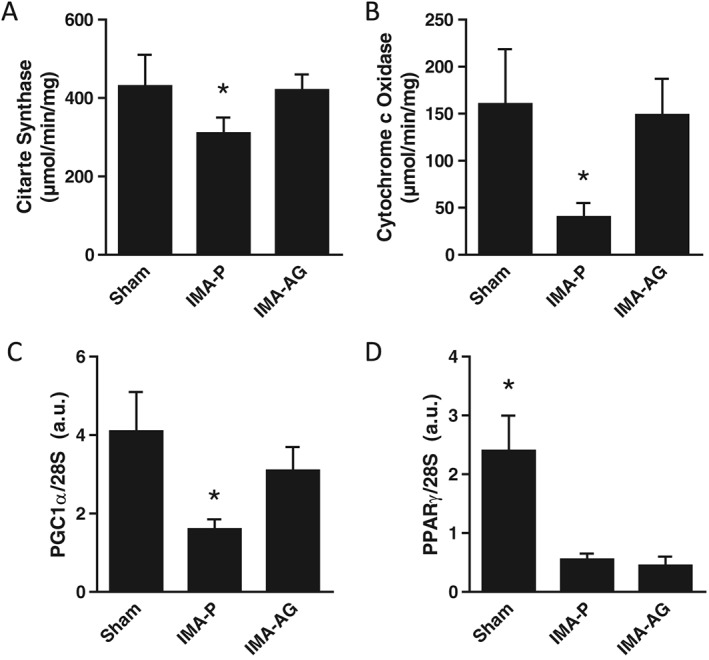
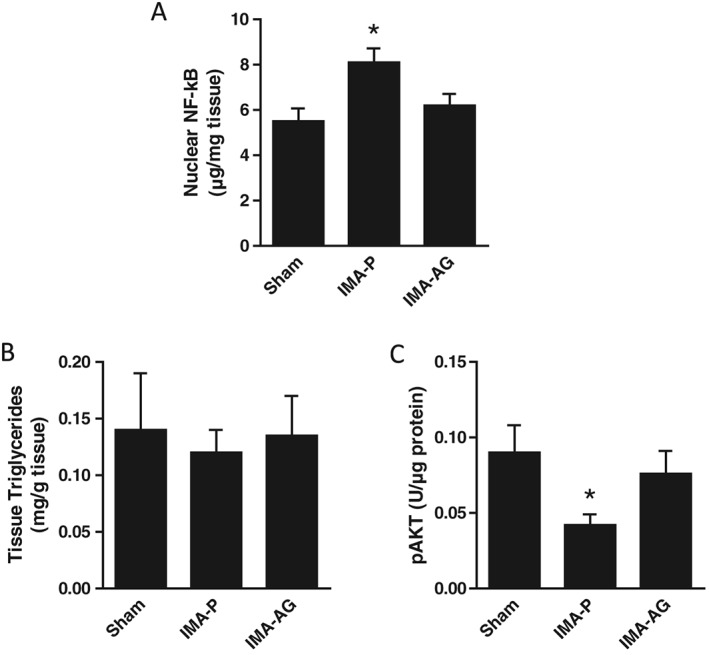
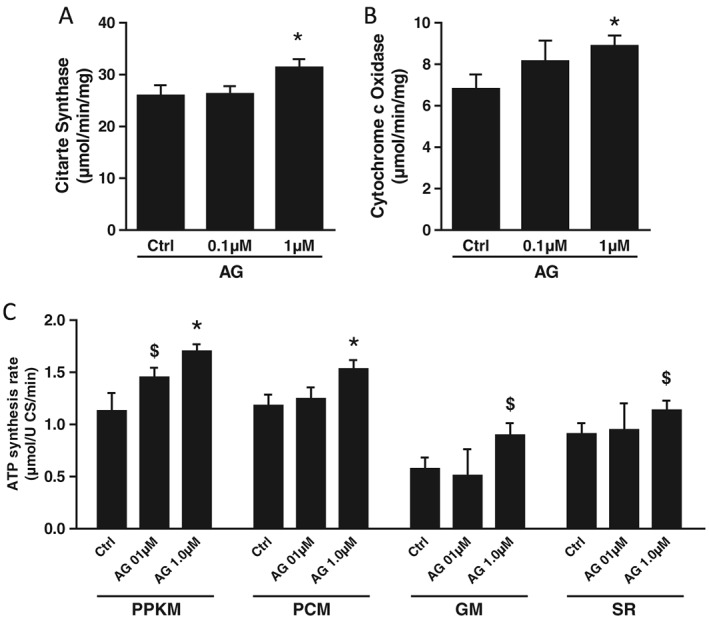
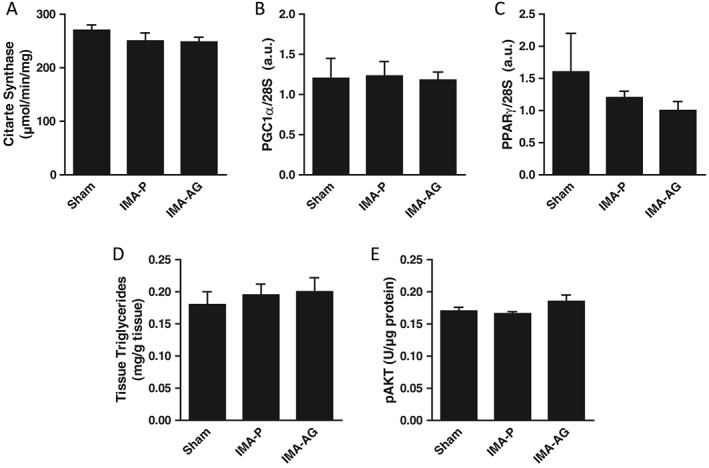
Results: No statistically significant differences (NS) were observed among the three group in cumulative food intake. Compared with sham-operated, P had low mitochondrial enzyme activities, mitochondrial biogenesis regulators transcripts, and insulin signalling activation at AKT level (P < 0.05), associated with activating nuclear translocation of pro-inflammatory transcription factor nuclear factor-κB. AG completely normalized all alterations (P < 0.05 vs P, P = NS vs sham-operated). Direct AG activities were strongly supported by in vitro C2C12 myotubes experiments showing AG-dependent stimulation of mitochondrial enzyme activities. No changes in mitochondrial parameters and insulin signalling were observed in the liver in any group.
Conclusions: Sustained peripheral AG treatment with preserved food intake normalizes a CHF-induced tissue-specific cluster of skeletal muscle mitochondrial dysfunction, pro-inflammatory changes, and reduced insulin signalling. AG is therefore a potential treatment for CHF-associated muscle catabolic alterations, with potential positive impact on patient outcome.
Keywords: Ghrelin; Insulin signalling; Mitochondria; Skeletal muscle.
© 2017 The Authors. Journal of Cachexia, Sarcopenia and Muscle published by John Wiley & Sons Ltd on behalf of the Society on Sarcopenia, Cachexia and Wasting Disorders.
Figures
References
-
- McMurray JJ, Pfeffer MA. Heart failure. Lancet 2005;365:1877–1889. - PubMed
-
- Ponikowski P, Voors AA, Anker SD, Bueno H, Cleland JG, Coats AJ, et al. 2016 ESC Guidelines for the diagnosis and treatment of acute and chronic heart failure: The Task Force for the diagnosis and treatment of acute and chronic heart failure of the European Society of Cardiology (ESC). Developed with the special contribution of the Heart Failure Association (HFA) of the ESC. Eur J Heart Fail 2016;18:891–975. - PubMed
-
- Adams V, Reich B, Uhlemann M, Niebauer J. Molecular effects of exercise training in patients with cardiovascular disease: focus on skeletal muscle, endothelium, and myocardium. Am J Physiol Heart Circ Physiol 2017;313:H72–H88. - PubMed
-
- Anker SD, Ponikowski P, Varney S, Chua TP, Clark AL, Webb‐Peploe KM, et al. Wasting as independent risk factor for mortality in chronic heart failure. Lancet 1997;349:1050–1053. - PubMed
-
- Harrington D, Anker SD, Chua TP, Webb‐Peploe KM, Ponikowski PP, Poole‐Wilson PA, et al. Skeletal muscle function and its relation to exercise tolerance in chronic heart failure. J Am Coll Cardiol 1997;30:1758–1764. - PubMed
MeSH terms
Substances
LinkOut - more resources
Full Text Sources
Other Literature Sources
Medical
Miscellaneous
