


Anti-apoptotic BCL-2 family members in development
- PMID: 29099482
- PMCID: PMC5729530
- DOI: 10.1038/cdd.2017.170
Anti-apoptotic BCL-2 family members in development
Abstract
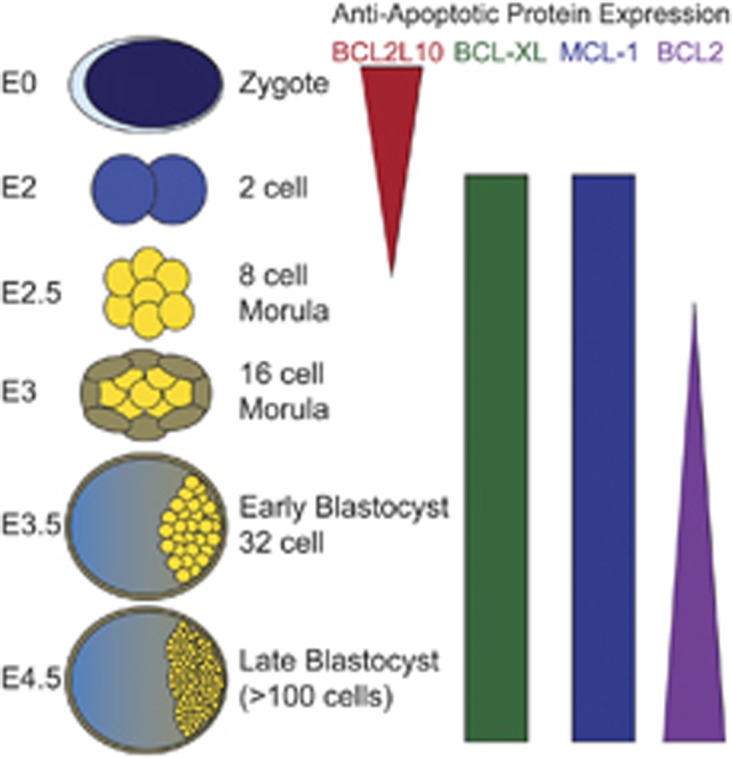
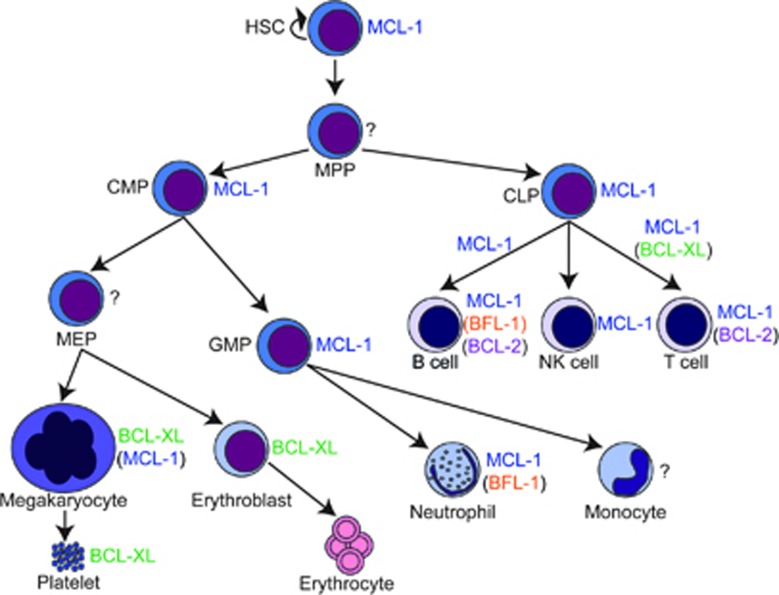
Almost 30 years ago it was first appreciated that anti-apoptotic B-cell lymphoma-2 (BCL-2) prevents the induction of apoptosis not only in malignant cells, but also in normal cellular lineages. This critical observation has rapidly evolved from merely identifying new BCL-2 family members to understanding how their biochemical interactions trigger the cell death process, and, more recently, to pharmacological inhibition of anti-apoptotic BCL-2 function in disease. Indeed, the proper regulation of apoptosis is important in many aspects of life including development, homeostasis, and disease biology. To better understand these processes, scientists have used many tools to assess the contribution of individual anti-apoptotic BCL-2 family members. This review will focus on the prominent roles for BCL-2 and other pro-survival family members in promoting the development of mammals during early embryogenesis, neurogenesis, and hematopoiesis.
Conflict of interest statement
The authors declare no conflict of interest.
Figures
References
-
- Krajewski S, Tanaka S, Takayama S, Schibler MJ, Fenton W, Reed JC. Investigation of the subcellular distribution of the bcl-2 oncoprotein: residence in the nuclear envelope, endoplasmic reticulum, and outer mitochondrial membranes. Cancer Res 1993; 53: 4701–4714. - PubMed
-
- Fabian D, Koppel J, Maddox-Hyttel P. Apoptotic processes during mammalian preimplantation development. Theriogenology 2005; 64: 221–231. - PubMed
-
- Hardy K. Cell death in the mammalian blastocyst. Mol Hum Reprod 1997; 3: 919–925. - PubMed
-
- Hardy K. Apoptosis in the human embryo. Rev Reprod 1999; 4: 125–134. - PubMed
Publication types
MeSH terms
Substances
Grants and funding
LinkOut - more resources
Full Text Sources
Other Literature Sources
