


Differential exposure and acute health impacts of inhaled solid-fuel emissions from rudimentary and advanced cookstoves in female CD-1 mice
- PMID: 29100208
- PMCID: PMC6143295
- DOI: 10.1016/j.envres.2017.10.043
Differential exposure and acute health impacts of inhaled solid-fuel emissions from rudimentary and advanced cookstoves in female CD-1 mice
Abstract
Background: There is an urgent need to provide access to cleaner end user energy technologies for the nearly 40% of the world's population who currently depend on rudimentary cooking and heating systems. Advanced cookstoves (CS) are designed to cut emissions and solid-fuel consumption, thus reducing adverse human health and environmental impacts.
Study premise: We hypothesized that, compared to a traditional (Tier 0) three-stone (3-S) fire, acute inhalation of solid-fuel emissions from advanced natural-draft (ND; Tier 2) or forced-draft (FD; Tier 3) stoves would reduce exposure biomarkers and lessen pulmonary and innate immune system health effects in exposed mice.
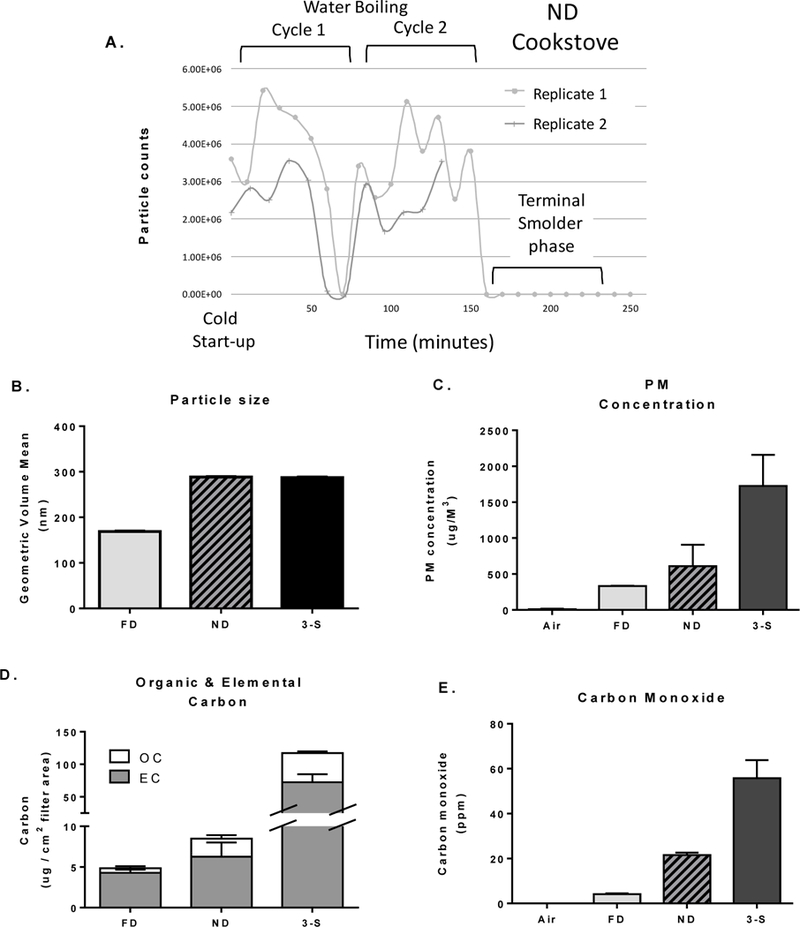
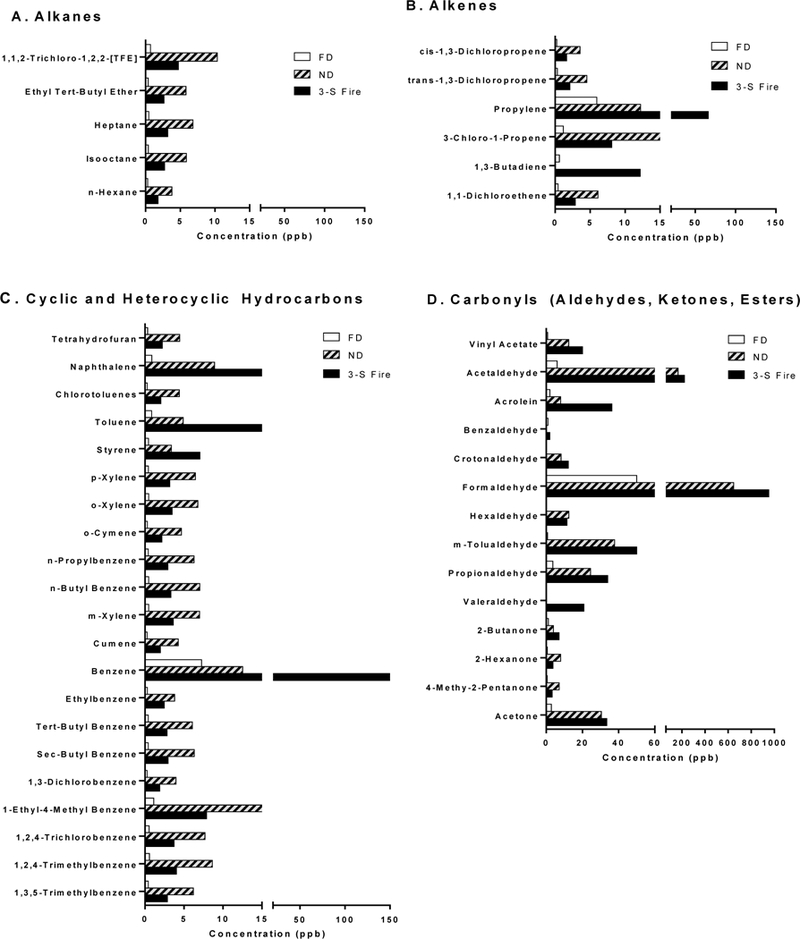
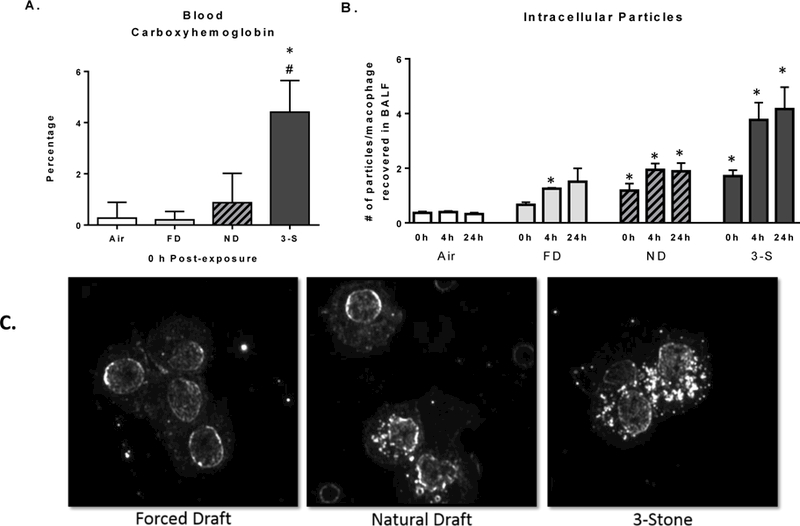
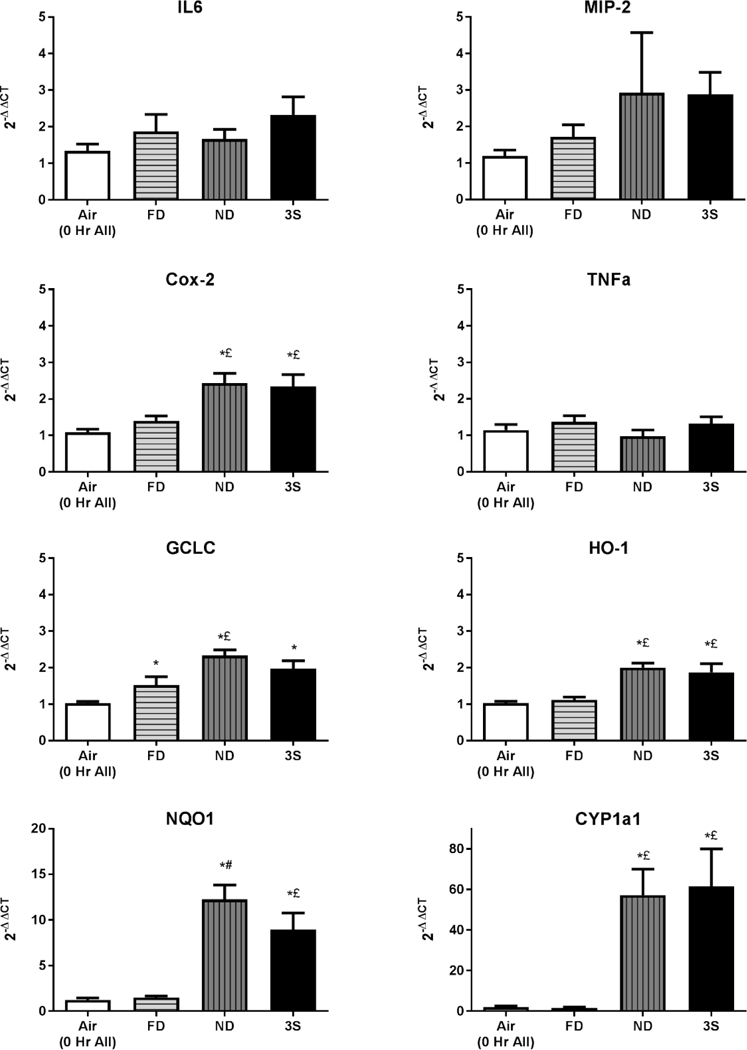
Results: Across two simulated cooking cycles (duration ~ 3h), emitted particulate mass concentrations were reduced 80% and 62% by FD and ND stoves, respectively, compared to the 3-S fire; with corresponding decreases in particles visible within murine alveolar macrophages. Emitted carbon monoxide was reduced ~ 90% and ~ 60%, respectively. Only 3-S-fire-exposed mice had increased carboxyhemoglobin levels. Emitted volatile organic compounds were FD ≪ 3-S-fire ≤ ND stove; increased expression of genes involved in xenobiotic metabolism (COX-2, NQO1, CYP1a1) was detected only in ND- and 3-S-fire-exposed mice. Diminished macrophage phagocytosis was observed in the ND group. Lung glutathione was significantly depleted across all CS groups, however the FD group had the most severe, ongoing oxidative stress.
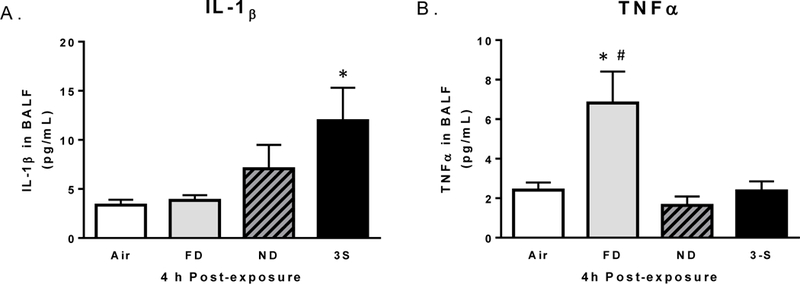
Conclusions: These results are consistent with reports associating exposure to solid fuel stove emissions with modulation of the innate immune system and increased susceptibility to infection. Lower respiratory infections continue to be a leading cause of death in low-income economies. Notably, 3-S-fire-exposed mice were the only group to develop acute lung injury, possibly because they inhaled the highest concentrations of hazardous air toxicants (e.g., 1,3-butadiene, toluene, benzene, acrolein) in association with the greatest number of particles, and particles with the highest % organic carbon. However, no Tier 0-3 ranked CS group was without some untoward health effect indicating that access to still cleaner, ideally renewable, energy technologies for cooking and heating is warranted.
Keywords: Cookstoves; Incomplete combustion; Lung injury; Oxidative stress; Phagocytosis.
Published by Elsevier Inc.
Conflict of interest statement
Competing financial interest declaration.
The authors report no conflicts of interest. This manuscript has been reviewed by the National Health and Environmental Effects Research Laboratory, U.S. Environmental Protection Agency, and approved for publication. Approval does not signify that contents necessarily reflect the views and policies of the Agency, nor does the mention of trade names of commercial products constitute endorsement for use.
Figures
References
-
- Anenberg SC, Balakrishnan K, Jetter J, Masera O, Mehta S, Moss J, Ramanathan V. 2013. Cleaner Cooking Solutions to Achieve Health, Climate, and Economic Cobenefits. Environ Sci Technol. 47:3944–3952. - PubMed
-
- Assad NA, Balmes J, Mehta S, Cheema U, Sood A. 2015. Chronic obstructive pulmonary disease secondary to household air pollution. Semin Respir Crit Care Med. 36(3):408–21. - PubMed
-
- Barrett EG, Henson RD, Seilkop SK, McDonald JD, Reed MD. 2006. Effects of Hardwood Smoke Exposure on Allergic Airway Inflammation in Mice. Inhalation Toxicology. 18:33–43. - PubMed
-
- Bates JT, Weber RJ, Abrams J, Verma V, Fang T, Klein M, Strickland MJ, Sarnat SE, Chang HH, Mulholland JA, Tolbert PE, Russell AG. 2015. Reactive Oxygen Species Generation Linked to Sources of Atmospheric Particulate Matter and Cardiorespiratory Effects. Environ Sci Technol. 49(22):13605–12. - PubMed
-
- Brown SK, Sim MR, Abramson MJ, Gray CN. 1994. Concentrations of Volatile Organic Compounds in Indoor Air – A Review. Indoor Air. 4:123–134.
MeSH terms
Substances
Grants and funding
LinkOut - more resources
Full Text Sources
Other Literature Sources
Medical
Research Materials
Miscellaneous
