


Kinetic modeling of Shewanella baltica KB30 growth on different substrates through respirometry
- PMID: 29100519
- PMCID: PMC5670636
- DOI: 10.1186/s12934-017-0805-7
Kinetic modeling of Shewanella baltica KB30 growth on different substrates through respirometry
Abstract
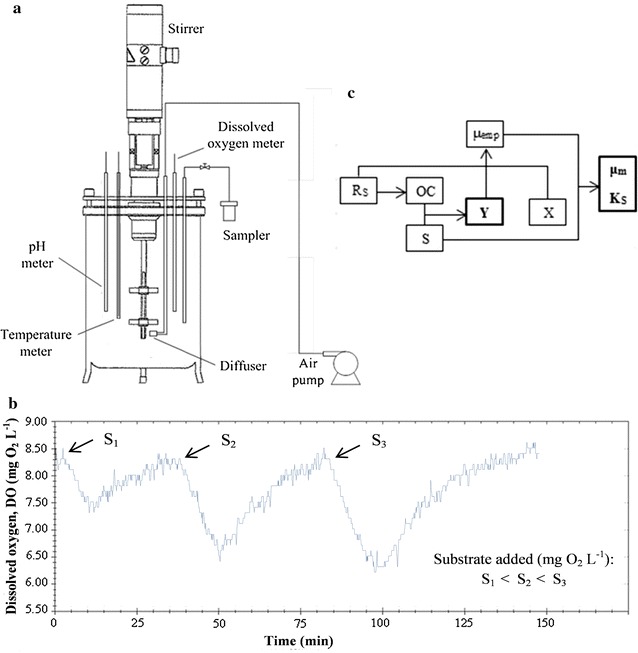
Background: Shewanella baltica KB30 was isolated from seawater collected in Kandalaksha Bay, White Sea (Russia). This strain is known for its ability to grow on a pool of different substrates, including carbohydrates, carboxylic and amino acids, and lipids. However, no data are available on its metabolic efficiency in relation to the use of different carbon sources typologies. This work represents the first attempt to characterize S. baltica by its heterotrophic kinetic performance.
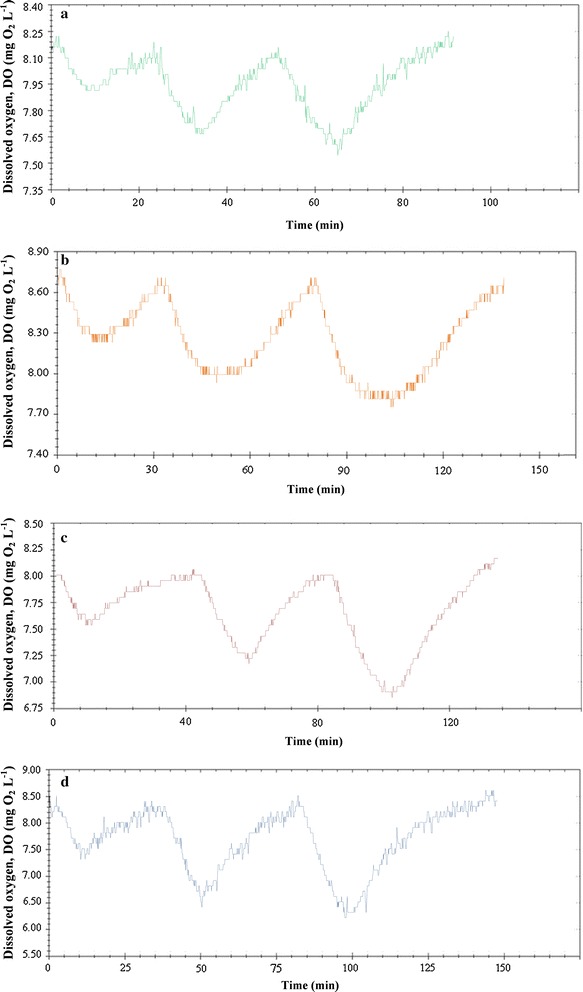
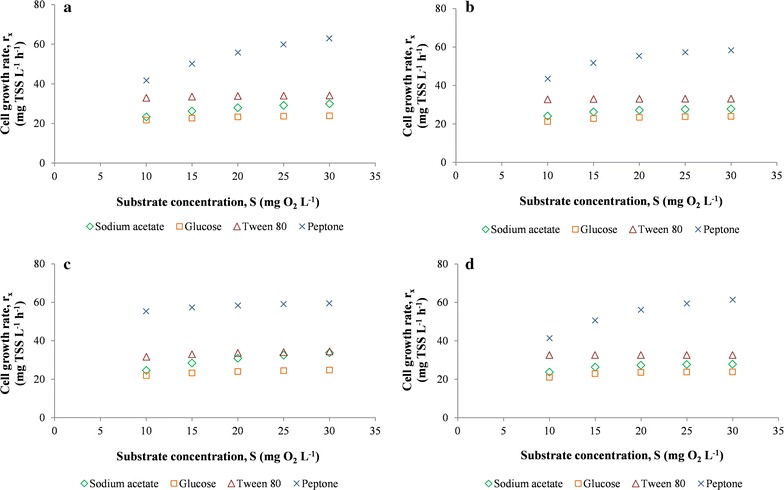
Results: Growth and substrate consumption, during the biodegradation of sodium acetate, glucose, tween 80 and peptone, were analyzed through a respirometric method. To find the model best fitting the experimental data and to obtain the kinetic parameters, the equations of Monod, Moser, Contois and Tessier were applied. The kinetic behavior of S. baltica was fitted to Monod model for sodium acetate and tween 80, while it was adjusted to Contois model for glucose and peptone. In this regard, peptone was consumed faster than the other substrates, as indicated by the highest values of substrate degradation rate, which exceeded 60 mg O2 L-1 h-1.
Conclusions: Proteolytic metabolism was favored than lipidic and glucidic metabolism, which could contribute much more to mineralization and recycling of proteins than lipids and carbohydrates.
Keywords: Carbon utilization; Kinetics; Modeling; Shewanella baltica.
Figures


References
-
- Shewan JM, Hobbs G, Hodgkiss W. A determinative scheme for the identification of certain genera of Gram-negative bacteria with special reference to Pseudomonodaceae. J Appl Bacteriol. 1960;23:379–390. doi: 10.1111/j.1365-2672.1960.tb00211.x. - DOI
-
- Macdonell MT, Colwell RR. Phylogeny of the Vibrionaceae and recommendation for two new genera Listonella and Shewanella. Syst Appl Microbiol. 1985;6:171–182. doi: 10.1016/S0723-2020(85)80051-5. - DOI
-
- Ivanova EP, Flavier S, Christen R. Phylogenetic relationships among marine Alteromonas-like proteobacteria: emended description of the family Alteromonadaceae and proposal of Pseudoalteromonadaceae fam. nov., Colwelliaceae fam. nov., Shewanellaceae fam. nov., Moritellaceae fam. nov., Ferrimonadaceae fam. nov., Idiomarinaceae fam. nov. and Psychromonadaceae fam. nov. Int J Syst Evol Microbiol. 2004;54(5):1773–1788. doi: 10.1099/ijs.0.02997-0. - DOI - PubMed
-
- Bowman JP, McCammon SA, Nichols DS, Skerratt JH, Rea SM, Nichols PD, McMeekin TA. Shewanella gelidimarina sp. nov. and Shewanella frigidimarina sp. nov., novel Antarctic species with the ability to produce eicosapentaenoic acid (20:5w3) and grow anaerobically by dissimilatory Fe(III) reduction. Int J Syst Bacteriol. 1997;47:1040–1047. doi: 10.1099/00207713-47-4-1040. - DOI - PubMed
MeSH terms
Substances
LinkOut - more resources
Full Text Sources
Other Literature Sources
