


The congenital long QT syndrome Type 3: An update
- PMID: 29101013
- PMCID: PMC5840852
- DOI: 10.1016/j.ipej.2017.10.011
The congenital long QT syndrome Type 3: An update
Abstract
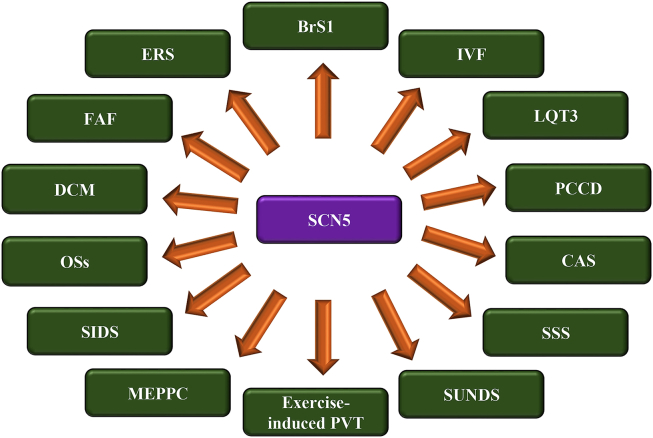
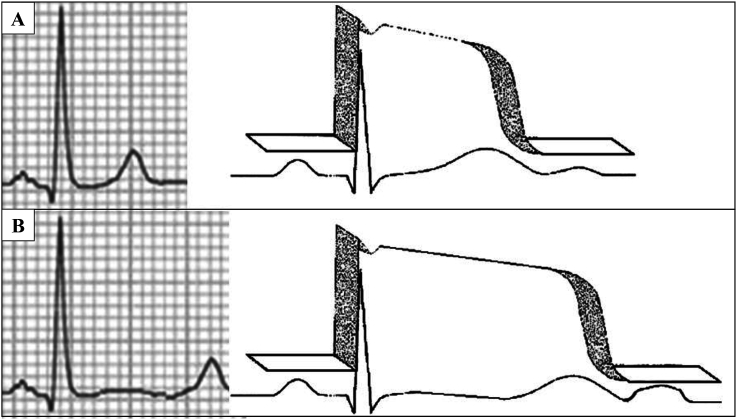
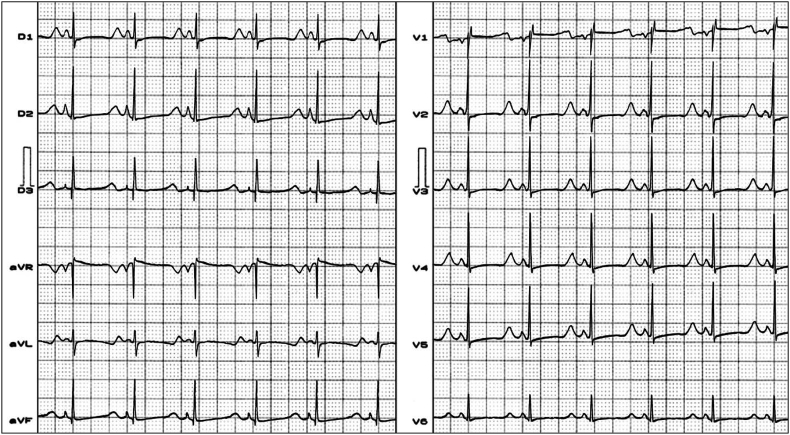
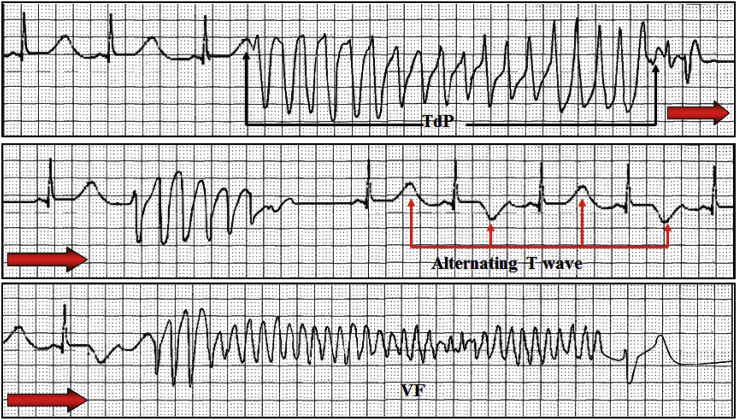
Congenital long QT syndrome type 3 (LQT3) is the third in frequency compared to the 15 forms known currently of congenital long QT syndrome (LQTS). Cardiac events are less frequent in LQT3 when compared with LQT1 and LQT2, but more likely to be lethal; the likelihood of dying during a cardiac event is 20% in families with an LQT3 mutation and 4% with either an LQT1 or an LQT2 mutation. LQT3 is consequence of mutation of gene SCN5A which codes for the Nav1.5 Na+ channel α-subunit and electrocardiographically characterized by a tendency to bradycardia related to age, prolonged QT/QTc interval (mean QTc value 478 ± 52 ms), accentuated QT dispersion consequence of prolonged ST segment, late onset of T wave and frequent prominent U wave because of longer repolarization of the M cell across left ventricular wall.
Keywords: Electrocardiogram; Long QT syndrome; Long QT syndrome-type-3; Torsade de Pointes.
Copyright © 2017 Indian Heart Rhythm Society. Production and hosting by Elsevier B.V. All rights reserved.
Figures
References
-
- Vincent G.M. The molecular genetics of the long QT syndrome: genes causing fainting and sudden death. Annu Rev Med. 1998;49:263–274. - PubMed
Publication types
LinkOut - more resources
Full Text Sources
Other Literature Sources
Miscellaneous
