Cancer Patients' Knowledge and Acceptance of Physical Activities for Rehabilitation
- PMID: 29102944
- PMCID: PMC5756650
- DOI: 10.21873/invivo.11188
Cancer Patients' Knowledge and Acceptance of Physical Activities for Rehabilitation
Abstract
Background/aim: Physical activities are an essential part of patients' rehabilitation in oncology. For cancer patients special sport groups for rehabilitation exist and are reimbursed by the statutory health system. The aim of our study was to evaluate patients' knowledge and acceptance of these offers and their actual sportive engagement.
Patients and methods: We used a standardized questionnaire which was distributed in medical oncology and ENT oncology practice.
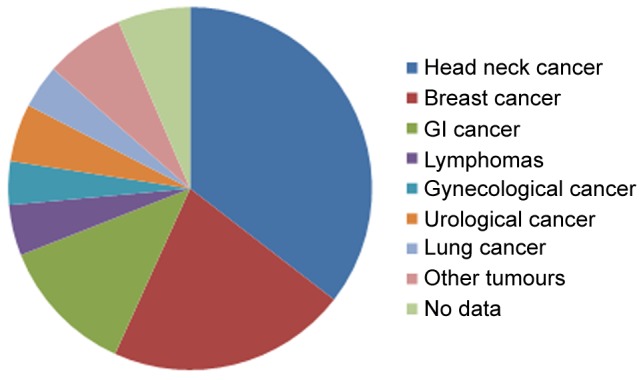
Results: From 200 questionnaires, we got 155 (76%) answers (83 females, 71 males, mean age was 64.8±12.0 years. A total of 80 patients had current cancer therapy. Sportive activity was decreasing from 71% before cancer, to 50% during therapy, to 40% after anticancer treatment. Only 24% of participants were informed about local offers for cancer patients. The 38% of our patients would like to become more active. Gender, former sportive experience, favourite disciplines, and the type of cancer are factors with a high impact on patient's affinity to physical exercise.
Conclusion: The presented screening tool offers first and fast information about the patient's affinity to sports and helps the oncologist to offer patients individualized training concepts.
Keywords: Sports; cancer; physical activity; screening.
Copyright© 2017, International Institute of Anticancer Research (Dr. George J. Delinasios), All rights reserved.
References
-
- Göllnitz I, J Inhestern, TG Wendt, J Buentzel, D Esser, D Boeger, AH Mueller, JU Piesold, Schultze-Mosgau S, Eigendorff E, Schlattmann P, Guntinas-Lichius O. Role of comorbidity on outcome of head and neck cancer: A population-based study in Thuringia, Germany. Cancer Med. 2016;5:3260–3271. - PMC - PubMed
-
- Leensen MCJ, Groeneveld IF, Rejda T, Groenenboom P, van Berkel S, Brandon T, de Boer AGEM, Frings-Dresen MHW. Feasibility of a multidisciplinary intervention to help cancer patients return to work. Eur J Cancer Care (Engl) 2017 doi: 10.1111/ecc.12690. [Epub ahead of print] - PubMed
-
- Hayes SC1, Rye S, Disipio T, Yates P, Bashford J, Pyke C, Saunders C, Battistutta D, Eakin E. Exercise for health: a randomized, controlled trial evaluating the impact of a pragmatic, translational exercise intervention on the quality of life, function and treatment-related side-effects following breast cancer. Breast Cancer Res Treat. 2013;137:175–186. - PubMed
-
- Markes M, Brockow T, Resch KL. Exercise for women receiving adjuvant therapy for breast cancer. Cochrane Database of Systematic Reviews. 2006;4:1–39. - PubMed
MeSH terms
LinkOut - more resources
Full Text Sources
Other Literature Sources
Medical
Research Materials
Miscellaneous