


Reading m6A in the Transcriptome: m6A-Binding Proteins
- PMID: 29103884
- PMCID: PMC5794650
- DOI: 10.1016/j.tcb.2017.10.001
Reading m6A in the Transcriptome: m6A-Binding Proteins
Abstract
N6-Methyladenosine (m6A) is the most prevalent post-transcriptional modification of eukaryotic mRNA and long noncoding RNA. m6A mediates its effects primarily by recruiting proteins, including the multiprotein eukaryotic initiation factor 3 complex and a set of proteins that contain the YTH domain. Here we describe the mechanisms by which YTH domain-containing proteins bind m6A and influence the fate of m6A-containing RNA in mammalian cells. We discuss the diverse, and occasionally contradictory, functions ascribed to these proteins and the emerging concepts that are influencing our understanding of these proteins and their effects on the epitranscriptome.
Keywords: N(6)-methyl adenosine; RNA metabolism; YTH proteins; m(6)A modification; splicing; translational regulation.
Copyright © 2017 Elsevier Ltd. All rights reserved.
Figures
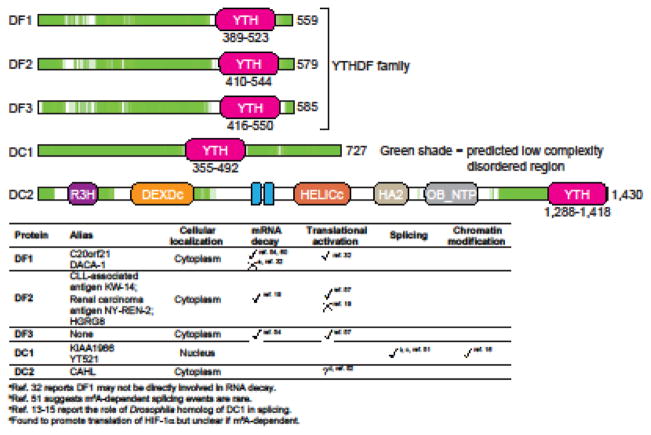
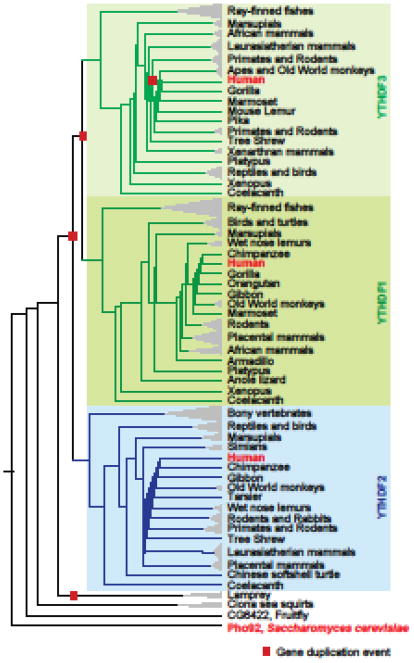
 ) and YTHDF1, YTHDF2, and YTHDF3 gene clades are also indicated.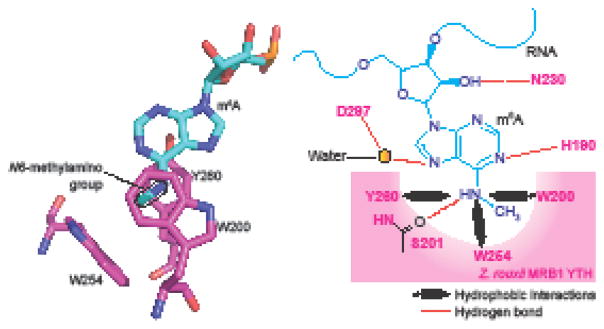
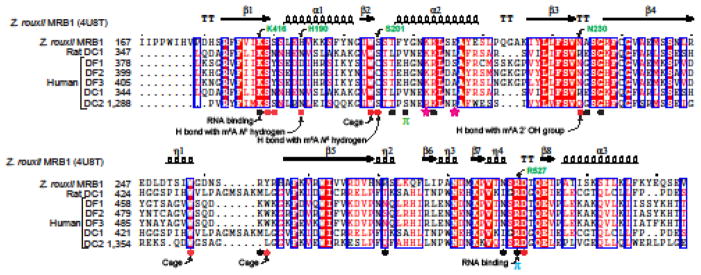
 ) Residues making contact with bases other than m6A in Z. rouxii MRB1; (●) Residues making contact with the m6A base in Z. rouxii MRB1; (π) π-stacking Y205 in Z. rouxii MRB1 with G upstream of the m6A nucleotide; not conserved in human DC2; (π) π-stacking R296 in Z. rouxii MRB1 with the C on the 3′ side of the m6A nucleotide; (
 ) R1318 and R1322 in human DC2 form an increased positive surface charge than in human DC1. Amino acids involved in cage formation, RNA binding, hydrogen bond (H bond) formation are also indicated.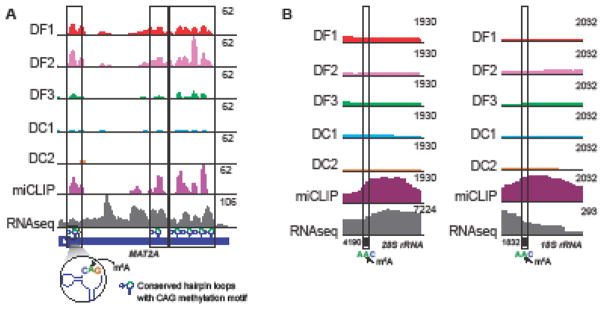
References
-
- Perry RP, Kelley DE. Existence of methylated messenger RNA in mouse L cells. Cell. 1974;1(1):37–42.
Publication types
MeSH terms
Substances
Grants and funding
LinkOut - more resources
Full Text Sources
Other Literature Sources
