


A unifying motor control framework for task-specific dystonia
- PMID: 29104291
- PMCID: PMC5975945
- DOI: 10.1038/nrneurol.2017.146
A unifying motor control framework for task-specific dystonia
Abstract
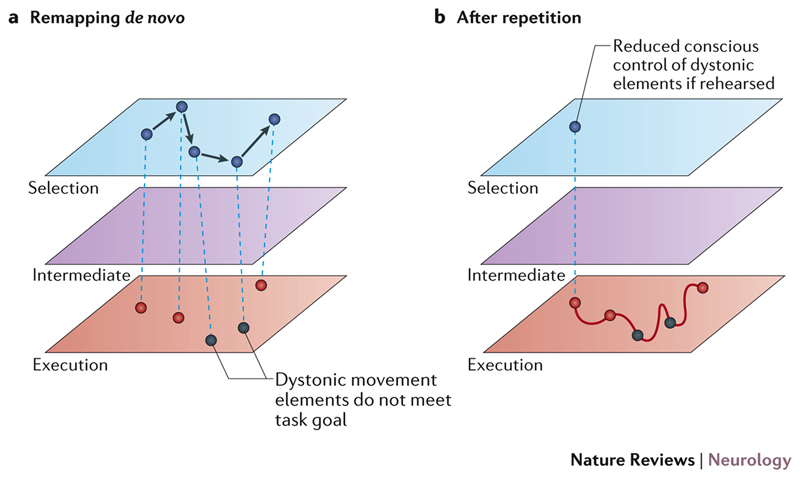
Task-specific dystonia is a movement disorder characterized by a painless loss of dexterity specific to a particular motor skill. This disorder is prevalent among writers, musicians, dancers and athletes. No current treatment is predictably effective, and the disorder generally ends the careers of affected individuals. Traditional disease models of dystonia have a number of limitations with regard to task-specific dystonia. We therefore discuss emerging evidence that the disorder has its origins within normal compensatory mechanisms of a healthy motor system in which the representation and reproduction of motor skill are disrupted. We describe how risk factors for task-specific dystonia can be stratified and translated into mechanisms of dysfunctional motor control. The proposed model aims to define new directions for experimental research and stimulate therapeutic advances for this highly disabling disorder.
Conflict of interest statement
A.S. and K.K. declare that they have no competing interests. J.C.R. declares that he has received speaker travel costs from the Movement Disorders Society. M.J.E. declares that he receives royalties from publication of the Oxford Specialist Handbook Of Parkinson's Disease and Other Movement Disorders (Oxford University Press, 2008) and that he has received honoraria for speaking from UCB pharmaceuticals.
Figures
References
-
- Hofmann A, Grossbach M, Baur V, Hermsdorfer J, Altenmuller E. Musician's dystonia is highly task specific: no strong evidence for everyday fine motor deficits in patients. Med Probl Perform Art. 2015;30:38–46. - PubMed
-
- Altenmuller E, Jabusch HC. Focal hand dystonia in musicians: phenomenology, etiology, and psychological trigger factors. J Hand Ther. 2009;22:144–154. quiz 155. - PubMed
-
- Garcia-Ruiz PJ. Task-specific dystonias: historical review--a new look at the classics. J Neurol. 2013;260:750–753. - PubMed
Publication types
MeSH terms
Supplementary concepts
Grants and funding
LinkOut - more resources
Full Text Sources
Other Literature Sources
