


Three-Year Follow-Up of Participants from a Self-Weighing Randomized Controlled Trial
- PMID: 29104805
- PMCID: PMC5625756
- DOI: 10.1155/2017/4956326
Three-Year Follow-Up of Participants from a Self-Weighing Randomized Controlled Trial
Abstract
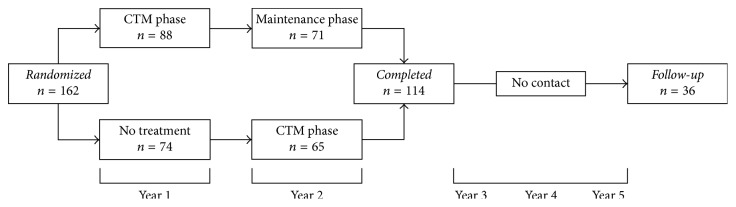
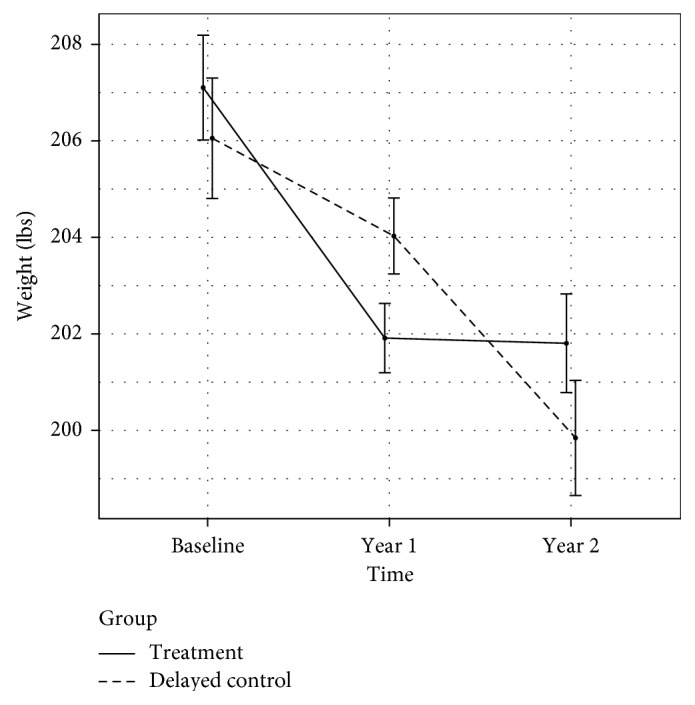
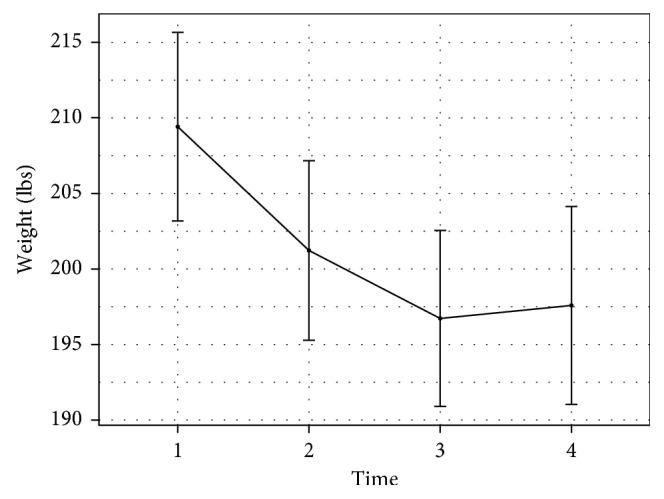
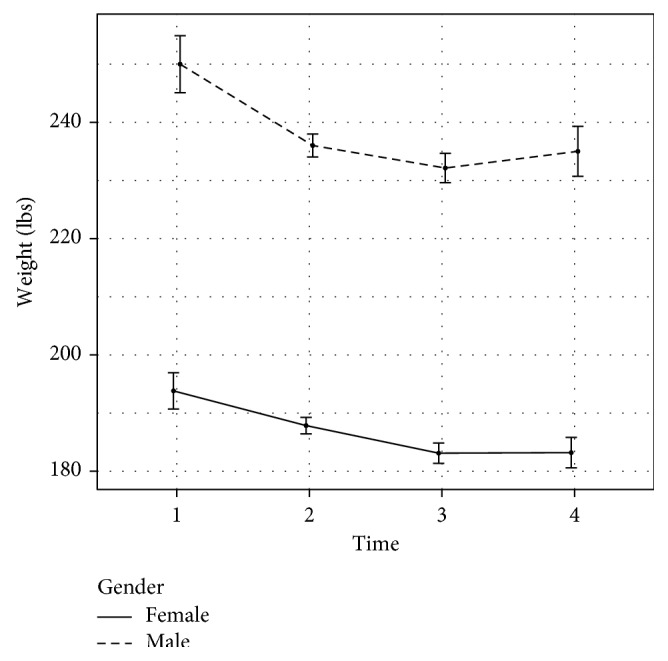
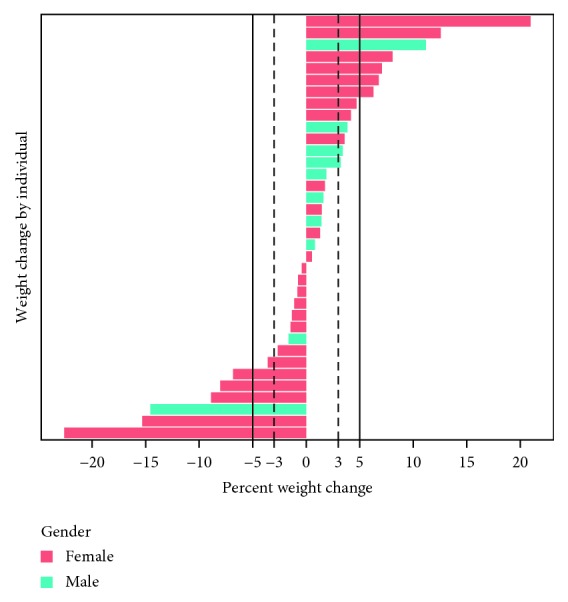
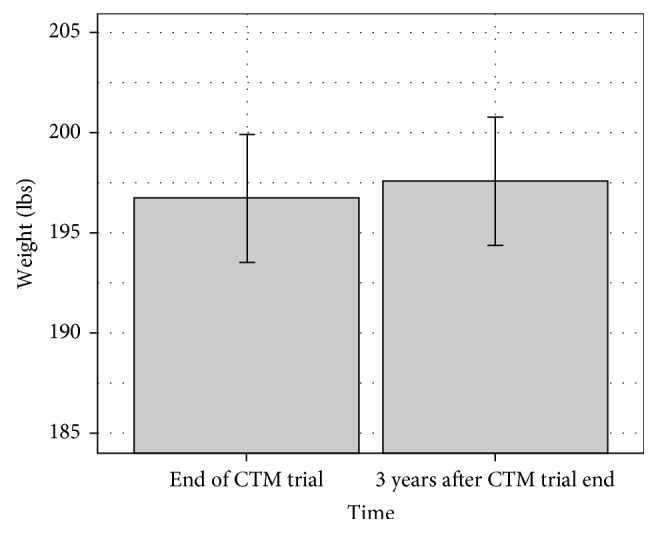
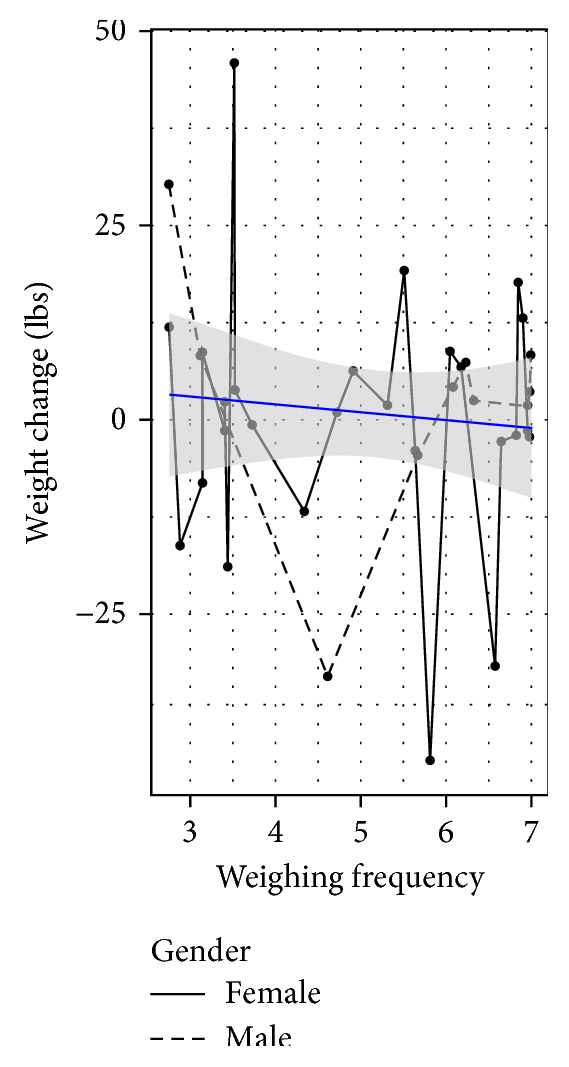
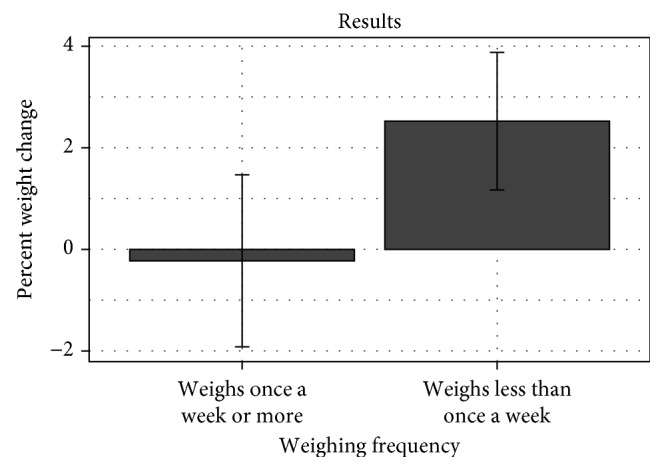
Frequent self-weighing is associated with weight loss maintenance. Several years ago, we investigated frequent self-weighing's effect on weight loss and found the participants lost a significant amount of weight. Three years after this trial's end, participants were contacted for an update on their weight and self-weighing frequency. Weight change and self-weighing frequency since the end of the study were assessed. We hypothesized that participants who maintained frequent self-weighing behavior would have maintained their weight loss. Out of 98 participants enrolled in the RCT, 37% (n = 36) participated in this follow-up study. Total weight loss during the trial for the follow-up participants was 12.7 ± 19.4 lbs (p < 0.001). Three years after intervention, participants regained 0.9 ± 4.34 lbs, a value that was not statistically different from zero (p = 0.75). This did not differ by gender (p = 0.655). Over 75% of these participants continued to weigh themselves at least once a week. Frequent self-weighing may be an effective, low-cost strategy for weight loss maintenance. Future research should further investigate the role of self-weighing in long-term weight gain prevention.
Figures
References
-
- Brownell K. D., Jeffery R. W. Improving long-term weight loss: pushing the limits of treatment. Behavior Therapy. 1987;18(4):353–374. doi: 10.1016/S0005-7894(87)80004-7. - DOI
Publication types
MeSH terms
Grants and funding
LinkOut - more resources
Full Text Sources
Other Literature Sources
Medical
