


Association between obesity and trastuzumab-related cardiac toxicity in elderly patients with breast cancer
- PMID: 29108307
- PMCID: PMC5668040
- DOI: 10.18632/oncotarget.17808
Association between obesity and trastuzumab-related cardiac toxicity in elderly patients with breast cancer
Abstract
Purpose: Trastuzumab can improve the prognosis for patients with breast cancer, but its related cardiac toxicity is concerning. This study aimed to identify the risk factors associated with trastuzumab-related cardiac toxicity in elderly patients with HER2-positive breast cancer.
Patients and methods: A total of 133 elderly (≥ 65 years) patients who were diagnosed with breast cancer between June 1, 2007, and January 31, 2016, and received trastuzumab treatment were retrospectively reviewed. Cardiac events were defined as: (1) LVEF reduction of >10% from baseline echocardiography, (2) reduction of LVEF to <50%, and (3) signs and symptoms of heart failure as defined by the Common Terminology Criteria for Adverse Events (CTCAE) accompanied by a decrease in the LVEF. Univariate and multivariate regression analyses were used to determine the contribution of different clinical variables to trastuzumab-related cardiac events.
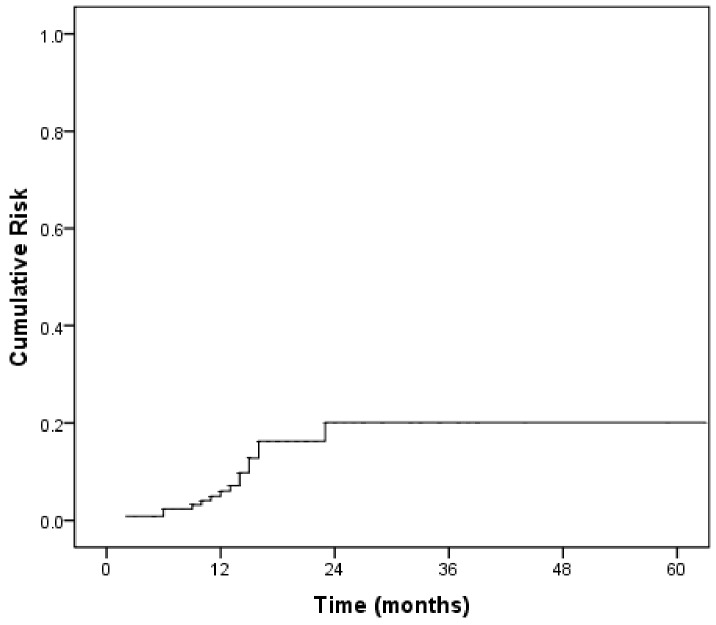
Results: The median age of the cohort was 71.0 years (range, 65-81 years). The median follow-up period for measurement of left ventricular ejection fraction was 11.0 months (range, 2-71 months). Fifteen patients (11.2%) experienced cardiac events during the follow-up. Multivariate regression analysis revealed that obesity (odd ratio[OR], 4.706; 95% CI, 1.984-10.147; P = 0.002) was a statistically significant risk factor associated with cardiac events.
Conclusion: Obesity is an independent risk factor for trastuzumab-related cardiac toxicity in elderly patients with breast cancer, receiving trastuzumab. Further studies are needed to establish the independent predictive value of obesity on cardiotoxicity in these patients.
Keywords: breast cancer; cardiac toxicity; elderly patients; obesity; trastuzumab.
Conflict of interest statement
CONFLICTS OF INTEREST All authors contributed to the research, writing and preparation of this manuscript. None of the authors has a potential conflict of interest or financial relationship to disclose.
Figures

References
-
- Siegel RL, Miller KD, Jemal A. Cancer Statistics, 2015. CA Cancer J Clin. 2015;65:5–29. - PubMed
-
- Wildiers H, Kunkler I, Biganzoli L, Fracheboud J, Vlastos G, Bernard-Marty C, Hurria A, Extermann M, Girre V, Brain E, Audisio RA, Bartelink H, Barton M, et al. Management of breast cancer in elderly individuals: recommendations of the international society of geriatric oncology. Lancet Oncol. 2007;8:1101–15. - PubMed
-
- Ebner F, van Ewijk R, Wöckel A, Hancke K, Schwentner L, Fink V, Kreienberg R, Janni W, Blettner M. Tumor biology in older breast cancer patients—what is the impact on survival stratified for guideline adherence? A retrospective multi-centre cohort study of 5378 patients. Breast. 2015;24:256–262. - PubMed
-
- Carey LA, Perou CM, Livasy CA, Dressler LG, Cowan D, Conway K, Karaca G, Troester MA, Tse CK, Edmiston S, Deming SL, Geradts J, Cheang MC, et al. Race, breast cancer subtypes, and survival in the Carolina Breast Cancer Study. JAMA. 2006;295:2492–2502. - PubMed
LinkOut - more resources
Full Text Sources
Other Literature Sources
Research Materials
Miscellaneous
