


Effectiveness of a theory-based multicomponent intervention (Movement Coaching) on the promotion of total and domain-specific physical activity: a randomised controlled trial in low back pain patients
- PMID: 29110703
- PMCID: PMC5674836
- DOI: 10.1186/s12891-017-1788-6
Effectiveness of a theory-based multicomponent intervention (Movement Coaching) on the promotion of total and domain-specific physical activity: a randomised controlled trial in low back pain patients
Abstract
Background: The promotion of physical activity is a major field in rehabilitation and health promotion but evidence is lacking on what method or strategy works best. Ensuing from this research gap, the present study compared the effectiveness of a comprehensive theory based multicomponent intervention (Movement Coaching) to a low intensity intervention in low back pain patients.
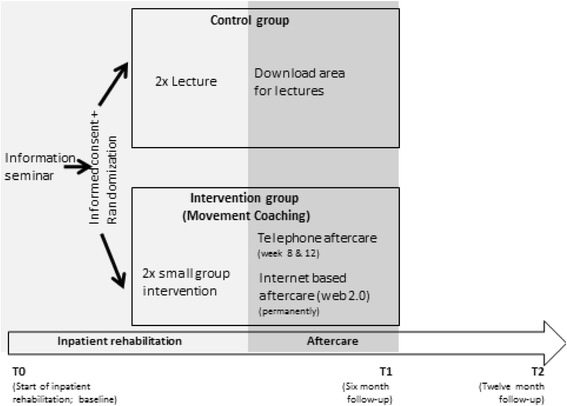
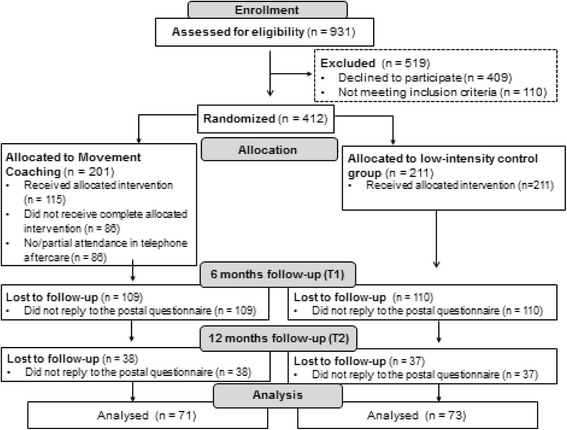
Methods: A monocenter randomized controlled trial with three measuring points (T0 = baseline, T1 = six month follow-up, T2 = twelve month follow-up) was conducted. N = 412 chronic low back pain patients participated. The Movement Coaching group (n = 201) received a comprehensive multicomponent intervention with small-group intervention, phone- and web 2.0-intervention. The low intensity control (n = 211) received two oral presentations that were available for download afterwards. Main outcome was total physical activity measured by Global Physical Activity Questionnaire at 12 month follow-up. Additionally, workplace, leisure time and transportation activities were compared. A split-plot anova was conducted for evaluating repeated measure effects and between group effects.
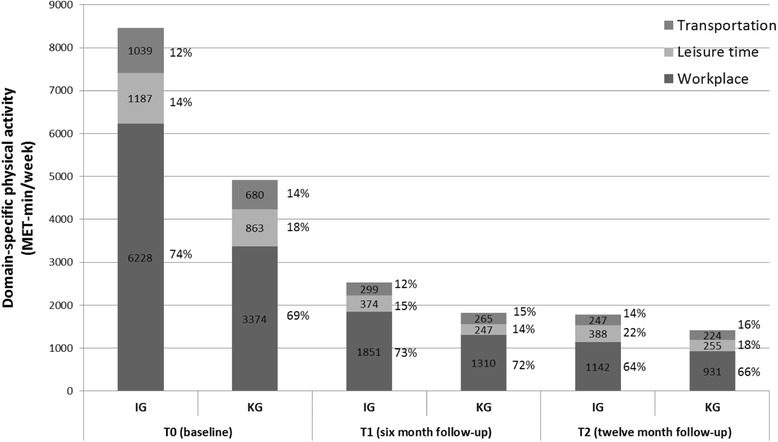
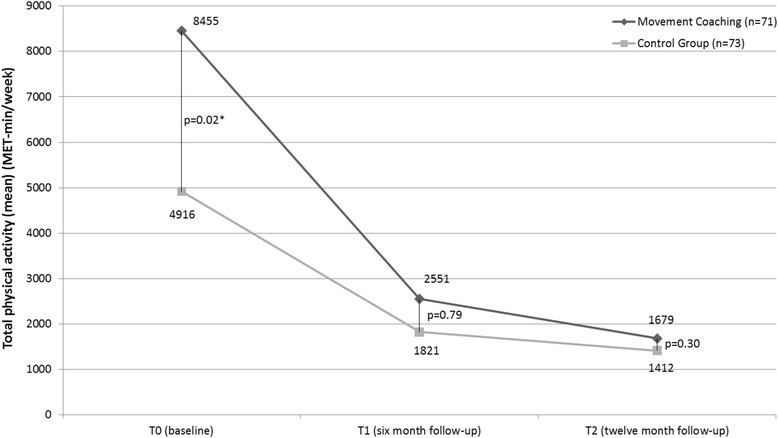
Results: At six and twelve month follow-up there were no statistically significant between group differences in total (T1: p = 0.79; T2: p = 0.30) as well as domain-specific physical activity (workplace (T1: p = 0.16; T2: p = 0.65), leisure time (T1: p = 0.54; T2: p = 0.89), transportation (T1: p = 0.29; T2: p = 0.77) between Movement Coaching and the control group. In both groups, workplace physical activity showed the highest proportion of total physical activity. From baseline to twelve month follow-up the results showed a decline in total physical activity (Movement Coaching: p = 0.04; control group: p = 0.50).
Conclusions: The comprehensive Movement Coaching intervention was not found to be more effective than a low intensity intervention in promoting total and domain-specific physical activity in chronic low back pain patients.
Trial registration: This study is registered at German Clinical Trials Register (DRKS)-ID: DRKS00004878 .
Keywords: Inpatient rehabilitation; Low back pain; Physical activity promotion; Randomized controlled trial.
Conflict of interest statement
Ethics approval and consent to participate
The study was conducted in compliance with the Helsinki Declaration and was approved by the Ethics Committee of the German Sport University Cologne (reference number: 56/12). Written informed consent to participate in this study in the study was provided by all participants.
Consent for publication
Not applicable.
Competing interests
All authors declare that they have no competing interests.
Publisher’s Note
Springer Nature remains neutral with regard to jurisdictional claims in published maps and institutional affiliations.
Figures
References
-
- Centers for Disease Control and Prevention. Physical activity and health: a report of the surgeon general. Atlanta: US Department of Health and Human Services, Centers for Disease Control and Prevention, National Center for chronic disease prevention and. Health Promotion. 1996;
-
- World Health Organization (WHO). Global Status Report on Noncommunicable Diseases 2010. Geneva: World Health Organization; 2011.
Publication types
MeSH terms
LinkOut - more resources
Full Text Sources
Other Literature Sources
Medical
Miscellaneous
