


Referral determinants in Swiss primary care with a special focus on managed care
- PMID: 29112975
- PMCID: PMC5675398
- DOI: 10.1371/journal.pone.0186307
Referral determinants in Swiss primary care with a special focus on managed care
Abstract
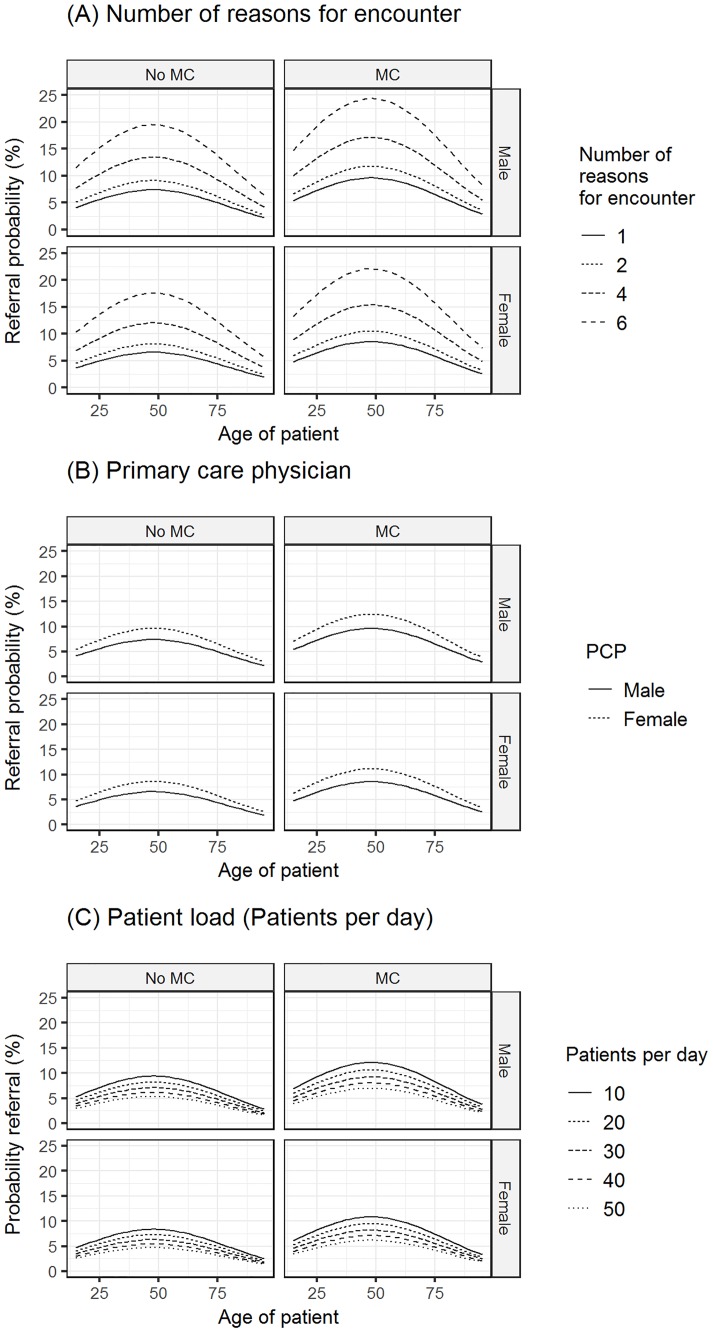
Studies have shown large variation of referral probabilities in different countries, and many influencing factors have been described. This variation is most likely explained by different healthcare systems, particularly to which extent primary care physicians (PCPs) act as gatekeepers. In Switzerland no mandatory gatekeeping system exists, however insurance companies offer voluntary managed care plans with reduced insurance premiums. We aimed at investigating the role of managed care plans as a potential referral determinant in a non-gatekeeping healthcare system. We conducted a cross-sectional study with 90 PCPs collecting data on consultations and referrals in 2012/2013. During each consultation up to six reasons for encounters (RFE) were documented. For each RFE PCPs indicated whether a referral was initiated. Determinants for referrals were analyzed by hierarchical logistic regression, taking the potential cluster effect of the PCP into account. To further investigate the independent association of the managed care plan with the referral probability, a hierarchical multivariate logistic regression model was applied, taking into account all available data potentially affecting the referring decision. PCPs collected data on 24'774 patients with 42'890 RFE, of which 2427 led to a referral. 37.5% of patients were insured in managed health care plans. Univariate analysis showed significant higher referral rates of patients with managed care plans (10.7% vs. 8.5%). The difference in referral probability remained significant after controlling for other confounders in the hierarchical multivariate regression model (OR 1.355). Patients in managed care plans were more likely to be referred than patients without such a model. These data contradict the argument that patients in managed care plans have limited healthcare access, but underline the central role of PCPs as coordinator of care.
Conflict of interest statement
Figures
References
-
- Starfield B, Shi L, Macinko J. Contribution of primary care to health systems and health. The Milbank quarterly. 2005;83(3):457–502. doi: 10.1111/j.1468-0009.2005.00409.x - DOI - PMC - PubMed
-
- Forrest CB, Nutting PA, von Schrader S, Rohde C, Starfield B. Primary care physician specialty referral decision making: patient, physician, and health care system determinants. Med Decis Making. 2006;26(1):76–85. doi: 10.1177/0272989X05284110 - DOI - PubMed
-
- Franks P, Williams GC, Zwanziger J, Mooney C, Sorbero M. Why do physicians vary so widely in their referral rates? J Gen Intern Med. 2000;15(3):163–8. doi: 10.1046/j.1525-1497.2000.04079.x - DOI - PMC - PubMed
-
- O'Donnell CA. Variation in GP referral rates: what can we learn from the literature? Fam Pract. 2000;17(6):462–71. - PubMed
MeSH terms
LinkOut - more resources
Full Text Sources
Other Literature Sources
Medical
