Beyond ALK and ROS1: RET, NTRK, EGFR and BRAF gene rearrangements in non-small cell lung cancer
- PMID: 29114471
- PMCID: PMC5653525
- DOI: 10.21037/tlcr.2017.08.02
Beyond ALK and ROS1: RET, NTRK, EGFR and BRAF gene rearrangements in non-small cell lung cancer
Abstract
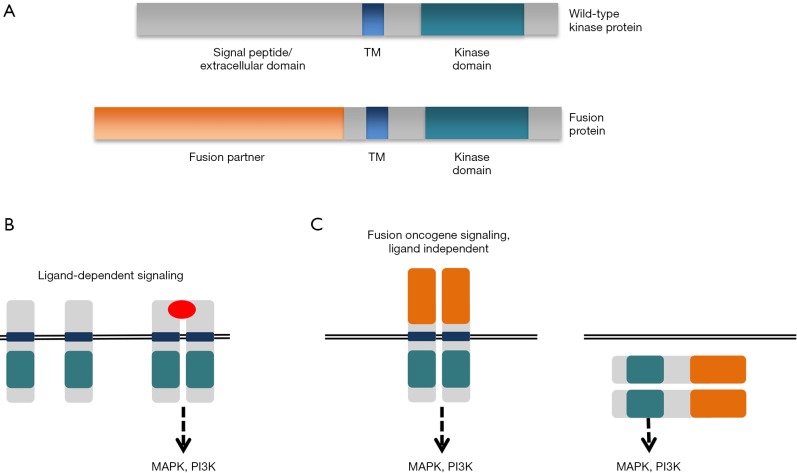
The discovery of gene rearrangements involving the receptor tyrosine kinase genes ALK and ROS1 has revolutionized management of the subset of non-small cell lung cancers characterized by these alterations. The oncogenic fusion proteins expressed in these tumors drive cancer cell growth and survival, and targeted inhibition of this signaling can lead to dramatic and durable responses in patients. While the best characterized gene fusions in non-small cell lung cancer (NSCLC) involve ALK and ROS1, fusions involving other kinases including RET, NTRK, EGFR and BRAF are now established as additional targetable drivers. Here we review data supporting the roles of these fusions as oncogenic drivers, and the potential for targeting these fusions for improved clinical outcomes. These discoveries should encourage multiplexed molecular profiling of lung cancers using next-generation platforms which identify these gene fusions in order to expand treatment options for patients.
Keywords: BRAF; EGFR; NTRK; RET; non-small cell lung cancer (NSCLC).
Conflict of interest statement
Conflicts of Interest: AF Farago serves as consulting or advisory role for Abbive, Pharmamar, Merrimack Pharmaceuticals, Takeda, Intervention Insights, and received honorarium from Foundation Medicine. CG Azzoli has no conflicts of interest to declare.
Figures
References
Publication types
LinkOut - more resources
Full Text Sources
Other Literature Sources
Research Materials
Miscellaneous