Comparative effectiveness of lumbar stabilization, dynamic strengthening, and Pilates on chronic low back pain: randomized clinical trial
- PMID: 29114516
- PMCID: PMC5667628
- DOI: 10.12965/jer.1734972.486
Comparative effectiveness of lumbar stabilization, dynamic strengthening, and Pilates on chronic low back pain: randomized clinical trial
Abstract
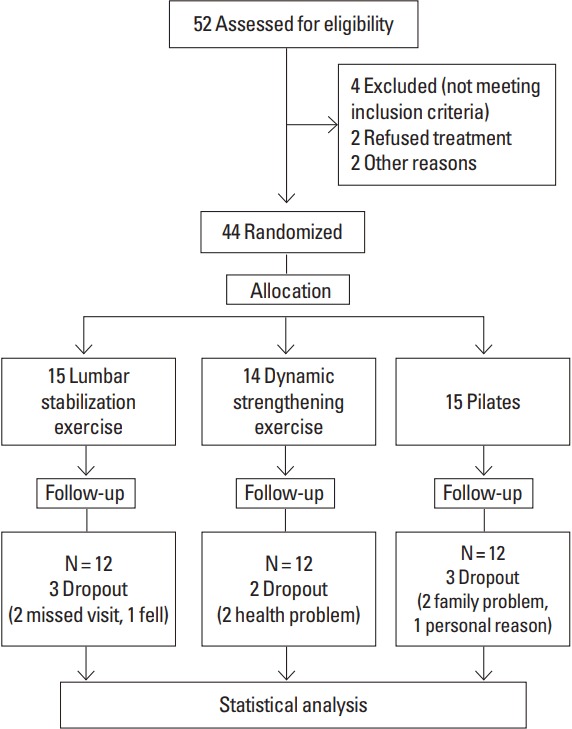
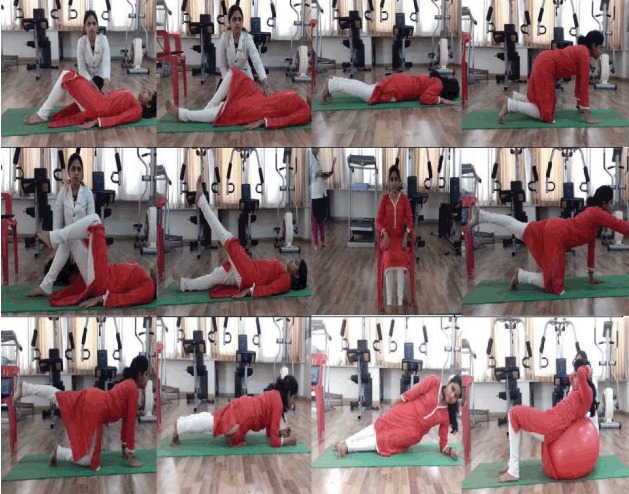
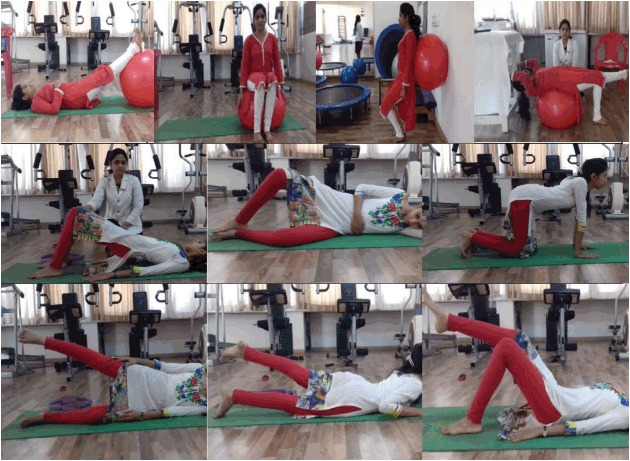
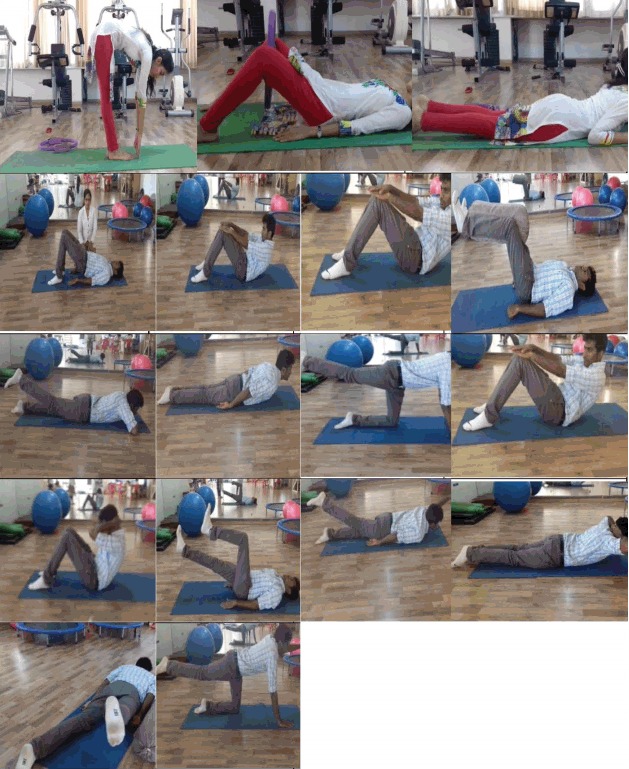
The aim of the present study was to compare three different forms of exercises namely lumbar stabilization, dynamic strengthening, and Pilates on chronic low back pain (LBP) in terms of pain, range of motion, core strength and function. In this study, 44 subjects suffering from non-specific LBP for more than 3 months were randomly allocated into the lumbar stabilization group, the dynamic strengthening group, and the Pilates group. Ten sessions of exercises for 3 weeks were prescribed along with interferential current and hot moist pack. Pain was assessed by visual analog scale, functional affection by modified Oswestry Disability Questionnaire, range of motion by assessing lumbar flexion and extension by modified Schober test and core strength was assessed by pressure biofeedback on day 1 and day 10 of the treatment. There was reduction of pain, improvement in range of motion, functional ability and core strength in all the 3 exercise groups. The improvement was significantly greater in the lumbar stabilization group for all the outcome measures, when compared the posttreatment after 10th session. Pairwise comparison showed that there was greater reduction of disability in the Pilates group than the dynamic strengthening group. It was concluded that the lumbar stabilization is more superior compared to the dynamic strengthening and Pilates in chronic nonspecific LBP. However, long-term benefits need to be assessed and compared with prospective follow-up studies.
Keywords: Chronic low back pain; Dynamic strengthening; Lumbar stabilization; Pilates.
Conflict of interest statement
CONFLICT OF INTEREST No potential conflict of interest relevant to this article was reported.
Figures
References
-
- Balagué F, Mannion AF, Pellisé F, Cedraschi C. Non-specific low back pain. Lancet. 2012;379:482–491. - PubMed
-
- Biering-Sørensen F. A prospective study of low back pain in a general population. I. Occurrence, recurrence and aetiology. Scand J Rehabil Med. 1983;15:71–79. - PubMed
-
- Bindra S, Sinha AK, Benjamin AI. Epidemiology of low back pain in Indian population: a review. Int J Appl Basic Med Res. 2015;5:166–179.
-
- Burton AK, Balagué F, Cardon G, Eriksen HR, Henrotin Y, Lahad A, Leclerc A, Müller G, van der Beek AJ COST B13 Working Group on Guidelines for Prevention in Low Back Pain. Chapter 2. European guidelines for prevention in low back pain: November 2004. Eur Spine J. 2006;15(Suppl 2):S136–168. - PMC - PubMed
-
- Carlsson AM. Assessment of chronic pain. I. Aspects of the reliability and validity of the visual analogue scale. Pain. 1983;16:87–101. - PubMed
LinkOut - more resources
Full Text Sources
Other Literature Sources
Medical
Miscellaneous