


The challenge of mapping the human connectome based on diffusion tractography
- PMID: 29116093
- PMCID: PMC5677006
- DOI: 10.1038/s41467-017-01285-x
The challenge of mapping the human connectome based on diffusion tractography
Erratum in
-
Author Correction: The challenge of mapping the human connectome based on diffusion tractography.Nat Commun. 2019 Nov 4;10(1):5059. doi: 10.1038/s41467-019-12867-2. Nat Commun. 2019. PMID: 31685826 Free PMC article.
Abstract
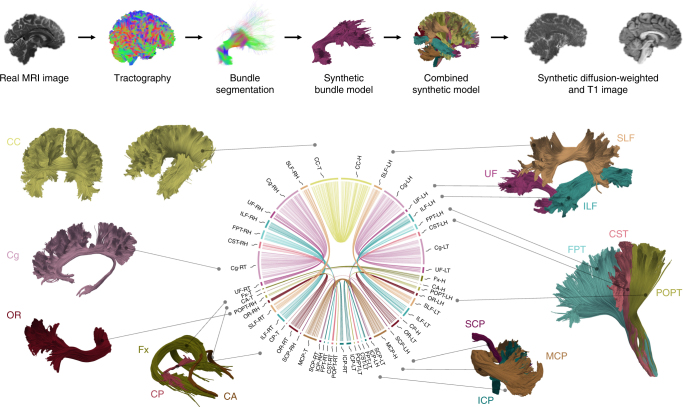
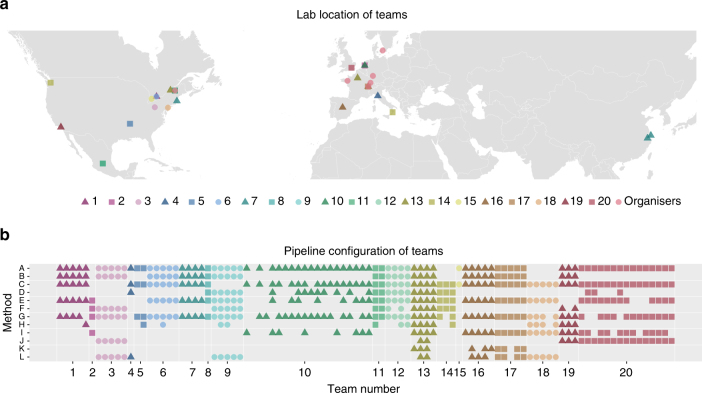
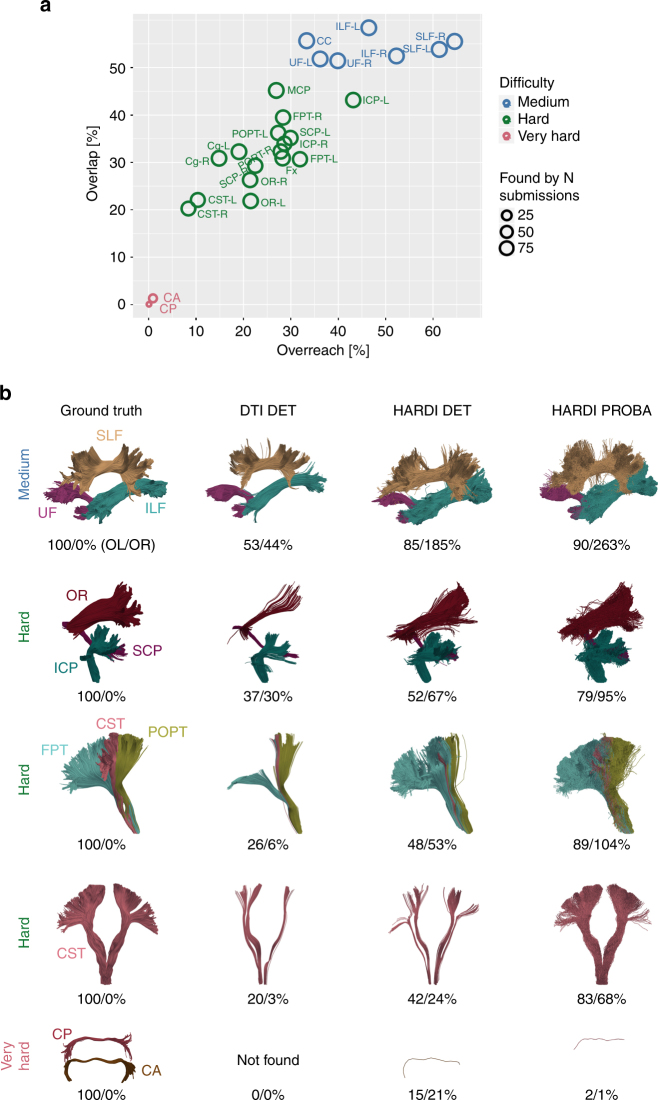
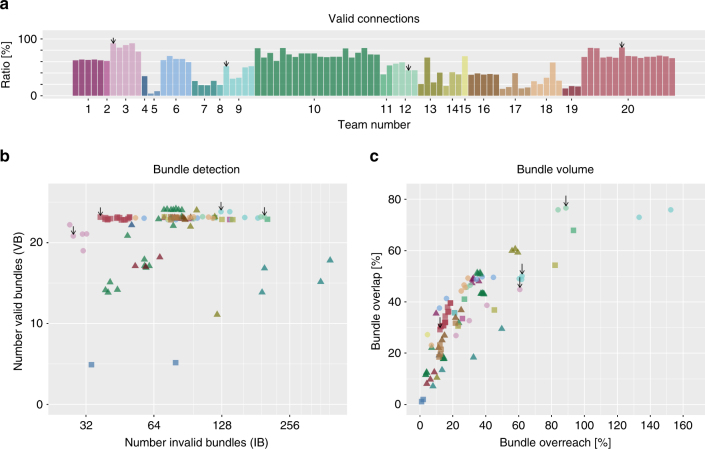
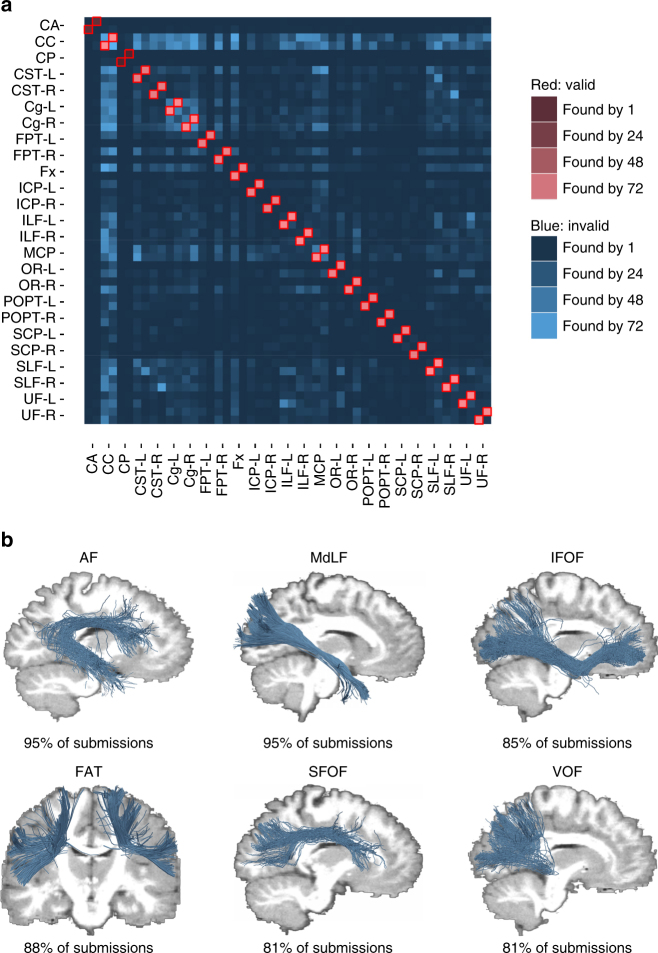
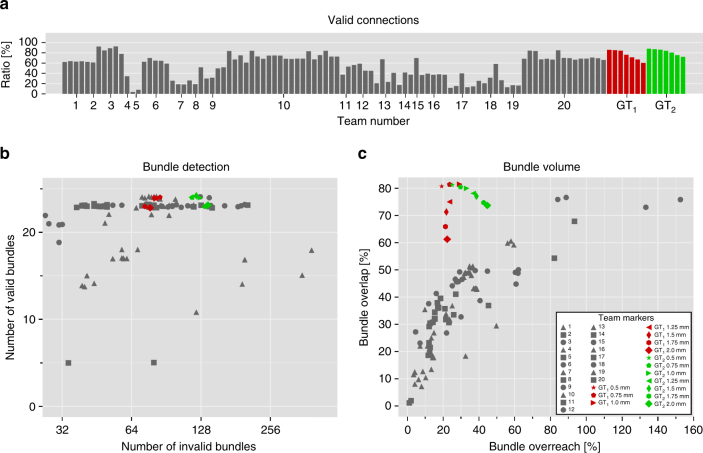
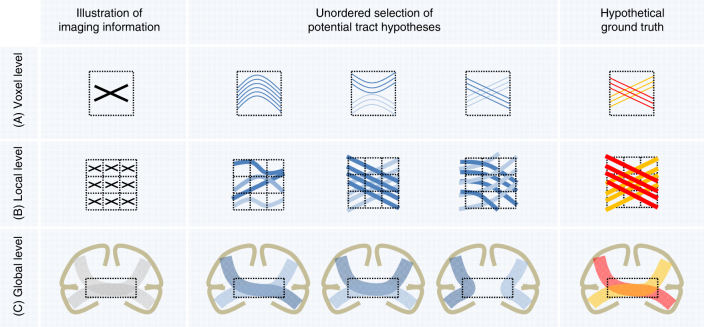
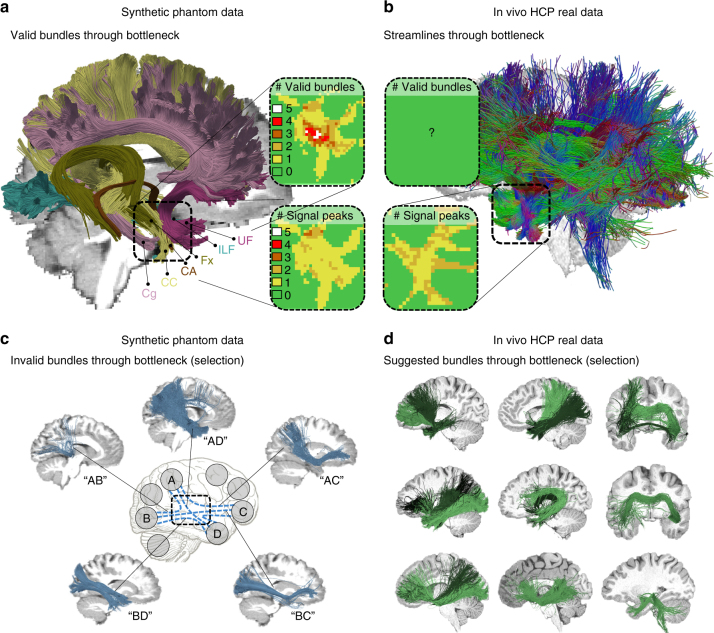
Tractography based on non-invasive diffusion imaging is central to the study of human brain connectivity. To date, the approach has not been systematically validated in ground truth studies. Based on a simulated human brain data set with ground truth tracts, we organized an open international tractography challenge, which resulted in 96 distinct submissions from 20 research groups. Here, we report the encouraging finding that most state-of-the-art algorithms produce tractograms containing 90% of the ground truth bundles (to at least some extent). However, the same tractograms contain many more invalid than valid bundles, and half of these invalid bundles occur systematically across research groups. Taken together, our results demonstrate and confirm fundamental ambiguities inherent in tract reconstruction based on orientation information alone, which need to be considered when interpreting tractography and connectivity results. Our approach provides a novel framework for estimating reliability of tractography and encourages innovation to address its current limitations.
Conflict of interest statement
The authors declare no competing financial interests.
Figures
References
-
- Jbabdi S, Sotiropoulos SN, Haber SN, Van Essen DC, Behrens TE. Measuring macroscopic brain connections in vivo. Nat. Neurosci. 2015;18:1546–1555. - PubMed
-
- Bullmore E, Sporns O. Complex brain networks: graph theoretical analysis of structural and functional systems. Nat. Rev. Neurosci. 2009;10:186–198. - PubMed
-
- Deco G, Kringelbach ML. Great expectations: using whole-brain computational connectomics for understanding neuropsychiatric disorders. Neuron. 2014;84:892–905. - PubMed
Publication types
MeSH terms
Grants and funding
LinkOut - more resources
Full Text Sources
Other Literature Sources
