


The genomic landscape of malignant peripheral nerve sheath tumors: diverse drivers of Ras pathway activation
- PMID: 29118384
- PMCID: PMC5678116
- DOI: 10.1038/s41598-017-15183-1
The genomic landscape of malignant peripheral nerve sheath tumors: diverse drivers of Ras pathway activation
Abstract
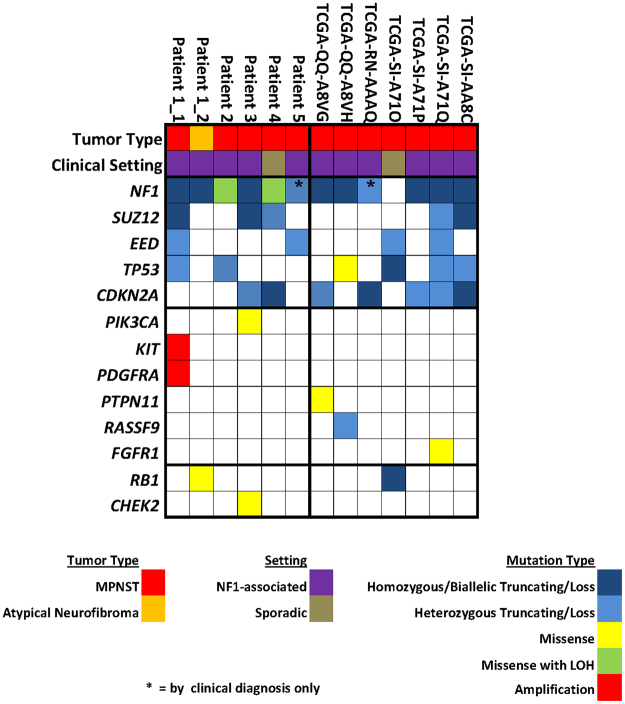
Malignant peripheral nerve sheath tumor (MPNST) is an aggressive soft tissue sarcoma. To more fully characterize the genomic landscape of this tumor type, we performed next generation sequencing studies for mutational and copy number analysis. We analyzed whole exome sequencing data from 12 MPNST and SNP arrays for a subset of these. We additionally conducted a literature review of prior next generation sequencing studies in this disease and compared to the current study. We report recurrent mutations in NF1, SUZ12, EED, TP53 and CDKN2A in our study cohort. Combined with prior studies, we calculate the disease specific incidence of mutation in these genes to be: NF1 (56/64 = 87.5%). SUZ12 (69/123 = 56.1%), EED (40/123 = 32.5%), TP53 (29/72 = 40.3%), and CDKN2A (54/72 = 75.0%). Notably, we also identified frequent Ras pathway activating somatic mutations outside of these previously reported recurrently mutated genes. Five of the 12 MPNST in our cohort (42%) contained such a mutation. In conclusion, our study adds to the growing understanding of the genomic complexity of MPNST. We report a previously underappreciated frequency and variety of secondary or tertiary Ras pathway activating mutations, though not highly recurrent in a single gene.
Conflict of interest statement
The authors declare that they have no competing interests.
Figures
References
-
- De Raedt T, et al. PRC2 loss amplifies Ras-driven transcription and confers sensitivity to BRD4-based therapies. Nature. 2014;514:247–251. - PubMed
Publication types
MeSH terms
Substances
Grants and funding
LinkOut - more resources
Full Text Sources
Other Literature Sources
Medical
Research Materials
Miscellaneous
