


Epileptic MEG Spike Detection Using Statistical Features and Genetic Programming with KNN
- PMID: 29118962
- PMCID: PMC5651155
- DOI: 10.1155/2017/3035606
Epileptic MEG Spike Detection Using Statistical Features and Genetic Programming with KNN
Abstract
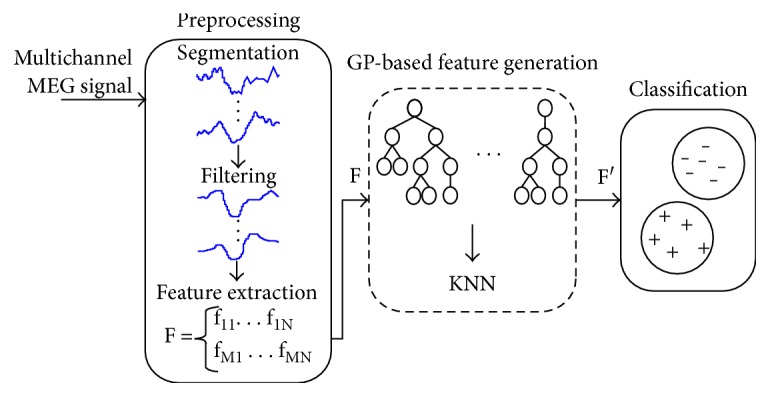
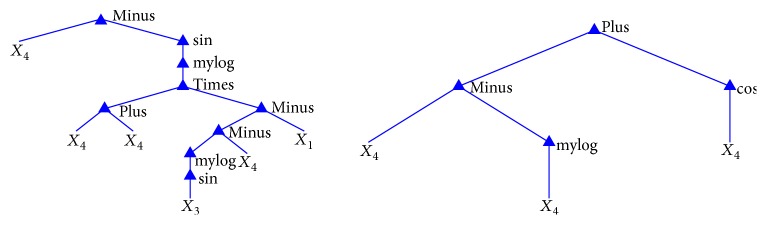
Epilepsy is a neurological disorder that affects millions of people worldwide. Monitoring the brain activities and identifying the seizure source which starts with spike detection are important steps for epilepsy treatment. Magnetoencephalography (MEG) is an emerging epileptic diagnostic tool with high-density sensors; this makes manual analysis a challenging task due to the vast amount of MEG data. This paper explores the use of eight statistical features and genetic programing (GP) with the K-nearest neighbor (KNN) for interictal spike detection. The proposed method is comprised of three stages: preprocessing, genetic programming-based feature generation, and classification. The effectiveness of the proposed approach has been evaluated using real MEG data obtained from 28 epileptic patients. It has achieved a 91.75% average sensitivity and 92.99% average specificity.
Figures
References
-
- Varsavsky A., Mareels I., Cook M. Epileptic Seizures and the EEG: Measurement, Models, Detection, and Prediction. Boca Raton, Fl, USA: CRC Press; 2010.
-
- World Health Organization. Fact sheet on epilepsy. October 2012, http://www.who.int/mediacentre/factsheets/fs999/en/index.html.
Publication types
MeSH terms
LinkOut - more resources
Full Text Sources
Other Literature Sources
Medical
