


Enzalutamide as an androgen receptor inhibitor prevents urothelial tumorigenesis
- PMID: 29119053
- PMCID: PMC5665851
Enzalutamide as an androgen receptor inhibitor prevents urothelial tumorigenesis
Abstract
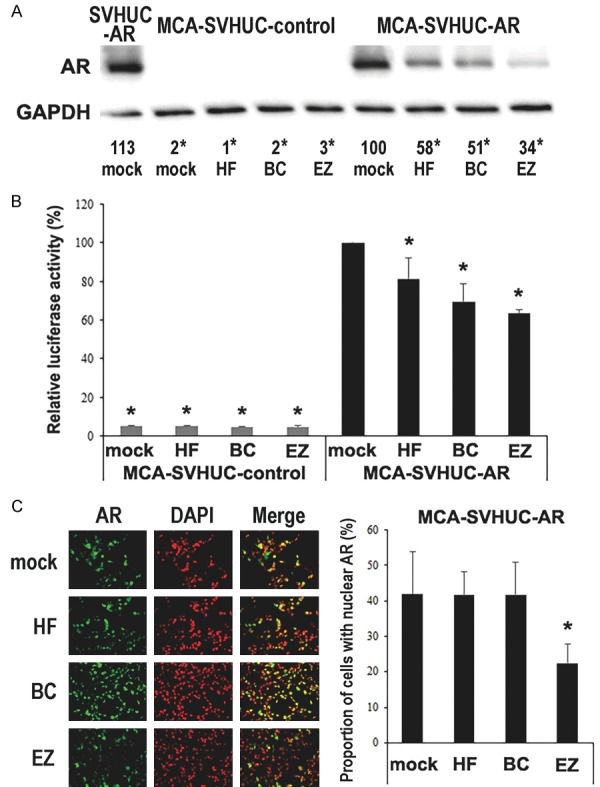
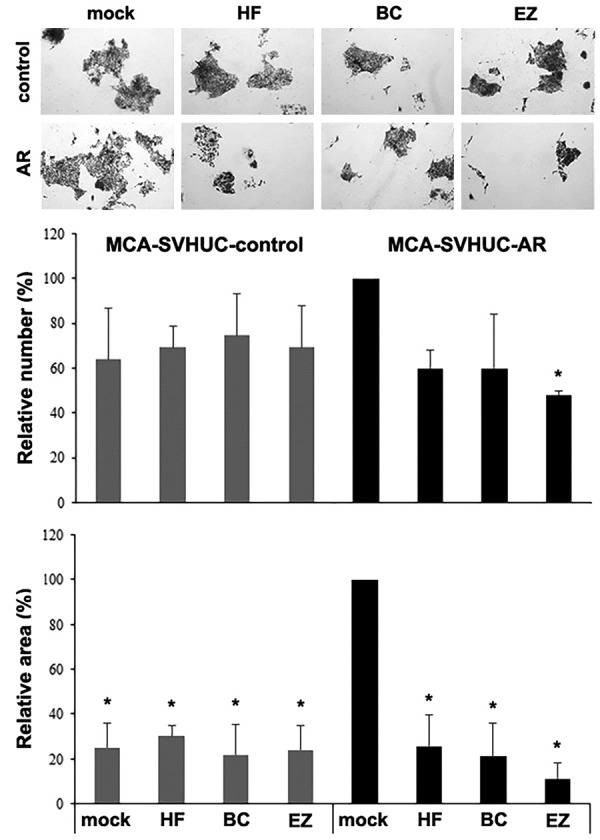
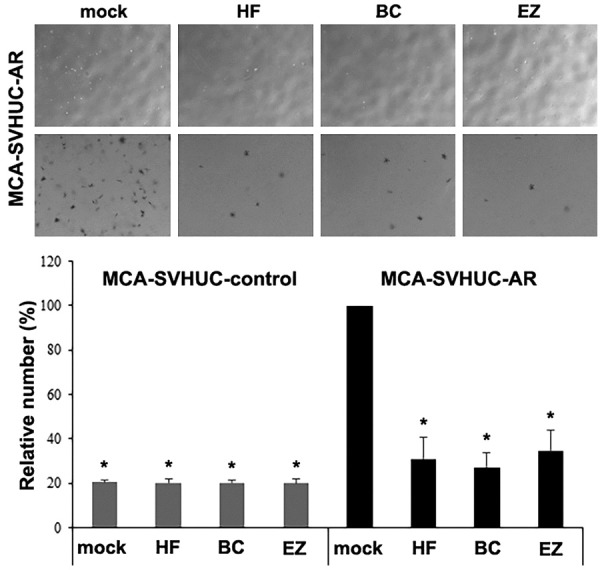
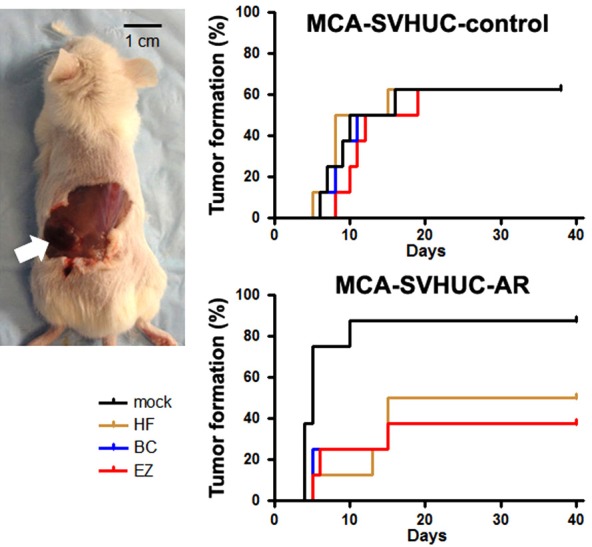
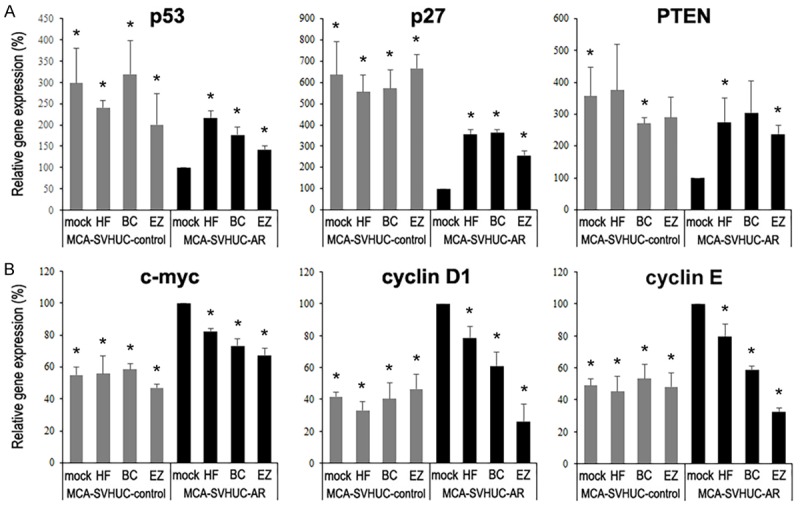
Emerging preclinical evidence suggests the critical role of androgen-mediated androgen receptor (AR) signals in the development of bladder cancer. However, little is known about the efficacy of enzalutamide, an AR signaling inhibitor, in androgen-induced urothelial tumorigenesis. We therefore aimed to assess the effects of enzalutamide on neoplastic transformation of urothelial cells. An immortalized normal urothelial cell line SVHUC stably expressing wild-type AR (SVHUC-AR) was exposed to a chemical carcinogen 3-methylcholanthrene (MCA) to induce neoplastic transformation, and subsequently cultured for 6 weeks in the presence of anti-androgens, including enzalutamide, hydroxyflutamide, and bicalutamide. Tumorigenesis was then monitored, using plate and soft agar colony formation assays as well as mouse xenograft models. In SVHUC-AR cells exposed to MCA, each anti-androgen inhibited AR-mediated transcriptional activity, but only enzalutamide prevented AR nuclear translocation. In vitro transformation showed that treatment with each anti-androgen during the process of neoplastic transformation reduced the efficiency of colony formation in vitro. Compared with mock treatment, culture with enzalutamide (P = 0.028), hydroxyflutamide (P = 0.033), or bicalutamide (P = 0.038) also resulted in prevention/retardation of tumor formation in male NOD-SCID mice. In addition, anti-androgens up-regulated the expression of several molecules that play a protective role in bladder tumorigenesis, including p53, p21, and PTEN, and down-regulated that of several oncogenic genes, such as c-myc, cyclin D1, and cyclin E, in MCA-exposed SVHUC-AR cells. Thus, enzalutamide, flutamide, and bicalutamide were found to similarly prevent neoplastic transformation of urothelial cells. These findings offer a potential chemopreventive approach for urothelial tumors using AR antagonists.
Keywords: Bicalutamide; enzalutamide; flutamide; neoplastic transformation; urothelial cancer.
Conflict of interest statement
None.
Figures
References
-
- Torre LA, Bray F, Siegel RL, Ferlay J, Lortet-Tieulent J, Jemal A. Global cancer statistics, 2012. CA Cancer J Clin. 2015;65:87–108. - PubMed
-
- Siegel RL, Miller KD, Jemal A. Cancer statistics, 2017. CA Cancer J Clin. 2017;67:7–30. - PubMed
-
- Hartge P, Harvey EB, Linehan WM, Silverman DT, Sullivan JW, Hoover RN, Fraumeni JF Jr. Unexplained excess risk of bladder cancer in men. J Natl Cancer Inst. 1990;82:1636–1640. - PubMed
-
- Miyamoto H, Zheng Y, Izumi K. Nuclear hormone receptor signals as new therapeutic targets for urothelial carcinoma. Curr Cancer Drug Targets. 2012;12:14–22. - PubMed
-
- Hsu I, Vitkus S, Da J, Yeh S. Role of oestrogen receptors in bladder cancer development. Nat Rev Urol. 2013;10:317–326. - PubMed
LinkOut - more resources
Full Text Sources
Research Materials
Miscellaneous