


Improve postoperative sleep: what can we do?
- PMID: 29120927
- PMCID: PMC5768217
- DOI: 10.1097/ACO.0000000000000538
Improve postoperative sleep: what can we do?
Abstract
Purpose of review: We reviewed evidences regarding occurrence, risk factors, harmful effects, prevention, and management of sleep disturbances in patients after surgery.
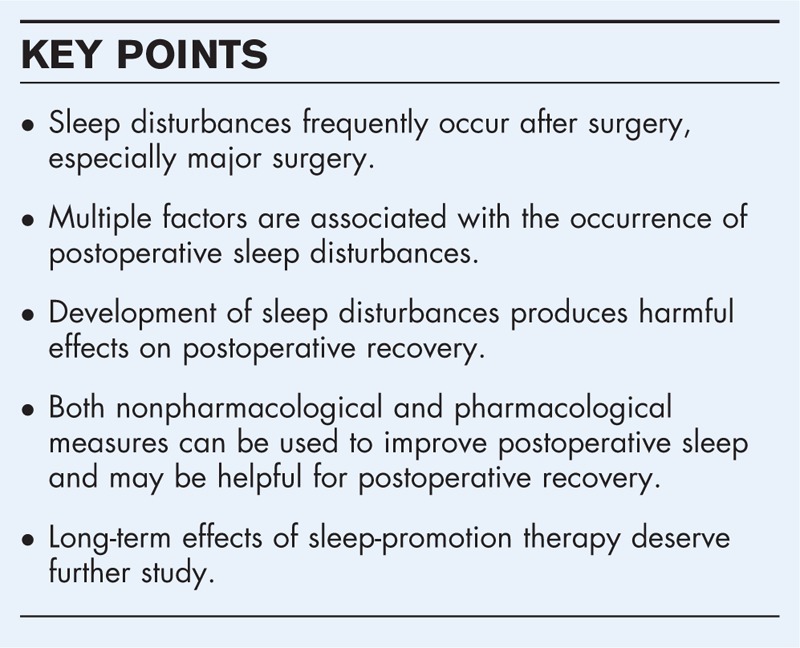
Recent findings: Normal sleep is important to maintain physical and mental health. Sleep disturbances frequently occur in patients after surgery. Factors associated with the development of postoperative sleep disturbances include old age, preoperative comorbidity, type of anesthesia, severity of surgical trauma, postoperative pain, environment stress, as well as other factors leading to discomfort of patients. Development of sleep disturbances produces harmful effects on postoperative patients, that is, leading to higher risk of delirium, increased sensitivity to pain, more cardiovascular events, and poorer recovery. Both nonpharmacological and pharmacological measures (such as zolpidem, melatonin, and dexmedetomidine) can be used to improve postoperative sleep. Recent evidences show that sleep promotion may improve patients' outcome, but requires further evidences.
Summary: Sleep disturbances are common in patients after surgery and produce harmful effects on postoperative recovery. Sleep-promotion therapy may be helpful to improve postoperative recovery, but long-term effects deserve further study.
References
-
- Knill RL, Moote CA, Skinner MI, Rose EA. Anesthesia with abdominal surgery leads to intense REM sleep during the first postoperative week. Anesthesiology 1990; 73:52–61. - PubMed
-
- Dette F, Cassel W, Urban F, et al. Occurrence of rapid eye movement sleep deprivation after surgery under regional anesthesia. Anesth Analg 2013; 116:939–943. - PubMed
-
- Fernandes NM, Nield LE, Popel N, et al. Symptoms of disturbed sleep predict major adverse cardiac events after percutaneous coronary intervention. Can J Cardiol 2014; 30:118–124. - PubMed
Publication types
MeSH terms
LinkOut - more resources
Full Text Sources
Other Literature Sources
Medical
Research Materials
