


The Role of Surgery in Metastatic Bladder Cancer: A Systematic Review
- PMID: 29122377
- PMCID: PMC8177016
- DOI: 10.1016/j.eururo.2017.09.030
The Role of Surgery in Metastatic Bladder Cancer: A Systematic Review
Abstract
Context: The role of surgery in metastatic bladder cancer (BCa) is unclear.
Objective: In this collaborative review article, we reviewed the contemporary literature on the surgical management of metastatic BCa and factors associated with outcomes to support the development of clinical guidelines as well as informed clinical decision-making.
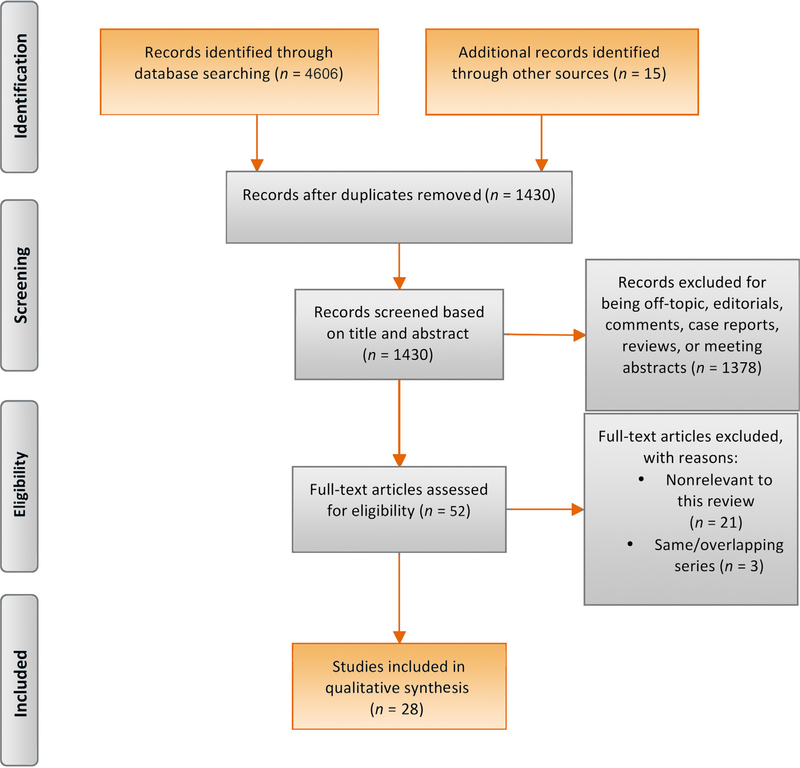
Evidence acquisition: A systematic search of English language literature using PubMed-Medline and Scopus from 1999 to 2016 was performed.
Evidence synthesis: The beneficial role of consolidation surgery in metastatic BCa is still unproven. In patients with clinically evident lymph node metastasis, data suggest a survival advantage for patients undergoing postchemotherapy radical cystectomy with lymphadenectomy, especially in those with measurable response to chemotherapy (CHT). Intraoperatively identified enlarged pelvic lymph nodes should be removed. Anecdotal reports of resection of pulmonary metastasis as part of multimodal approach suggest possible improved survival in well-selected patients. Cytoreductive radical cystectomy as local treatment has also been explored in patients with metastatic disease, although its benefits remain to be assessed.
Conclusions: Consolidative extirpative surgery may be considered in patients with clinically evident pelvic or retroperitoneal lymph nodal metastases but only if they have had a response to CHT. Surgery for limited pulmonary metastases may also be considered in very selected cases. Best candidates are those with resectable disease who demonstrate measurable response to CHT with good performance status. In the absence of data from prospective randomized studies, each patient should be evaluated on an individual basis and decisions made together with the patient and multidisciplinary teams.
Patient summary: Surgical resection of metastases is technically feasible and can be safely performed. It may help improve cancer control and eventually survival in very selected patients with limited metastatic burden. In a patient who is motivated to receive chemotherapy and to undergo extirpative surgical intervention, surgery should be discussed with the patient among other consolidation therapies in the setting of multidisciplinary teams.
Keywords: Bladder cancer; Lymph node dissection; Lymph node metastasis; Metastasectomy; Metastatic bladder cancer; Surgery.
Copyright © 2017 European Association of Urology. Published by Elsevier B.V. All rights reserved.
Conflict of interest statement
Figures
Comment in
-
Postchemotherapy Surgery for Advanced Urothelial Cancer: Another Tool To Improve Outcome.Eur Urol. 2018 Apr;73(4):558-559. doi: 10.1016/j.eururo.2017.12.015. Epub 2017 Dec 27. Eur Urol. 2018. PMID: 29289404 No abstract available.
References
-
- Rink M, Lee DJ, Kent M, et al. Predictors of cancer-specific mortality after disease recurrence following radical cystectomy. BJU Int 2013;111:E30–6. - PubMed
-
- Alfred Witjes J, Lebret T, Compérat EM, et al. Updated 2016 EAU Guidelines on Muscle-invasive and Metastatic Bladder Cancer. Eur Urol 2017;71:462–75. - PubMed
-
- Shariat SF, Karakiewicz PI, Palapattu GS, et al. Outcomes of radical cystectomy for transitional cell carcinoma of the bladder: a contemporary series from the Bladder Cancer Research Consortium. J Urol 2006;176:2414–22. - PubMed
-
- Stein JP, Lieskovsky G, Cote R, et al. Radical cystectomy in the treatment of invasive bladder cancer: long-term results in 1054 patients. J Clin Oncol 2001;19:666–75. - PubMed
Publication types
MeSH terms
Grants and funding
LinkOut - more resources
Full Text Sources
Other Literature Sources
Medical
