


Understanding the implementation of 'sick day guidance' to prevent acute kidney injury across a primary care setting in England: a qualitative evaluation
- PMID: 29122792
- PMCID: PMC5695520
- DOI: 10.1136/bmjopen-2017-017241
Understanding the implementation of 'sick day guidance' to prevent acute kidney injury across a primary care setting in England: a qualitative evaluation
Abstract
Objectives: The study sought to examine the implementation of sick day guidance cards designed to prevent acute kidney injury (AKI), in primary care settings.
Design: Qualitative semistructured interviews were conducted and comparative analysis informed by normalisation process theory was undertaken to understand sense-making, implementation and appraisal of the cards and associated guidance.
Setting: A single primary care health setting in the North of England.
Participants: 29 participants took part in the qualitative evaluation: seven general practitioners, five practice nurses, five community pharmacists, four practice pharmacists, two administrators, one healthcare assistant and five patients.
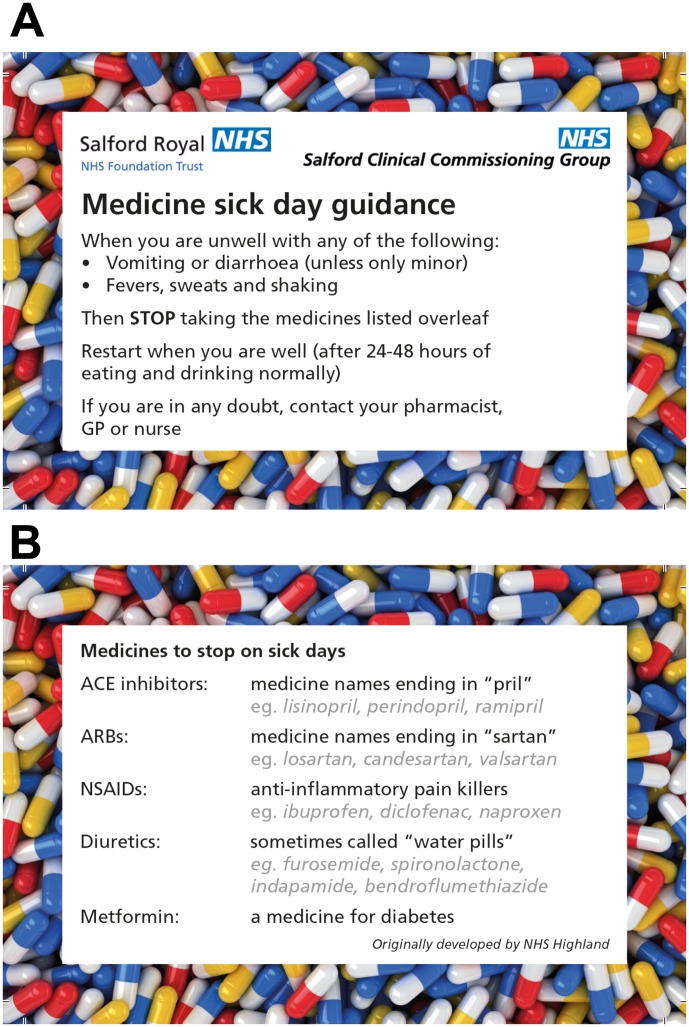
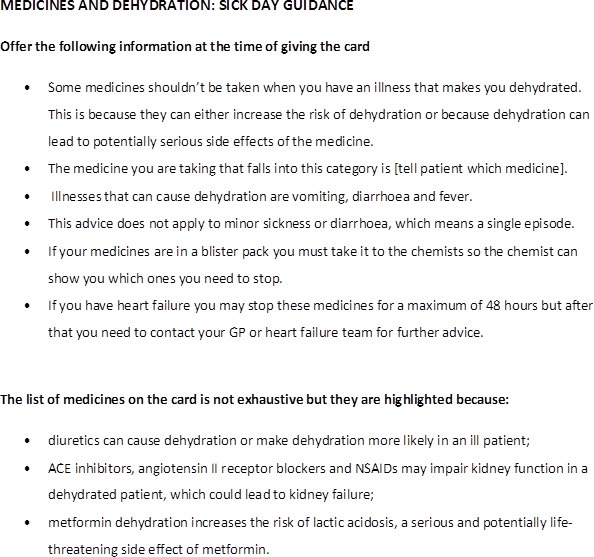
Intervention: The sick day guidance intervention was rolled out (2015-2016) in general practices (n=48) and community pharmacies (n=60). The materials consisted of a 'medicine sick day guidance' card, provided to patients who were taking the listed drugs. The card provided advice about medicines management during episodes of acute illness. An information leaflet was provided to healthcare practitioners and administrators suggesting how to use and give the cards.
Results: Implementation of sick day guidance cards to prevent AKI entailed a new set of working practises across primary care. A tension existed between ensuring reach in administration of the cards to at risk populations while being confident to ensure patient understanding of their purpose and use. Communicating the concept of temporary cessation of medicines was a particular challenge and limited their administration to patient populations at higher risk of AKI, particularly those with less capacity to self-manage.
Conclusions: Sick day guidance cards that focus solely on medicines management may be of limited patient benefit without adequate resourcing or if delivered as a standalone intervention. Development and evaluation of primary care interventions is urgently warranted to tackle the harm associated with AKI.
Keywords: acute kidney injury; patient safety; preventive medicine; primary care; qualitative research.
© Article author(s) (or their employer(s) unless otherwise stated in the text of the article) 2017. All rights reserved. No commercial use is permitted unless otherwise expressly granted.
Conflict of interest statement
Competing interests: None declared.
Figures
References
-
- Mehta RL, Cerdá J, Burdmann EA, et al. . International Society of Nephrology’s 0by25 initiative for acute kidney injury (zero preventable deaths by 2025): a human rights case for nephrology. Lancet 2015;385:2616–43. - PubMed
-
- Kidney Disease Improving Global Outcomes (KDIGO) Acute Kidney Injury Work Group. KDIGO Clinical Practice Guideline for Acute Kidney Injury. Kidney International Supplement, 2012;2:1–138.
-
- NHS England, UK Renal Registry, Think Kidneys. Acute Kidney Injury Best Practice Guidance: Responding to AKI Warning Stage Test Results for Adults in Primary Care. Think Kidneys, 2016.
-
- National Institute for Health and Care Excellence. Acute Kidney Injury: prevention, detection and management (CG169). London: NICE, 2013. - PubMed
-
- NHS England, UK Renal Registry, Think Kidneys. Acute Kidney Injury Warning Alert Best Practice document. England: Think Kidneys, 2014.
MeSH terms
Substances
LinkOut - more resources
Full Text Sources
Other Literature Sources
