


Identifying the Population with Serious Illness: The "Denominator" Challenge
- PMID: 29125784
- PMCID: PMC5756466
- DOI: 10.1089/jpm.2017.0548
Identifying the Population with Serious Illness: The "Denominator" Challenge
Abstract
Background: To ensure seriously ill people and their families receive high-quality primary and specialty palliative care services, rigorous methods are needed to prospectively identify this population.
Objective: To define and operationalize a definition of serious illness for the purpose of identifying patients and caregivers who need primary or specialty palliative care services.
Design/setting: Two stages of work included (1) building expert consensus around a conceptual definition of serious illness and (2) using the National Health and Aging Trends Study linked to Medicare claims data to test a range of operational definitions composed of diagnoses, utilization, and markers of care needs.
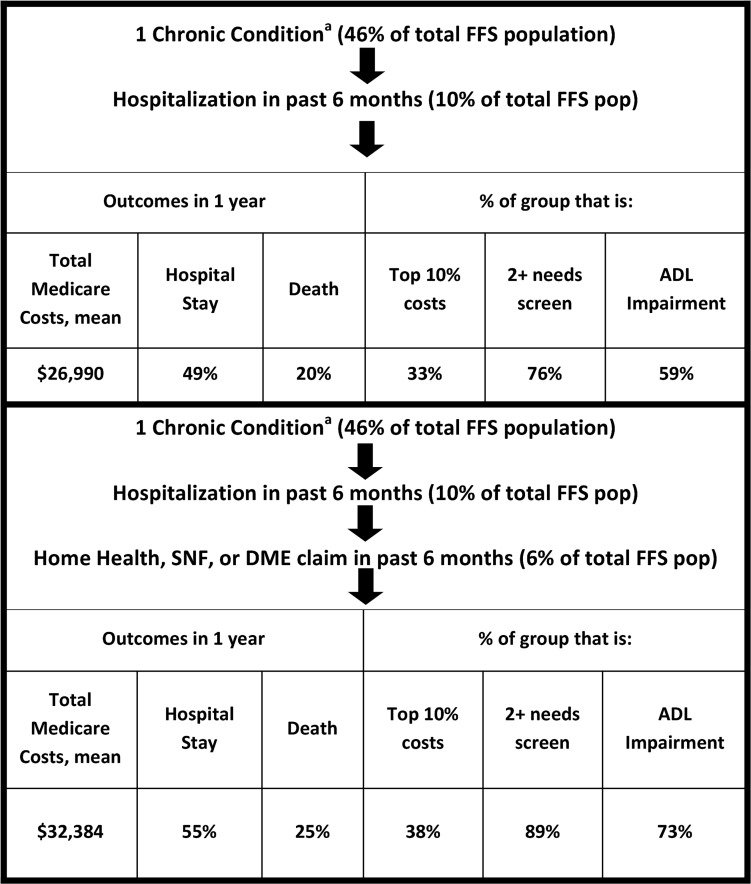
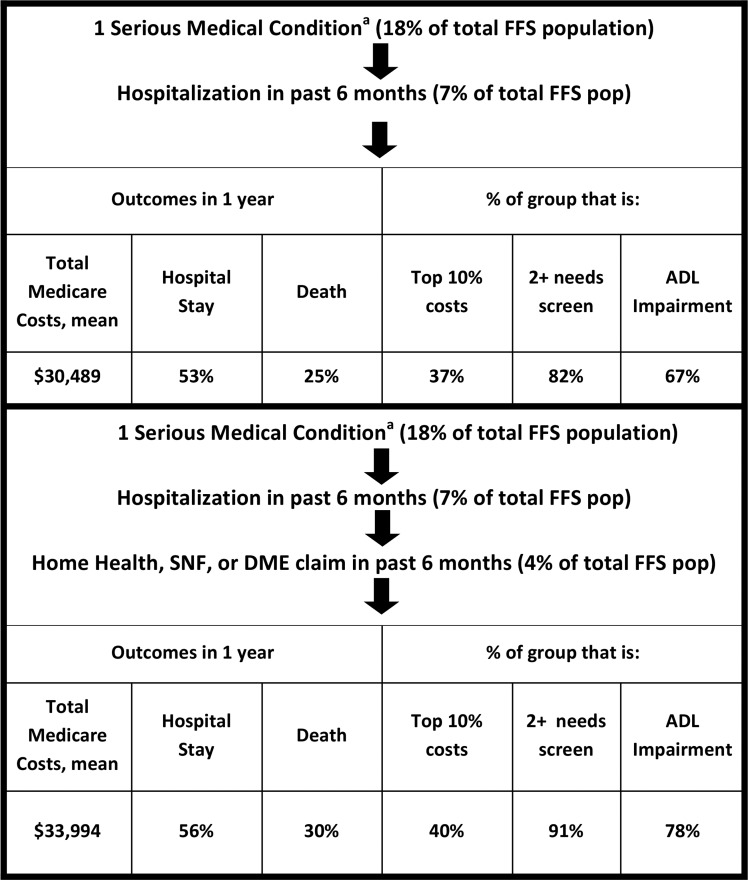
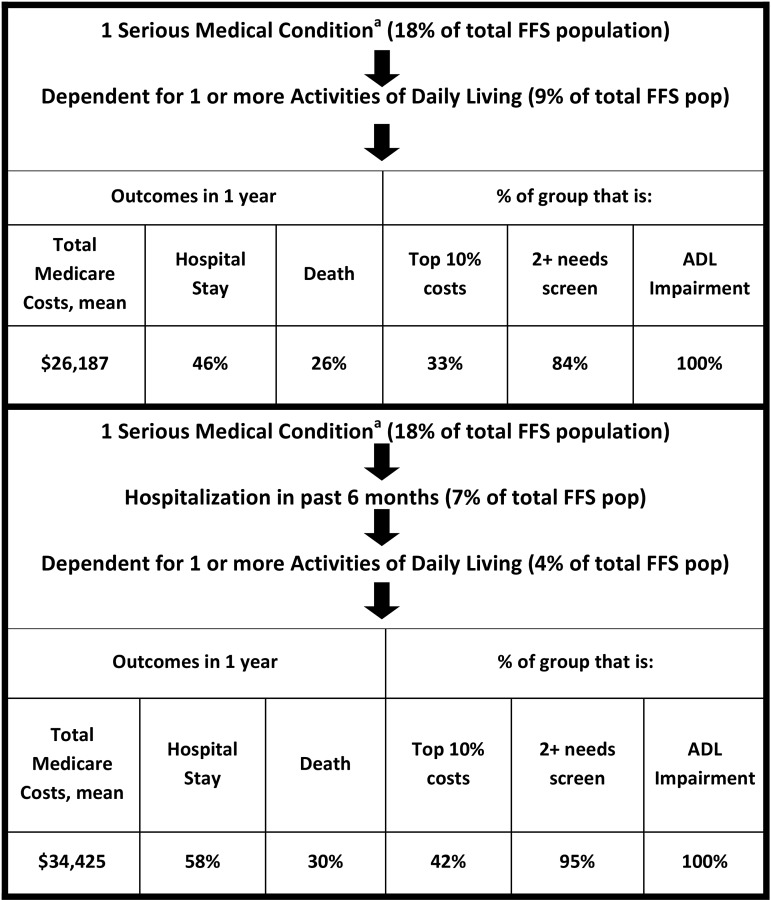
Measurements: One-year outcomes included mean total Medicare costs, mortality, and percent hospitalized, as well as those reporting ≥2 measures of need and functional impairment. Sensitivity, specificity, and c-statistics (unadjusted and adjusted for age, sex, race, and Medicaid status) were calculated for each definition across the outcomes.
Results: Conceptually, "Serious illness" is a health condition that carries a high risk of mortality AND either negatively impacts a person's daily function or quality of life, OR excessively strains their caregivers. The range of operational definitions simulated all had low sensitivity and high specificity across all outcomes. None of the definitions reached an unadjusted c-statistic >0.6 (or adjusted >0.7) for identifying a population with ≥2 indicators of care needs.
Conclusions: Standard administrative data are inadequate to identify this population. Defining the seriously ill denominator with high specificity, as described here, will focus efforts toward the highest-need segment of the population, who may indeed benefit most.
Keywords: Medicare; denominator populations; health care spending; measures of need; serious illness.
Conflict of interest statement
No competing financial interests exist.
Figures

Comment in
-
Recommendations Relevant to Physiatrists in New Clinical Practice Guidelines for Quality Palliative Care.Am J Phys Med Rehabil. 2020 May;99(5):444-445. doi: 10.1097/PHM.0000000000001381. Am J Phys Med Rehabil. 2020. PMID: 32310615 No abstract available.
References
-
- Alecxih L, Shen S, Chan I, et al. : Individuals Living in the Community with Chronic Conditions and Functional Limitations: A Closer Look. Washington, DC: Office of the Assistant Secretary for Planning & Evaluation, U.S. Department of Health and Human Services, 2010
-
- Hong CS, Siegel AL, Ferris TG: Caring for high-need, high-cost patients: What makes for a successful care management program? Issue Brief (Commonw Fund) 2014;19:1–19 - PubMed
-
- Aldridge MD, Kelley AS: Epidemiology of serious illness and high utilization of healthcare. In: Institute of Medicine: Dying in America: Improving Quality and Honoring Individual Preferences Near the End of Life. Washington, DC: The National Academies Press, 2014 - PubMed
-
- Field M, Cassel C. (eds): Approaching Death: Improving Care at the End of Life. Washington, DC: Institute of Medicine, 1997
Publication types
MeSH terms
Grants and funding
LinkOut - more resources
Full Text Sources
Other Literature Sources
Medical
