


Immunologic, microbial, and epithelial interactions in atopic dermatitis
- PMID: 29126710
- PMCID: PMC8715858
- DOI: 10.1016/j.anai.2017.09.055
Immunologic, microbial, and epithelial interactions in atopic dermatitis
Abstract
Objective: To provide an overview of studies contributing to the understanding of immunologic, microbial, and epithelial interactions in atopic dermatitis.
Data sources: PubMed literature review (2000-2017) and meeting abstracts from recent international dermatology conferences.
Study selections: Articles discussing primarily human disease.
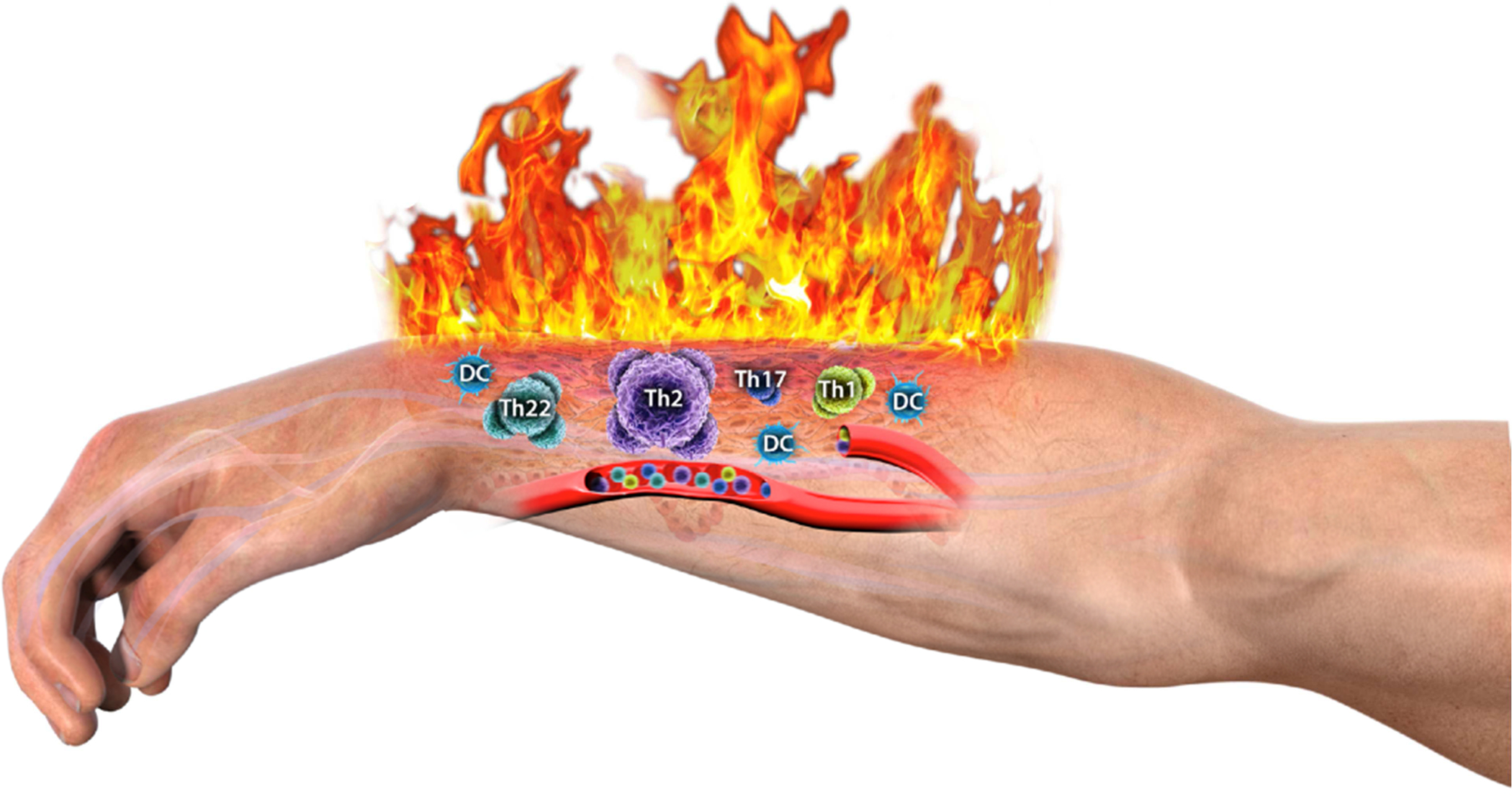
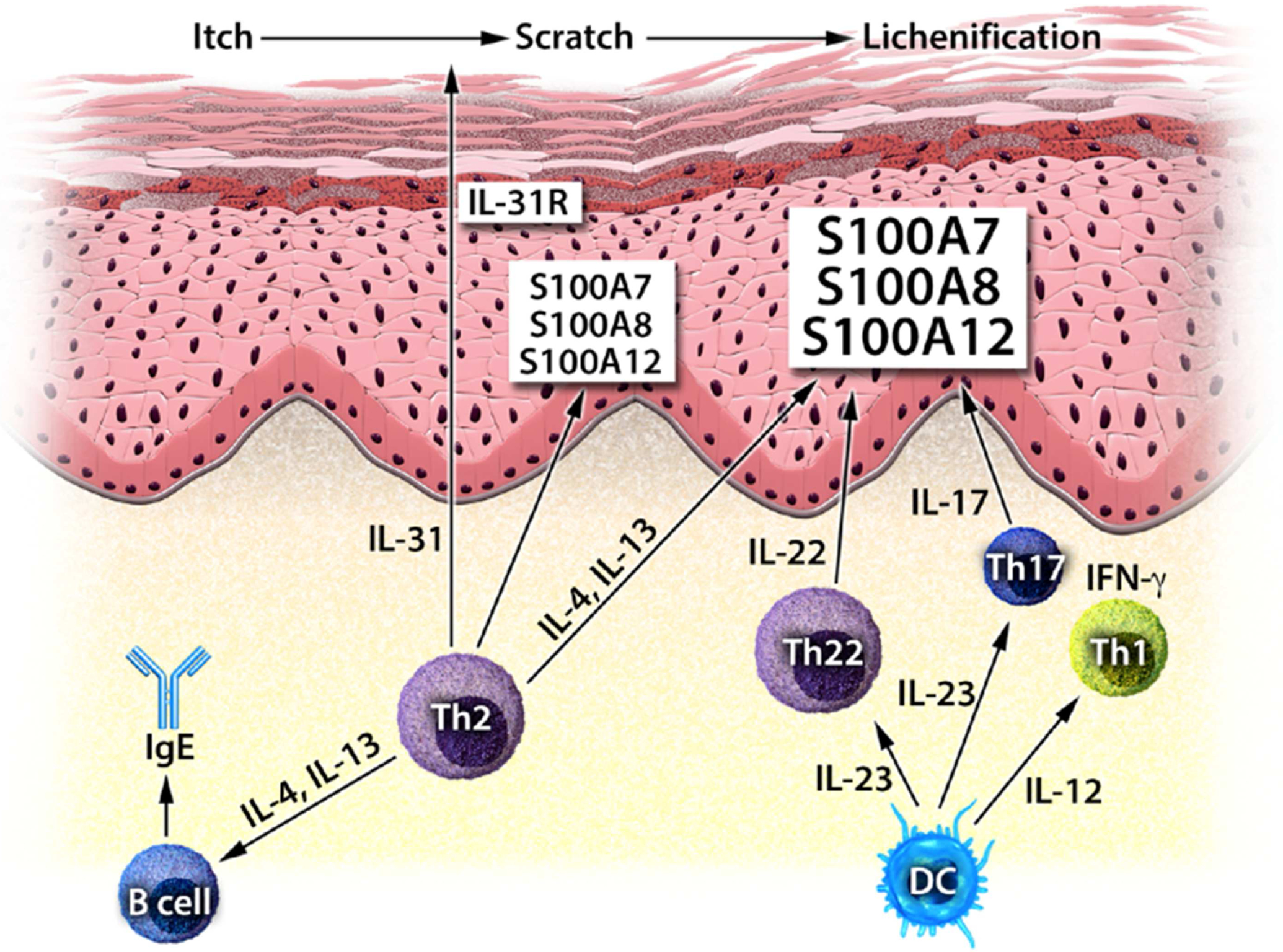
Results: Clinical studies showed that atopic dermatitis is a type 2 immune-centered disease with a systemic inflammatory component but with heterogeneous treatment responses. This suggests that other factors are likely involved in shaping the skin disease phenotype, including microbial dysbiosis and epidermal barrier dysfunction.
Conclusion: Recent clinical investigation has significantly expanded our knowledge on disease pathogenesis in atopic dermatitis, and current and future clinical trials will most likely further help to elucidate this complex, heterogeneous skin disease.
Copyright © 2017 American College of Allergy, Asthma & Immunology. Published by Elsevier Inc. All rights reserved.
Figures
References
-
- Weidinger S, Novak N. Atopic dermatitis. Lancet 2016;387:1109–22. - PubMed
-
- Silverberg JI. Public Health Burden and Epidemiology of Atopic Dermatitis. Dermatol Clin 2017;35:283–9. - PubMed
-
- Bonness S, Bieber T. Molecular basis of atopic dermatitis. Curr Opin Allergy Clin Immunol 2007;7:382–6. - PubMed
-
- Flohr C, Mann J. New insights into the epidemiology of childhood atopic dermatitis. Allergy 2014;69:3–16. - PubMed
-
- Dharmage SC, Lowe AJ, Matheson MC, Burgess JA, Allen KJ, Abramson MJ. Atopic dermatitis and the atopic march revisited. Allergy 2014;69:17–27. - PubMed
Publication types
MeSH terms
Grants and funding
LinkOut - more resources
Full Text Sources
Other Literature Sources
Medical
