


Extra-territorial movements differ between territory holders and subordinates in a large, monogamous rodent
- PMID: 29127395
- PMCID: PMC5681683
- DOI: 10.1038/s41598-017-15540-0
Extra-territorial movements differ between territory holders and subordinates in a large, monogamous rodent
Abstract
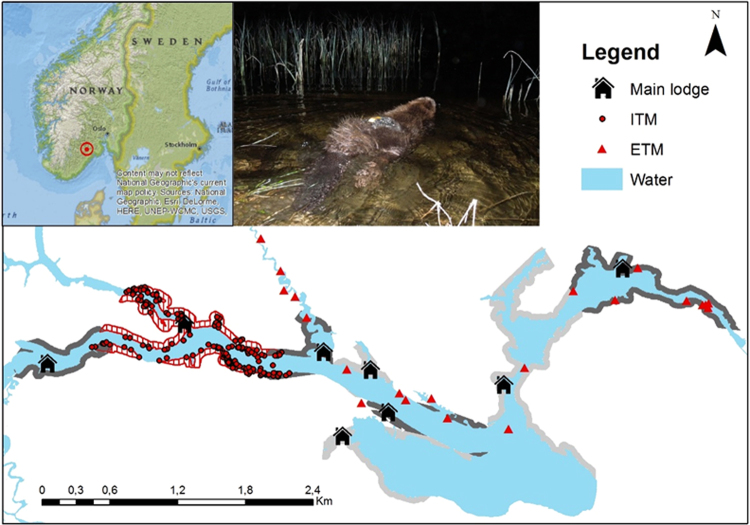
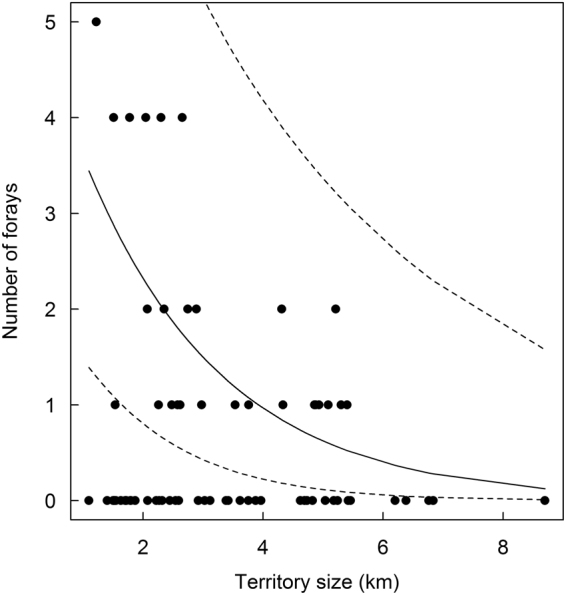
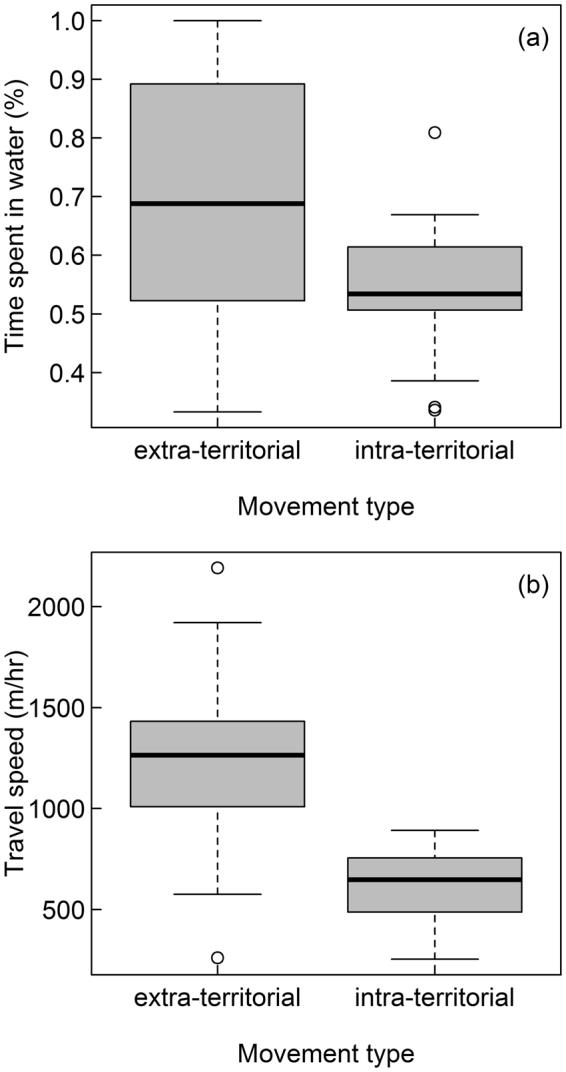
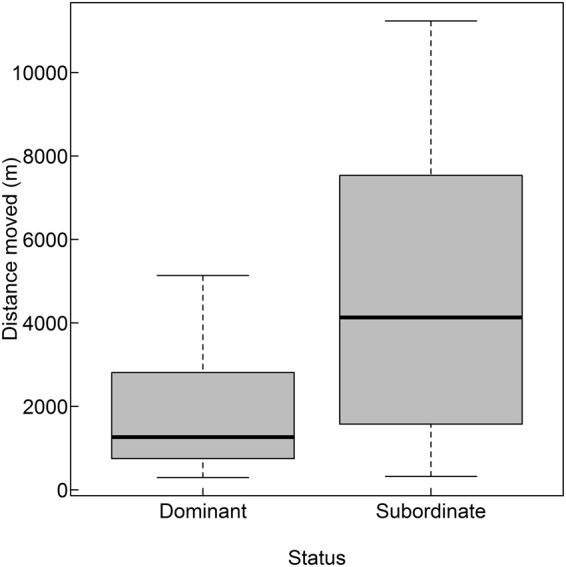
Territorial animals carry out extra-territorial movements (forays) to obtain pre-dispersal information or to increase reproductive success via extra-pair copulation. However, little is known about other purposes and spatial movement patterns of forays. In this study, we GPS-tagged 54 Eurasian beavers (Castor fiber), a year-round territorial, monogamous mammal, during the non-mating season. We investigated forays in territory-holding breeders (dominants) and non-breeding (subordinate) family members. Twenty of 46 dominant individuals (44%), and 6 of 10 subordinates (60%) conducted forays. Generally, beavers spent between 0 and 11% of their active time on forays, travelled faster and spend more time in water when on forays compared to intra-territorial movements, suggesting that forays are energetically costly. Further, beavers in smaller territories conducted more forays. Possibly, smaller territories might not have sufficient resources and thus dominant individuals might conduct forays to assess possibilities for territory expansion, and potentially for foraging. Generally, besides territory advertisement (e.g. via scent-marking), forays might serve as an additional mechanism for territory owners to assess neighbours. Subordinates spent more time on forays, moved greater distances and intruded into more territories than dominant individuals did, suggesting that they prospected to gain information on the population density and available mates before dispersal.
Conflict of interest statement
The authors declare that they have no competing interests.
Figures
References
-
- Brown JL. The evolution of diversity in avian territorial systems. The Wilson Bulletin. 1964;76:160–169.
-
- Bartels PJ. Extra-territorial movements of a perennially territorial damselfish, Eupomacentrus dorsopunicans Poey. Behaviour. 1984;91:312–321. doi: 10.1163/156853984X00137. - DOI
-
- Soulsbury CD, Iossa G, Baker PJ, White PC, Harris S. Behavioral and spatial analysis of extraterritorial movements in red foxes (Vulpes vulpes) Journal of Mammalogy. 2011;92:190–199. doi: 10.1644/09-MAMM-A-187.1. - DOI
Publication types
MeSH terms
LinkOut - more resources
Full Text Sources
Other Literature Sources
Molecular Biology Databases
