


Photobiomodulation for traumatic brain injury and stroke
- PMID: 29131369
- PMCID: PMC5803455
- DOI: 10.1002/jnr.24190
Photobiomodulation for traumatic brain injury and stroke
Erratum in
-
Corrigendum.J Neurosci Res. 2019 Mar;97(3):373. doi: 10.1002/jnr.24376. J Neurosci Res. 2019. PMID: 30666730 No abstract available.
Abstract
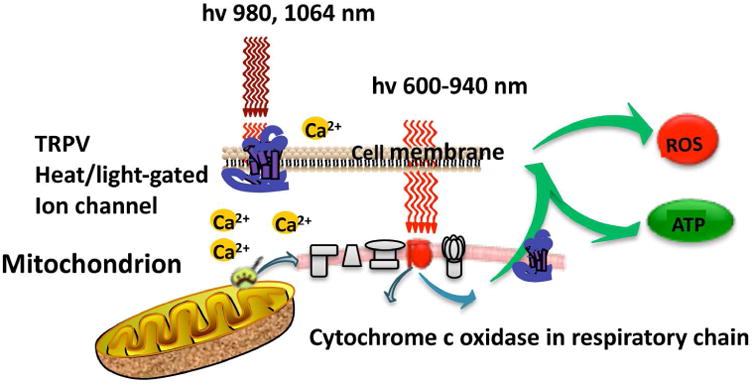
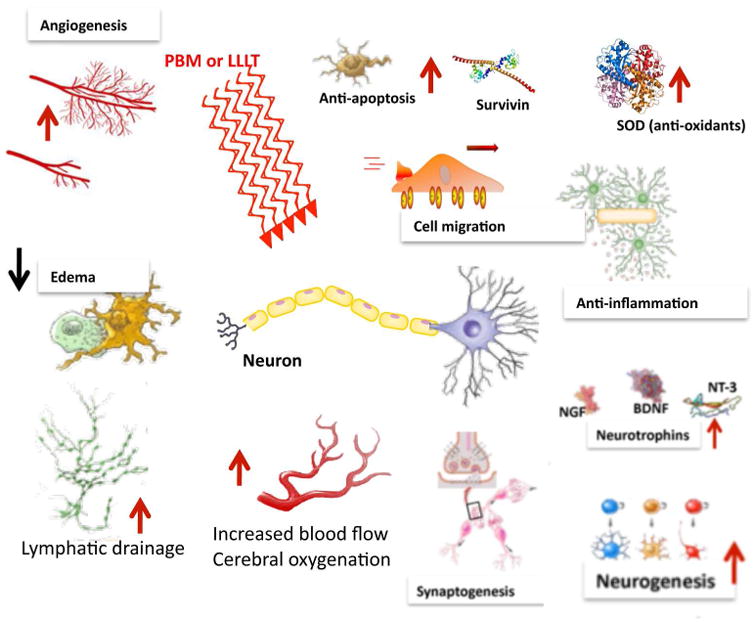
There is a notable lack of therapeutic alternatives for what is fast becoming a global epidemic of traumatic brain injury (TBI). Photobiomodulation (PBM) employs red or near-infrared (NIR) light (600-1100nm) to stimulate healing, protect tissue from dying, increase mitochondrial function, improve blood flow, and tissue oxygenation. PBM can also act to reduce swelling, increase antioxidants, decrease inflammation, protect against apoptosis, and modulate microglial activation state. All these mechanisms of action strongly suggest that PBM delivered to the head should be beneficial in cases of both acute and chronic TBI. Most reports have used NIR light either from lasers or from light-emitting diodes (LEDs). Many studies in small animal models of acute TBI have found positive effects on neurological function, learning and memory, and reduced inflammation and cell death in the brain. There is evidence that PBM can help the brain repair itself by stimulating neurogenesis, upregulating BDNF synthesis, and encouraging synaptogenesis. In healthy human volunteers (including students and healthy elderly women), PBM has been shown to increase regional cerebral blood flow, tissue oxygenation, and improve memory, mood, and cognitive function. Clinical studies have been conducted in patients suffering from the chronic effects of TBI. There have been reports showing improvement in executive function, working memory, and sleep. Functional magnetic resonance imaging has shown modulation of activation in intrinsic brain networks likely to be damaged in TBI (default mode network and salience network).
Keywords: animal studies; chromophores; clinical trials; human studies; low-level laser therapy; photobiomodulation; stroke; traumatic brain injury.
© 2017 Wiley Periodicals, Inc.
Conflict of interest statement
Figures
References
-
- Aimbire F, Albertini R, Pacheco MT, Castro-Faria-Neto HC, Leonardo PS, Iversen VV, Lopes-Martins RA, Bjordal JM. Low-level laser therapy induces dose-dependent reduction of TNFalpha levels in acute inflammation. Photomed Laser Surg. 2006;24(1):33–37. - PubMed
-
- Alexandratou E, Yova D, Handris P, Kletsas D, Loukas S. Human fibroblast alterations induced by low power laser irradiation at the single cell level using confocal microscopy. Photochem Photobiol Sci. 2002;1(8):547–552. - PubMed
-
- Anders JJ, Moges H, Wu X, Erbele ID, Alberico SL, Saidu EK, Smith JT, Pryor BA. In vitro and in vivo optimization of infrared laser treatment for injured peripheral nerves. Lasers Surg Med. 2014;46(1):34–45. - PubMed
-
- Barrett DW, Gonzalez-Lima F. Transcranial infrared laser stimulation produces beneficial cognitive and emotional effects in humans. Neuroscience. 2013;230:13–23. - PubMed
Publication types
MeSH terms
Grants and funding
LinkOut - more resources
Full Text Sources
Other Literature Sources
Medical
Miscellaneous
