


Fungal interactions with the human host: exploring the spectrum of symbiosis
- PMID: 29132066
- PMCID: PMC5733695
- DOI: 10.1016/j.mib.2017.10.020
Fungal interactions with the human host: exploring the spectrum of symbiosis
Abstract
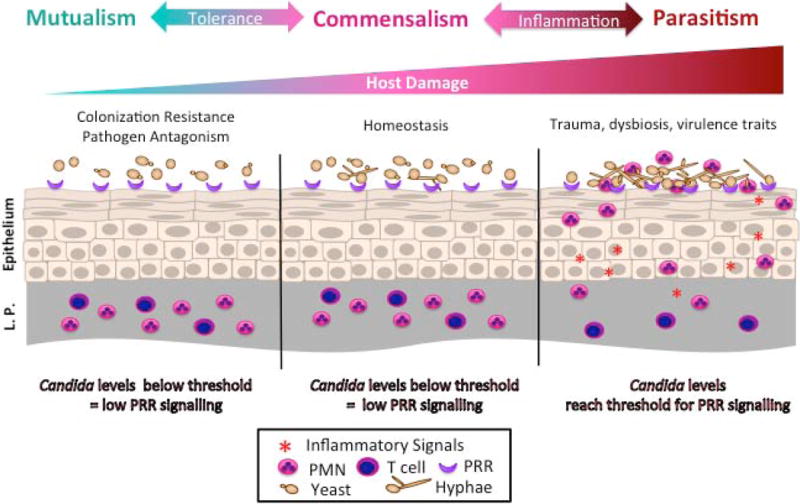
Fungi are ubiquitous transient or persistent human colonisers, and form the mycobiome with shifts in niche specific mycobiomes (dysbiosis) being associated with various diseases. These complex interactions of fungal species with the human host can be viewed as a spectrum of symbiotic relationships (i.e. commensal, parasitic, mutualistic, amensalistic). The host relevant outcome of the relationship is the damage to benefit ratio, elegantly described in the damage response framework. This review focuses on Candida albicans, which is the most well studied human fungal symbiont clinically and experimentally, its transition from commensalism to parasitism within the human host, and the factors that influence this relationship.
Copyright © 2017 The Authors. Published by Elsevier Ltd.. All rights reserved.
Figures
References
-
- Brown GD, Denning DW, Gow NA, Levitz SM, Netea MG, White TC. Hidden killers: human fungal infections. Sci Transl Med. 2012;4:165rv113. - PubMed
-
- Jabra-Rizk MA, Kong EF, Tsui C, Nguyen MH, Clancy CJ, Fidel PL, Noverr M. Candida albicans Pathogenesis: Fitting within the Host-Microbe Damage Response Framework. Infection and Immunity. 2016;84:2724–2739. A detailed overview of the damage response framework and how the fungal pathogen Candida albicans fits within all six classifications. - PMC - PubMed
Publication types
MeSH terms
Grants and funding
LinkOut - more resources
Full Text Sources
Other Literature Sources
Medical
