


Early Neolithic wine of Georgia in the South Caucasus
- PMID: 29133421
- PMCID: PMC5715782
- DOI: 10.1073/pnas.1714728114
Early Neolithic wine of Georgia in the South Caucasus
Abstract
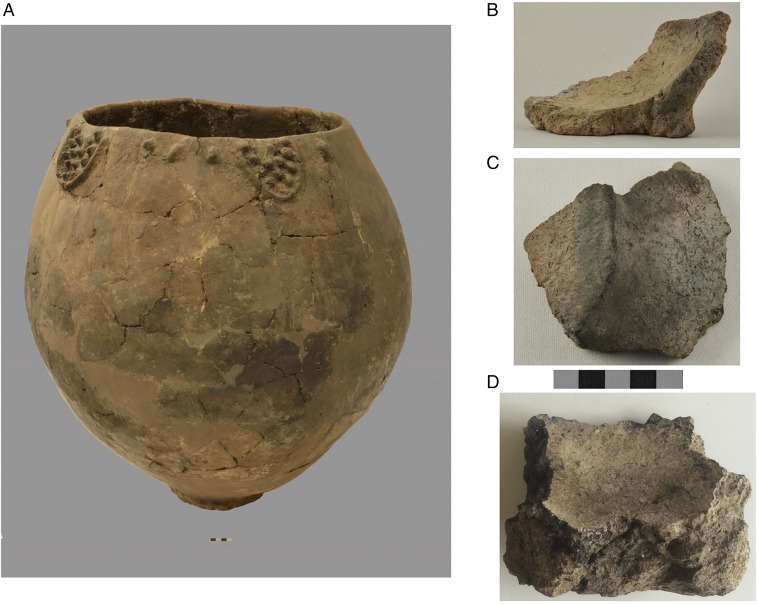
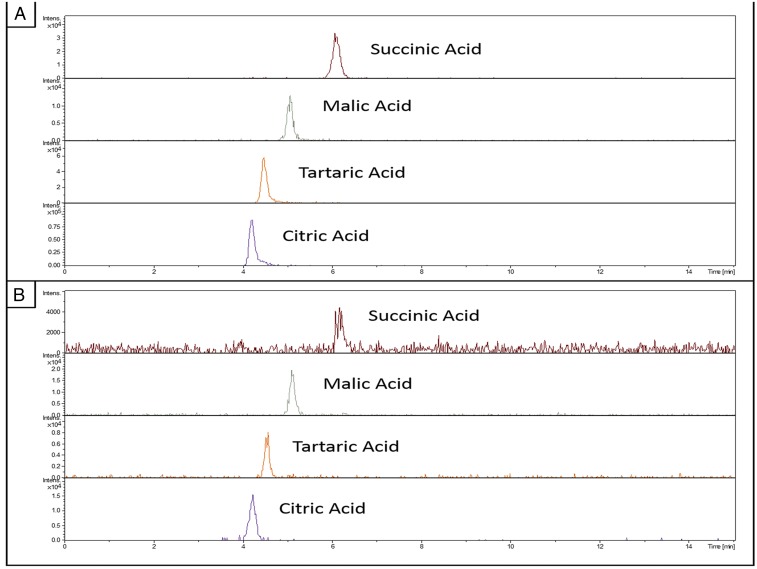
Chemical analyses of ancient organic compounds absorbed into the pottery fabrics from sites in Georgia in the South Caucasus region, dating to the early Neolithic period (ca. 6,000-5,000 BC), provide the earliest biomolecular archaeological evidence for grape wine and viniculture from the Near East, at ca. 6,000-5,800 BC. The chemical findings are corroborated by climatic and environmental reconstruction, together with archaeobotanical evidence, including grape pollen, starch, and epidermal remains associated with a jar of similar type and date. The very large-capacity jars, some of the earliest pottery made in the Near East, probably served as combination fermentation, aging, and serving vessels. They are the most numerous pottery type at many sites comprising the so-called "Shulaveri-Shomutepe Culture" of the Neolithic period, which extends into western Azerbaijan and northern Armenia. The discovery of early sixth millennium BC grape wine in this region is crucial to the later history of wine in Europe and the rest of the world.
Keywords: Georgia; Near East; Neolithic; viticulture; wine.
Copyright © 2017 the Author(s). Published by PNAS.
Conflict of interest statement
The authors declare no conflict of interest.
Figures



References
-
- McGovern PE. Ancient Wine: The Search for the Origins of Viniculture. Princeton Univ Press; Princeton, NJ: 2003/2007.
-
- McGovern PE. Uncorking the Past: The Quest for Wine, Beer, and Other Alcoholic Beverages. Univ of California Press; Berkeley, CA: 2009/2010.
-
- Bar-Yosef O. Multiple origins of agriculture in Eurasia and Africa. In: Tibayrenc M, Ayala FJ, editors. On Human Nature: Biology, Psychology, Ethics, Politics, and Religion. Academic; Amsterdam: 2016. pp. 297–331.
-
- Zohary D, Hopf M. Domestication of Plants in the Old World: The Origin and Spread Cultivated Plants in West Asia, Europe and the Nile Valley. 3rd Ed Oxford Univ Press; Oxford, UK: 2000.
-
- Moore AMT. The inception of potting in Western Asia and its impact on economy and society. In: Barnett WK, Hoopes JW, editors. The Emergence of Pottery. Smithsonian Institution Press; Washington, DC: 1995. pp. 39–53.
Publication types
MeSH terms
Substances
LinkOut - more resources
Full Text Sources
Other Literature Sources
