


Serotonin regulates prostate growth through androgen receptor modulation
- PMID: 29133842
- PMCID: PMC5684231
- DOI: 10.1038/s41598-017-15832-5
Serotonin regulates prostate growth through androgen receptor modulation
Abstract
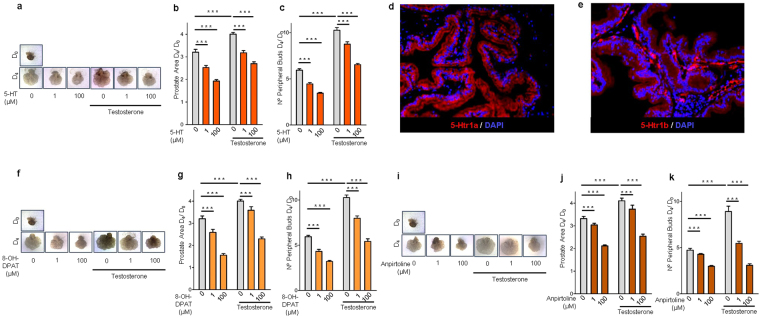
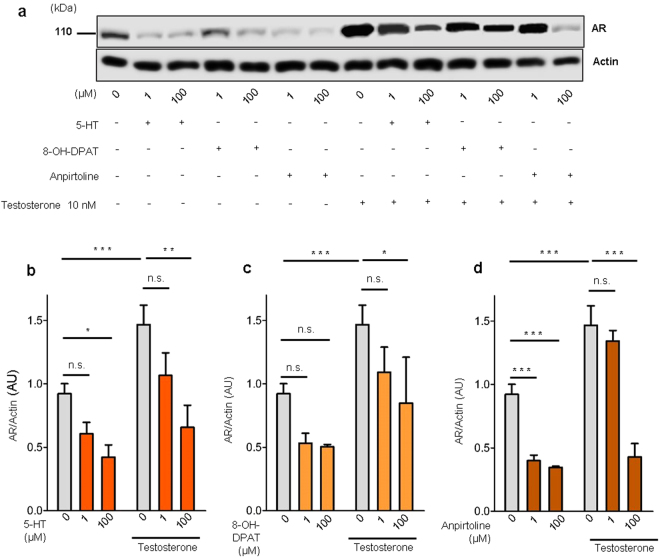
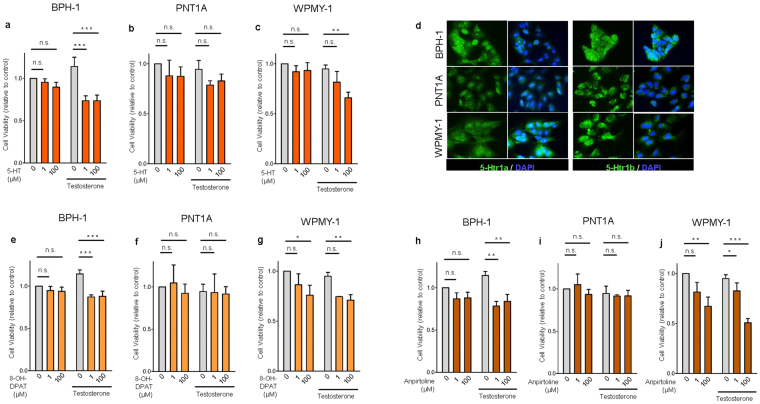
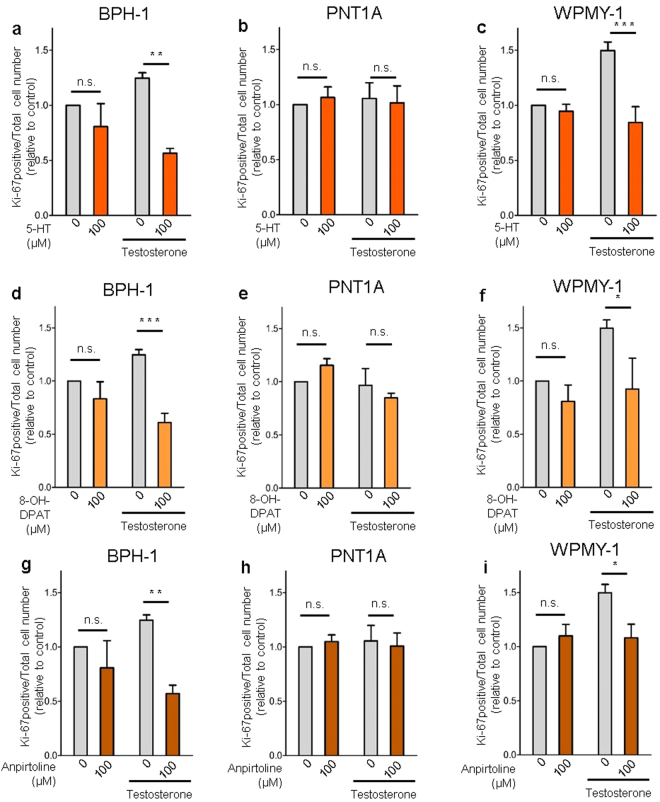
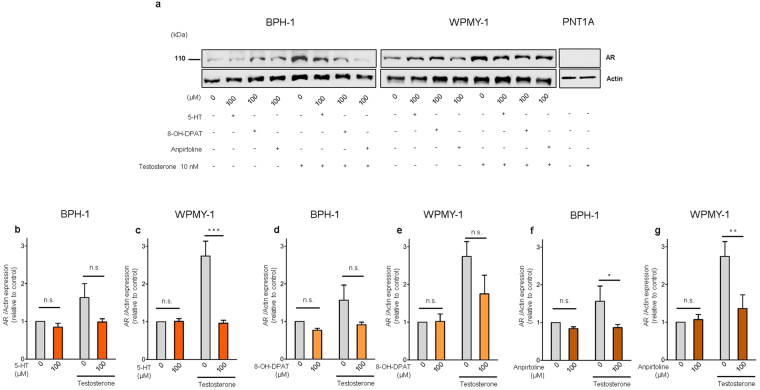
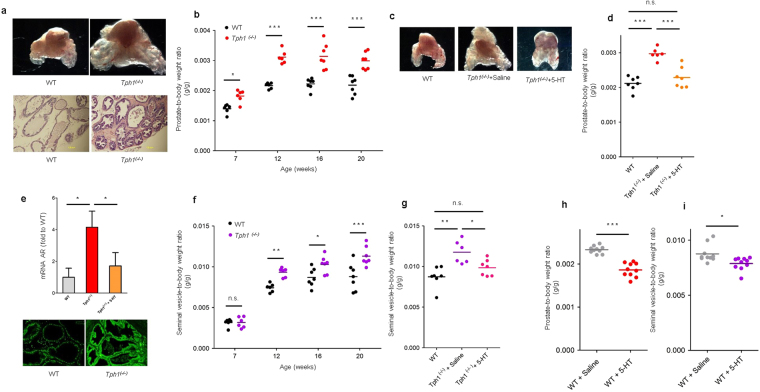
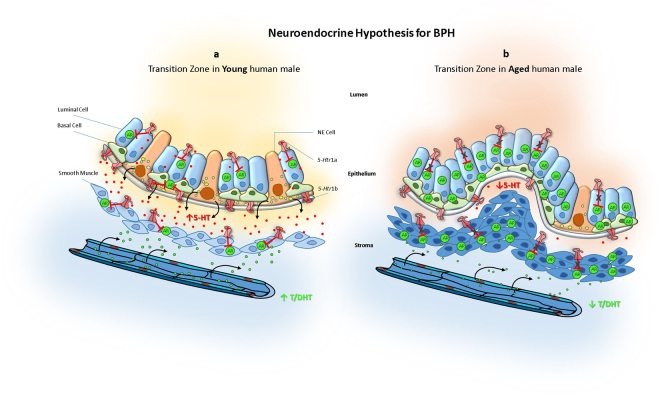
Aging and testosterone almost inexorably cause benign prostatic hyperplasia (BPH) in Human males. However, etiology of BPH is largely unknown. Serotonin (5-HT) is produced by neuroendocrine prostatic cells and presents in high concentration in normal prostatic transition zone, but its function in prostate physiology is unknown. Previous evidence demonstrated that neuroendocrine cells and 5-HT are decreased in BPH compared to normal prostate. Here, we show that 5-HT is a strong negative regulator of prostate growth. In vitro, 5-HT inhibits rat prostate branching through down-regulation of androgen receptor (AR). This 5-HT's inhibitory mechanism is also present in human cells of normal prostate and BPH, namely in cell lines expressing AR when treated with testosterone. In both models, 5-HT's inhibitory mechanism was replicated by specific agonists of 5-Htr1a and 5-Htr1b. Since peripheral 5-HT production is specifically regulated by tryptophan hydroxylase 1(Tph1), we showed that Tph1 knockout mice present higher prostate mass and up-regulation of AR when compared to wild-type, whereas 5-HT treatment restored the prostate weight and AR levels. As 5-HT is decreased in BPH, we present here evidence that links 5-HT depletion to BPH etiology through modulation of AR. Serotoninergic prostate pathway should be explored as a new therapeutic target for BPH.
Conflict of interest statement
The authors declare that they have no competing interests.
Figures
References
-
- McNeal JE. Origin and evolution of benign prostatic enlargement. Invest Urol. 1978;15:340–345. - PubMed
Publication types
MeSH terms
Substances
LinkOut - more resources
Full Text Sources
Other Literature Sources
Medical
Research Materials
