Inhibition of acid-sensing ion channels by diminazene and APETx2 evoke partial and highly variable antihyperalgesia in a rat model of inflammatory pain
- PMID: 29134638
- PMCID: PMC5980509
- DOI: 10.1111/bph.14089
Inhibition of acid-sensing ion channels by diminazene and APETx2 evoke partial and highly variable antihyperalgesia in a rat model of inflammatory pain
Abstract
Background and purpose: Acid-sensing ion channels (ASICs) are primary acid sensors in mammals, with the ASIC1b and ASIC3 subtypes being involved in peripheral nociception. The antiprotozoal drug diminazene is a moderately potent ASIC inhibitor, but its analgesic activity has not been assessed.
Experimental approach: We determined the ASIC subtype selectivity of diminazene and the mechanism by which it inhibits ASICs using voltage-clamp electrophysiology of Xenopus oocytes expressing ASICs 1-3. Its peripheral analgesic activity was then assessed relative to APETx2, an ASIC3 inhibitor, and morphine, in a Freund's complete adjuvant (FCA)-induced rat model of inflammatory pain.
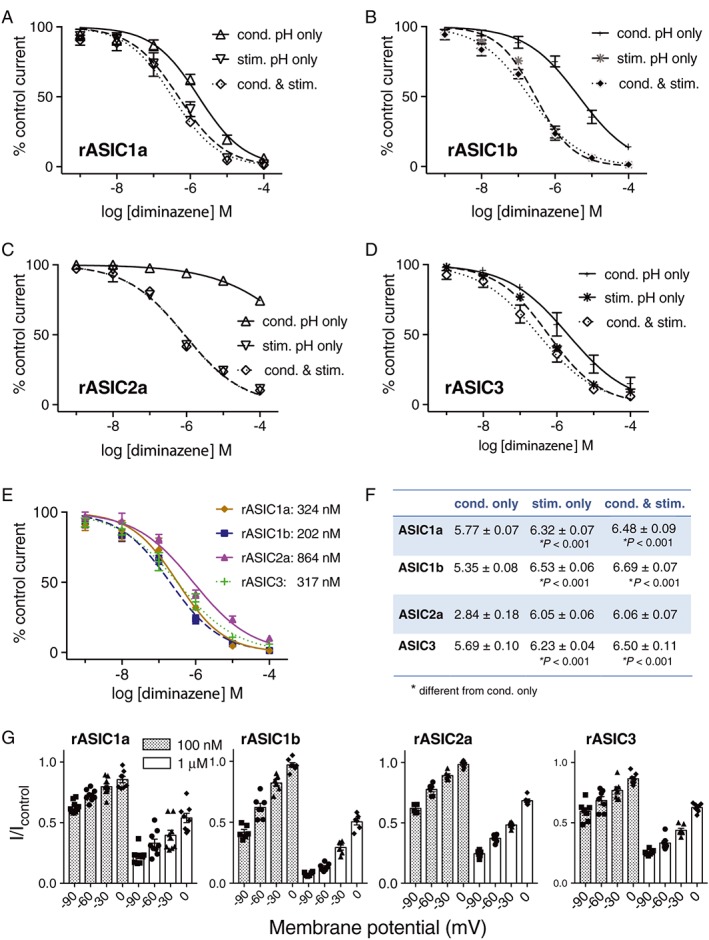
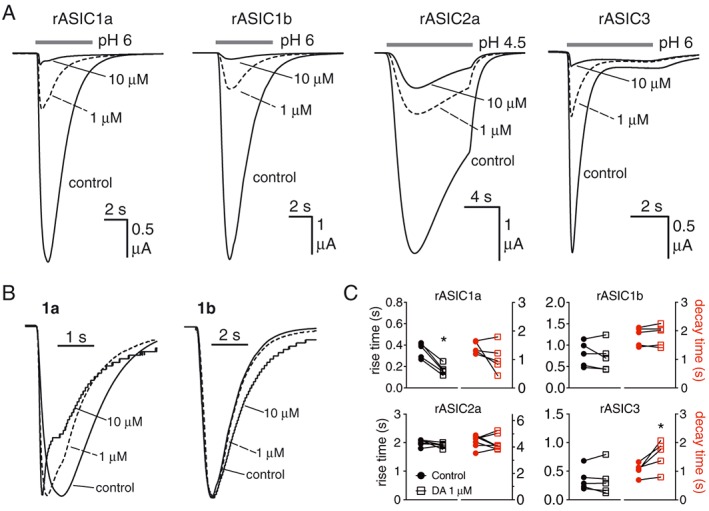
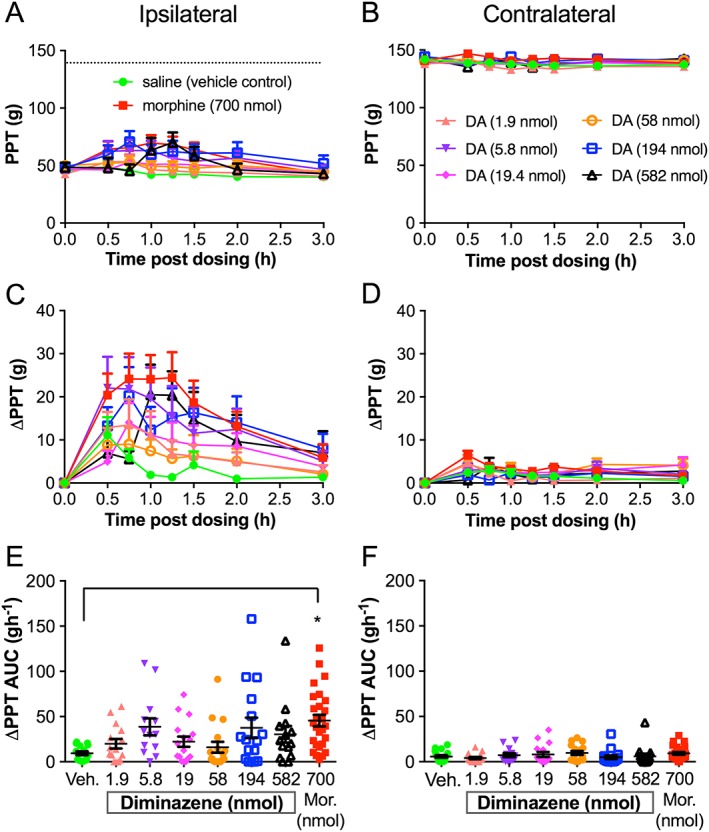
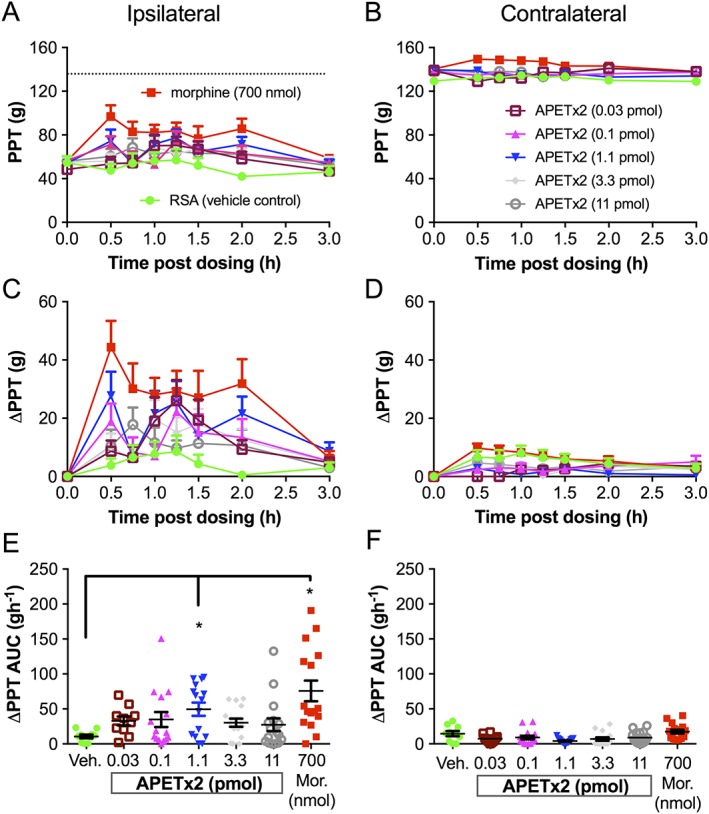
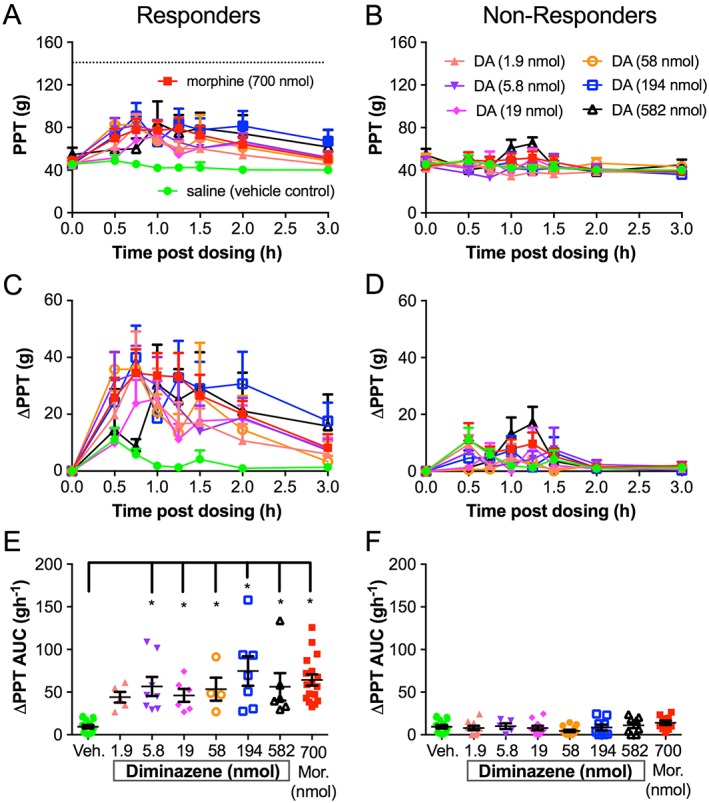
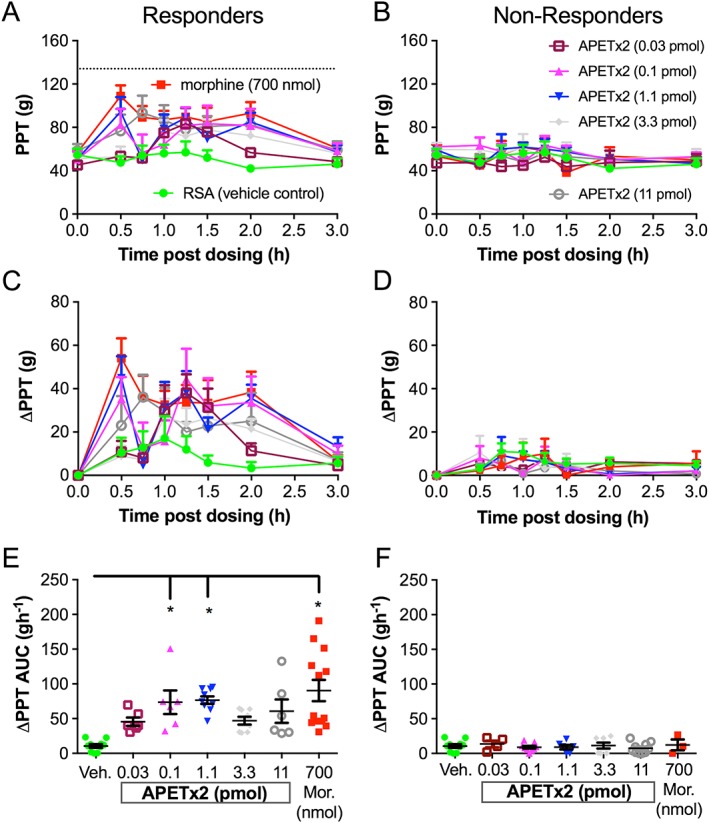
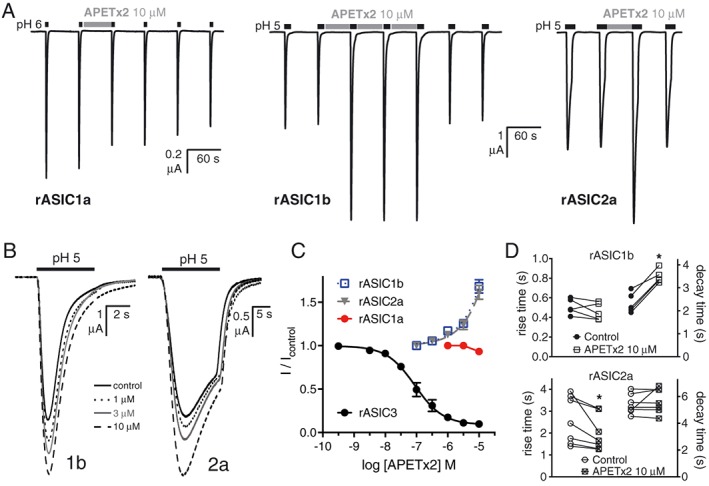
Key results: Diminazene inhibited homomeric rat ASICs with IC50 values of ~200-800 nM, via an open channel and subtype-dependent mechanism. In rats with FCA-induced inflammatory pain in one hindpaw, diminazene and APETx2 evoked more potent peripheral antihyperalgesia than morphine, but the effect was partial for APETx2. APETx2 potentiated rat ASIC1b at concentrations 30-fold to 100-fold higher than the concentration inhibiting ASIC3, which may have implications for its use in in vivo experiments.
Conclusions and implications: Diminazene and APETx2 are moderately potent ASIC inhibitors, both inducing peripheral antihyperalgesia in a rat model of chronic inflammatory pain. APETx2 has a more complex ASIC pharmacology, which must be considered when it is used as a supposedly selective ASIC3 inhibitor in vivo. Our use of outbred rats revealed responders and non-responders when ASIC inhibition was used to alleviate inflammatory pain, which is aligned with the concept of number-needed-to-treat in human clinical studies.
Linked articles: This article is part of a themed section on Recent Advances in Targeting Ion Channels to Treat Chronic Pain. To view the other articles in this section visit http://onlinelibrary.wiley.com/doi/10.1111/bph.v175.12/issuetoc.
© 2017 The British Pharmacological Society.
Figures
References
-
- Akopian AN, Souslova V, England S, Okuse K, Ogata N, Ure J et al (1999). The tetrodotoxin‐resistant sodium channel SNS has a specialized function in pain pathways. Nat Neurosci 2: 541–548. - PubMed
-
- Avsaroglu H, van der Sar AS, van Lith HA, van Zutphen LF, Hellebrekers LJ (2007). Differences in response to anaesthetics and analgesics between inbred rat strains. Lab Anim 41: 337–344. - PubMed
Publication types
MeSH terms
Substances
LinkOut - more resources
Full Text Sources
Other Literature Sources
Medical
Molecular Biology Databases