


Real-world clopidogrel utilization in acute coronary syndromes: patients selection and outcomes in a single-center experience
- PMID: 29134853
- PMCID: PMC5933677
- DOI: 10.1177/1753944717738911
Real-world clopidogrel utilization in acute coronary syndromes: patients selection and outcomes in a single-center experience
Abstract
Background: With this study, we sought to identify patient characteristics associated with clopidogrel prescription and its relationship with in-hospital adverse events in an unselected cohort of ACSs patients.
Materials and methods: We studied all consecutive patients admitted at our institution for ACSs from 2012 to 2014. Patients were divided into two groups based on clopidogrel or novel P2Y12 inhibitors (prasugrel or ticagrelor) prescription and the relationship between clopidogrel use and patient clinical characteristics and in-hospital adverse events was evaluated using logistic regression analysis.
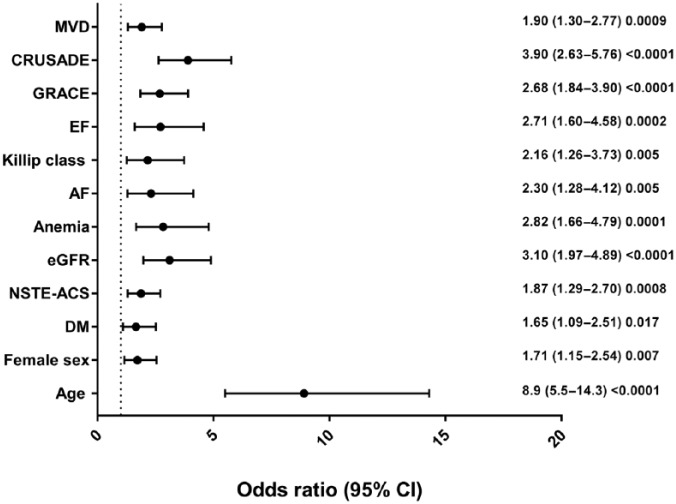
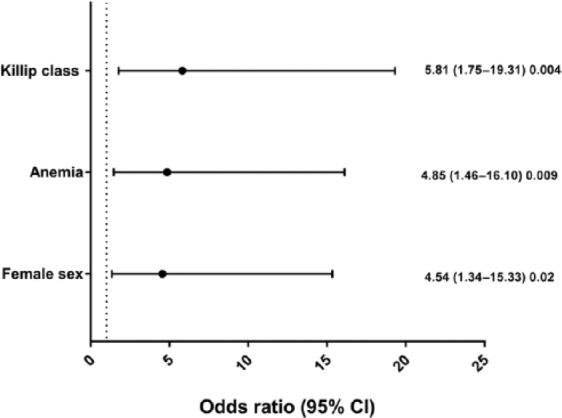
Results: The population median age was 68 years (57-77 year) and clopidogrel was prescribed in 230 patients (46%). Patients characteristics associated with clopidogrel prescription were older age, female sex, non-ST-elevation ACS diagnosis, the presence of diabetes mellitus and anemia, worse renal and left ventricular functions and a higher Killip class. Patients on clopidogrel demonstrated a significantly higher incidence of in-hospital mortality (4.8%) than prasugrel and ticagrelor-treated patients (0.4%), while a nonstatistically significant trend emerged considering bleeding events. However, on multivariable logistic regression analysis female sex, the presence of anemia and Killip class were the only variables independently associated with in-hospital death.
Conclusion: Patients treated with clopidogrel showed a higher in-hospital mortality. However, clinical variables associated with its use identify a population at high risk for adverse events and this seems to play a major role for the higher in-hospital mortality observed in clopidogrel-treated patients.
Keywords: acute coronary syndromes; clopidogrel; dual antiplatelet therapy; prasugrel; ticagrelor.
Conflict of interest statement
Figures
References
-
- Mehta SR, Yusuf S, Peters R, et al. ; Clopidogrel in Unstable angina to prevent Recurrent Events trial (CURE) Investigators. Effects of pretreatment with clopidogrel and aspirin followed by long-term therapy in patients undergoing percutaneous coronary intervention: the PCI-CURE study. Lancet 2001; 358: 527–533. - PubMed
-
- Peters R, Mehta SR, Fox KA, et al. ; Clopidogrel in Unstable angina to prevent Recurrent Events (CURE) Trial Investigators. Effects of aspirin dose when used alone or in combination with clopidogrel in patients with acute coronary syndromes: observations from the Clopidogrel in Unstable angina to prevent Recurrent Events (CURE) study. Circulation 2003; 108: 1682–1687. - PubMed
-
- Mehta SR, Tanguay JF, Eikelboom JW, et al. Double-dose versus standard-dose clopidogrel and high-dose versus low-dose aspirin in individuals undergoing percutaneous coronary intervention for acute coronary syndromes (CURRENT-OASIS 7): a randomized factorial trial. Lancet 2010; 376: 1233–1243. - PubMed
-
- Angiolillo DJ. The evolution of antiplatelet therapy in the treatment of acute coronary syndromes: from aspirin to the present day. Drugs 2012; 72: 2087–2101. - PubMed
-
- Patrono C, Bachmann F, Baigent C, et al. Expert consensus document on the use of antiplatelet agents. The task force on the use of antiplatelet agents in patients with atherosclerotic cardiovascular disease of the European Society of Cardiology. Eur Heart J 2004; 25: 166–181. - PubMed
Publication types
MeSH terms
Substances
LinkOut - more resources
Full Text Sources
Other Literature Sources
Medical
