


Probiotic, Prebiotic, and Brain Development
- PMID: 29135961
- PMCID: PMC5707719
- DOI: 10.3390/nu9111247
Probiotic, Prebiotic, and Brain Development
Abstract
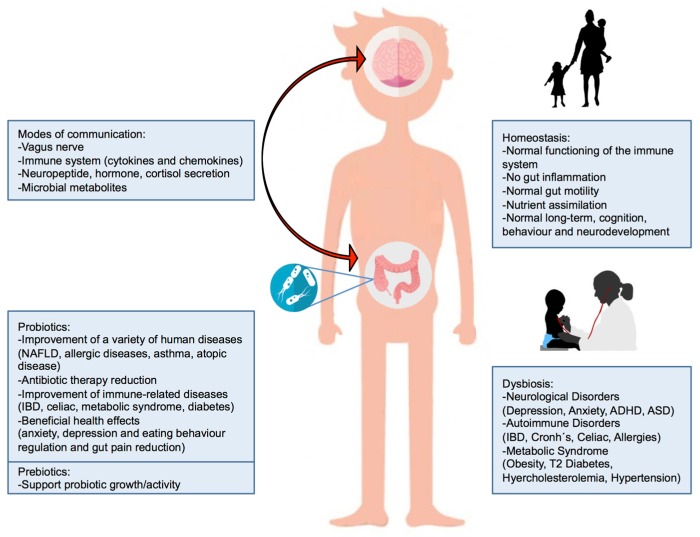
Recently, a number of studies have demonstrated the existence of a link between the emotional and cognitive centres of the brain and peripheral functions through the bi-directional interaction between the central nervous system and the enteric nervous system. Therefore, the use of bacteria as therapeutics has attracted much interest. Recent research has found that there are a variety of mechanisms by which bacteria can signal to the brain and influence several processes in relation to neurotransmission, neurogenesis, and behaviour. Data derived from both in vitro experiments and in vivo clinical trials have supported some of these new health implications. While recent molecular advancement has provided strong indications to support and justify the role of the gut microbiota on the gut-brain axis, it is still not clear whether manipulations through probiotics and prebiotics administration could be beneficial in the treatment of neurological problems. The understanding of the gut microbiota and its activities is essential for the generation of future personalized healthcare strategies. Here, we explore and summarize the potential beneficial effects of probiotics and prebiotics in the neurodevelopmental process and in the prevention and treatment of certain neurological human diseases, highlighting current and future perspectives in this topic.
Keywords: disease; health; microbiota; prebiotics; probiotics.
Conflict of interest statement
The authors declare no conflict of interest.
Figures
References
-
- Ross S.M. Microbiota-gut-brain axis, part 1: An integrated system of immunological, neural, and hormonal signals. Holist. Nurs. Pract. 2017;31:133–136. - PubMed
-
- Hennessey C.H., Sladek J., Miller E., Kim J., Kaur M., Gareau M.G. Intestinal dysbiosis during neonatal development alters the microbiota-gut-brain axis in adulthood. FASEB J. 2017;31:890–895.
Publication types
MeSH terms
Substances
LinkOut - more resources
Full Text Sources
Other Literature Sources
