


IL-7 receptor heterogeneity as a mechanism for repertoire change during postdepletional homeostatic proliferation and its relation to costimulation blockade-resistant rejection
- PMID: 29136317
- PMCID: PMC6035390
- DOI: 10.1111/ajt.14589
IL-7 receptor heterogeneity as a mechanism for repertoire change during postdepletional homeostatic proliferation and its relation to costimulation blockade-resistant rejection
Abstract
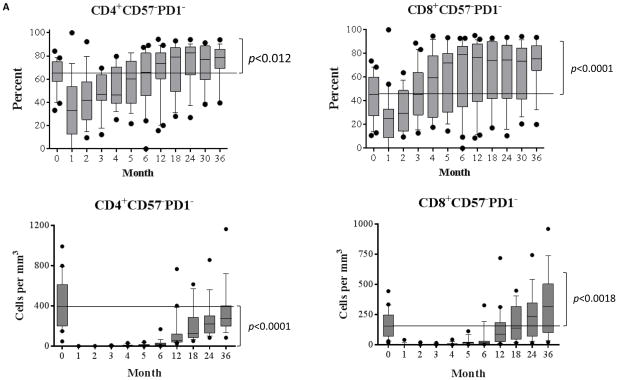
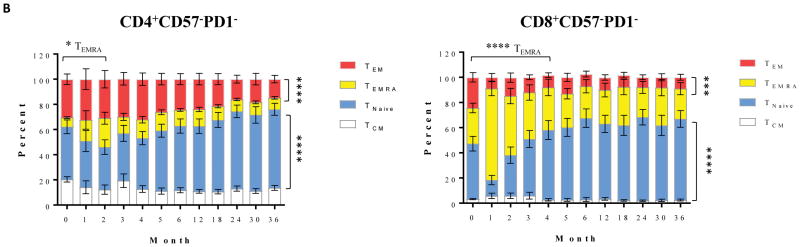
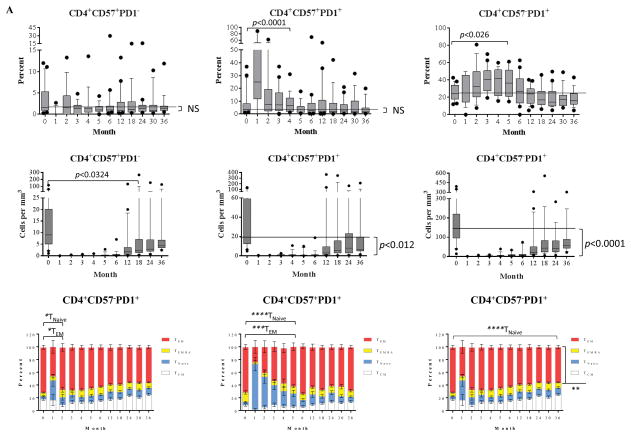
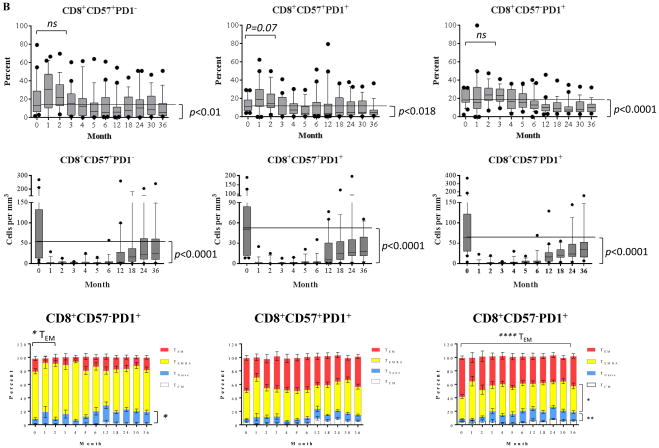
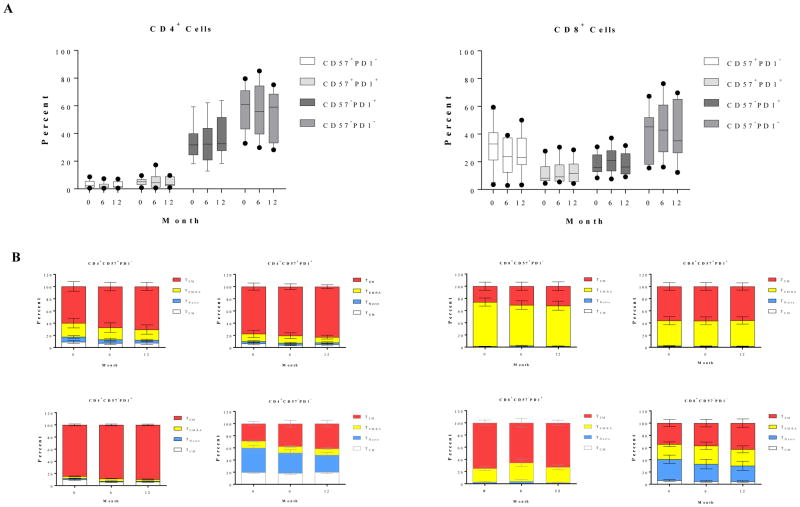
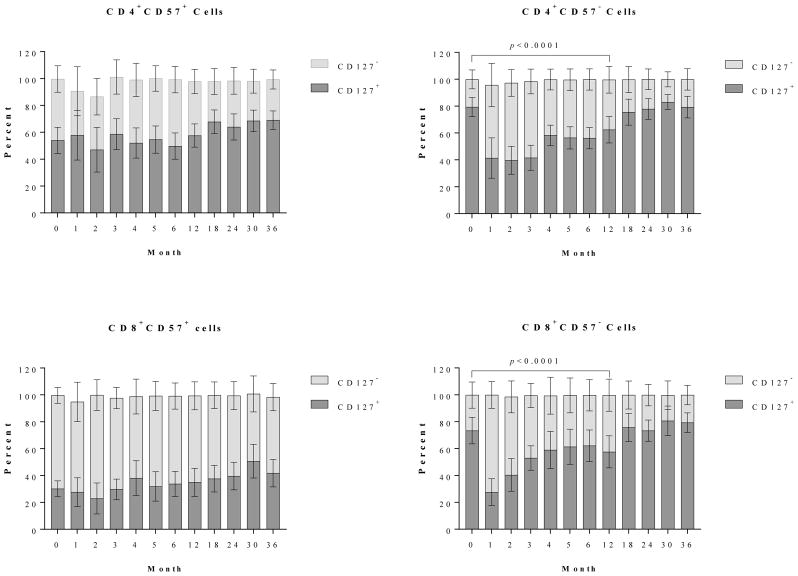
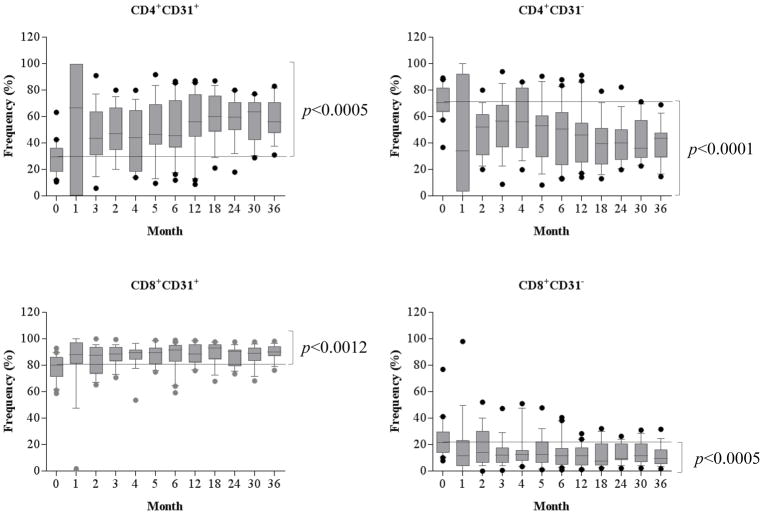
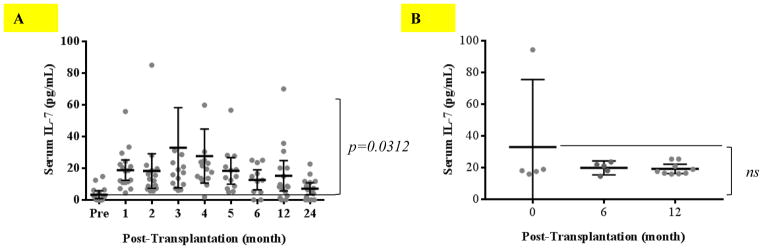
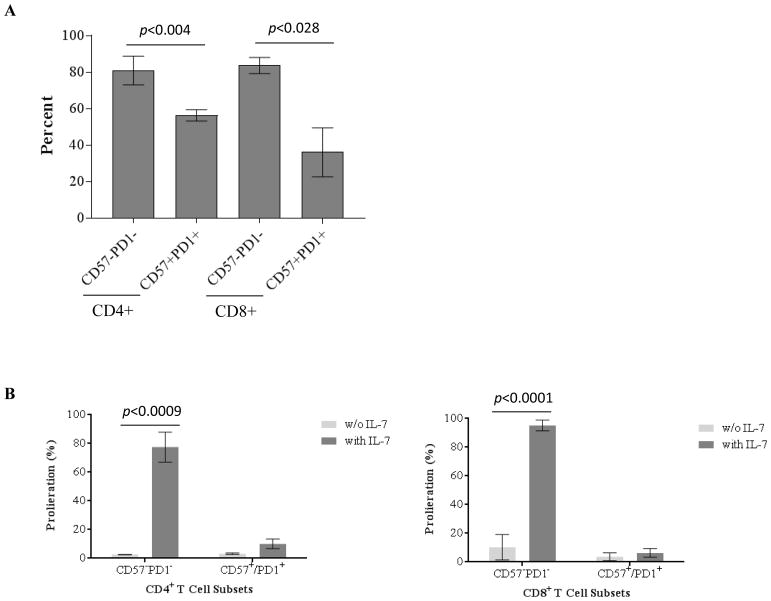
Kidney transplant patients treated with belatacept without depletional induction experience higher rates of acute rejection compared to patients treated with conventional immunosuppression. Costimulation blockade-resistant rejection (CoBRR) is associated with terminally differentiated T cells. Alemtuzumab induction and belatacept/sirolimus immunotherapy effectively prevent CoBRR. We hypothesized that cells in late phases of differentiation would be selectively less capable than more naive phenotypes of repopulating postdepletion, providing a potential mechanism by which lymphocyte depletion and repopulation could reduce the risk of CoBRR. Lymphocytes from 20 recipients undergoing alemtuzumab-induced depletion and belatacept/sirolimus immunosuppression were studied longitudinally for markers of maturation (CCR7, CD45RA, CD57, PD1), recent thymic emigration (CD31), and the IL-7 receptor-α (IL-7Rα). Serum was analyzed for IL-7. Alemtuzumab induction produced profound lymphopenia followed by repopulation, during which naive IL-7Rα+ CD57- PD1- cells progressively became the predominant subset. This did not occur in a comparator group of 10 patients treated with conventional immunosuppression. Serum from depleted patients showed markedly elevated IL-7 levels posttransplantation. Sorted CD57- PD1- cells demonstrated robust proliferation in response to IL-7, whereas more differentiated cells proliferated poorly. These data suggest that differences in IL-7-dependent proliferation is one exploitable mechanism that distinguishes CoB-sensitive and CoB-resistant T cell populations to reduce the risk of CoBRR. (ClinicalTrials.gov - NCT00565773.).
Keywords: basic (laboratory) research/science; clinical research/practice; cytokines/cytokine receptors; immunobiology; immunosuppressant - fusion proteins and monoclonal antibodies: belatacept; immunosuppressant - mechanistic target of rapamycin: sirolimus; immunosuppression/immune modulation; immunosuppressive regimens - induction; kidney transplantation/nephrology; lymphocyte biology: differentiation/maturation.
© 2017 The American Society of Transplantation and the American Society of Transplant Surgeons.
Figures
References
-
- Matas AJ, Smith JM, Skeans MA, Thompson B, Gustafson SK, Schnitzler MA, Cherikh WS, Wainright JL, Snyder JJ, Israni AK, Kasiske BL. OPTN/SRTR 2012 annual data report. Kidney Am J Transplant. 2014;14:11–44. - PubMed
-
- Issa N, Fishman J. Infectious complications of antilymphocyte therapies in solid organ transplantation. Clin Infect Dis. 2009;48:772–786. - PubMed
-
- Vincenti F, Larsen CP, Durrbach A, Wekerle T, Nashan B, Blancho G, Lang P, Grinyo J, Halloran PF, Solez K, Hagerty D, Levy E, Zhou W, Natarajan K, Charpentier B. Costimulation blockade with belatacept in renal transplantation. N Engl J Med. 2005;353:770–781. - PubMed
-
- Vincenti F, Larsen CP, Alberu J, Bresnahan B, Garcia VD, Kohari J, Lang P, Urrea EM, Massari P, Mondragon-Ramirez G, Reyes-Acevedo R, Rice K, Rostaing L, Steinberg S, Xing J, Agarwal M, Harler MB, Charpentier B. Three-year outcomes form BENEFIT, a randomized active-controlled, parallel-group study in adult kidney transplant recipient. Am J Transplant. 2012;12:210–217. - PubMed
Publication types
MeSH terms
Substances
Associated data
Grants and funding
LinkOut - more resources
Full Text Sources
Other Literature Sources
Medical
