


Successful treatment of ovarian cancer with apatinib combined with chemotherapy: A case report
- PMID: 29137078
- PMCID: PMC5690771
- DOI: 10.1097/MD.0000000000008570
Successful treatment of ovarian cancer with apatinib combined with chemotherapy: A case report
Abstract
Rationale: The standard treatment for ovarian cancer is chemotherapy with 2 drugs (taxanes and platinum drugs). However, the traditional combination of the 2 drugs has many adverse effects (AEs) and the cancer cells will quickly become resistant to the drugs. Apatinib is a small-molecule antiangiogenic agent which has shown promising therapeutic effects against diverse tumor types, but it still remains unknown whether apatinib has an antitumor effect in patients with ovarian cancer. Herein, we present a successfully treated case of ovarian cancer using chemotherapy and apatinib, in order to demonstrate the effectiveness of this new combined regimen in ovarian cancer.
Patients concerns: A 51-year-old Chinese woman presented with ovarian cancer >4.5 years. The disease and the cancer antigen 125 (CA-125) had been controlled well by surgical treatment and following chemotherapy. However, the drugs could not control the disease anymore as the CA-125 level was significantly increasing.
Diagnosis: Ovarian cancer.
Interventions: The patient was treated with apatinib combined with epirubicin. Apatinib was administered orally, at an initial daily dose of 500 mg, and was then reduced to 250 mg qd after the appearance of intolerable hand-foot syndrome (HFS) and oral ulcer. Then, the oral ulcer disappeared and the HFS was controlled by dose adjustment, oral vitamin B6, and hand cream application.
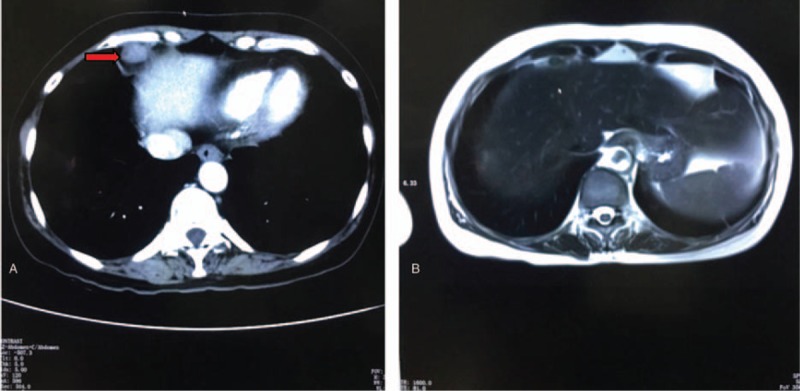
Outcomes: The CA-125 reverted to the normal value after treatment with the new regimen. Magnetic resonance imaging showed that the original tumor lesions had disappeared. Apatinib monotherapy as maintenance therapy was then used to successfully control the cancer with a complete response. Our study is the first, to our knowledge, to report the therapeutic effects of apatinib and epirubicin on ovarian cancer.
Lessons: Apatinib combined with chemotherapy and apatinib monotherapy as maintenance therapy could be a new therapeutic strategy for ovarian cancer, especially adenocarcinomas.
Conflict of interest statement
The authors have no conflicts of interest to disclose.
Figures


References
Publication types
MeSH terms
Substances
LinkOut - more resources
Full Text Sources
Other Literature Sources
Medical
Research Materials
Miscellaneous
