


Patent landscape of neglected tropical diseases: an analysis of worldwide patent families
- PMID: 29137663
- PMCID: PMC5686799
- DOI: 10.1186/s12992-017-0306-9
Patent landscape of neglected tropical diseases: an analysis of worldwide patent families
Abstract
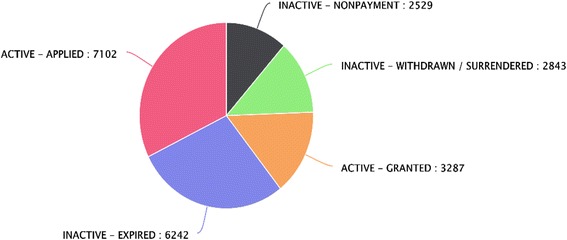
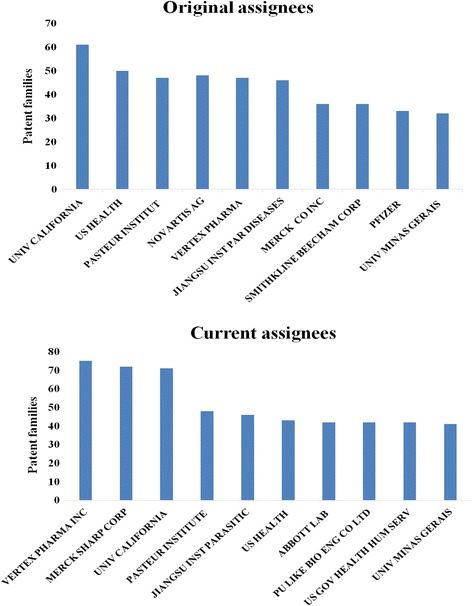
Background: "Neglected Tropical Diseases" (NTDs) affect millions of people in Africa, Asia and South America. The two primary ways of strategic interventions are "preventive chemotherapy and transmission control" (PCT), and "innovative and intensified disease management" (IDM). In the last 5 years, phenomenal progress has been achieved. However, it is crucial to intensify research effort into NTDs, because of the emerging drug resistance. According to the World Health Organization (WHO), the term NTDs covers 17 diseases, namely buruli ulcer, Chagas disease, dengue, dracunculiasis, echinococcosis, trematodiasis, human African trypanosomiasis, leishmaniasis, leprosy, lymphatic filariasis, onchocerciasis, rabies, schistosomiasis, soil-transmitted helminthes, taeniasis, trachoma, and yaws. The aim of this study is to map out research and development (R&D) landscape through patent analysis of these identified NTDs. To achieve this, analysis and evaluation have been conducted on patenting trends, current legal status of patent families, priority countries by earliest priority years and their assignee types, technological fields of patent families over time, and original and current patent assignees.
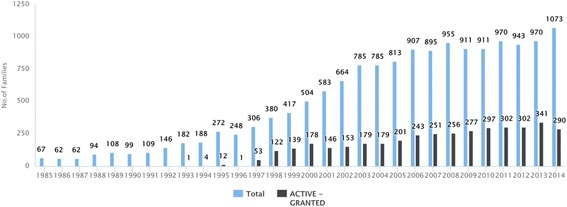
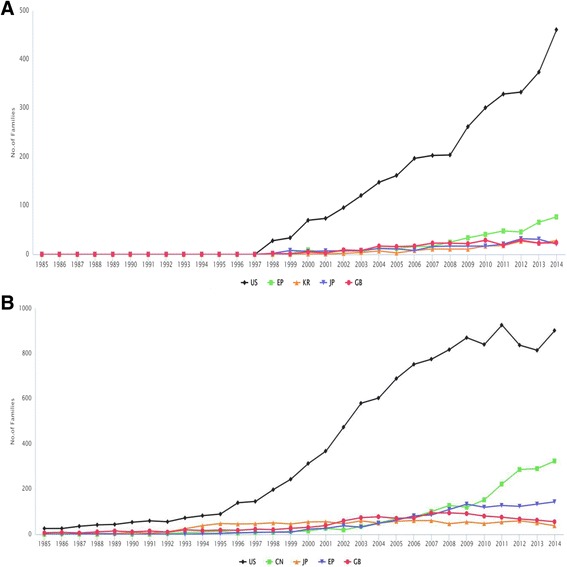
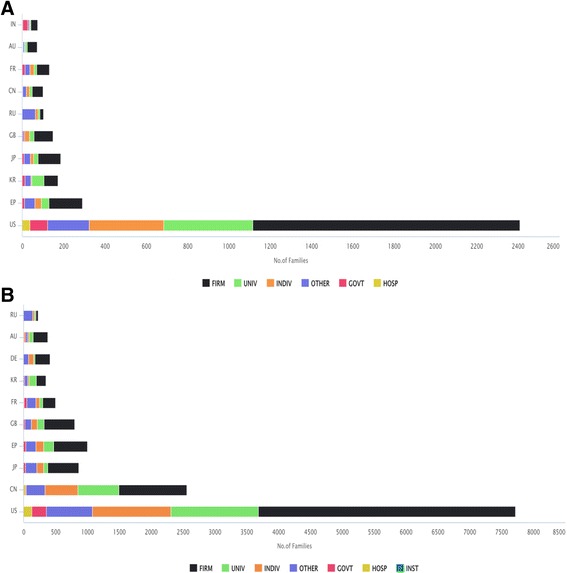
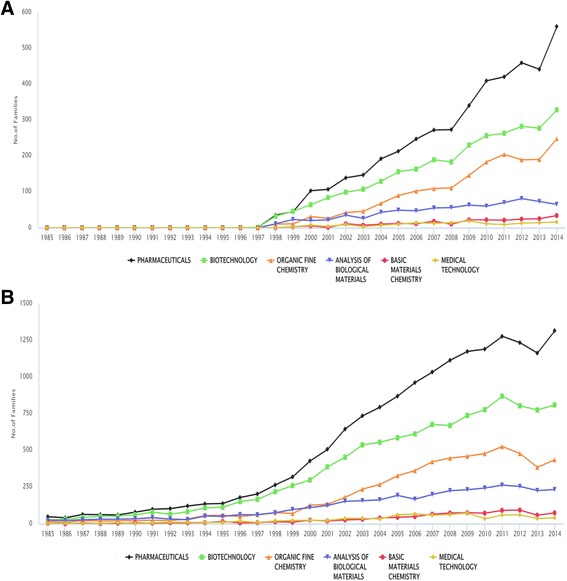
Main body: Patent families were extracted from Patseer, an international database of patents from over 100 patent issuing authorities worldwide. Evaluation of the patents was carried out using the combination of different search terms related to each identified NTD. In this paper, a total number of 12,350 patent families were analyzed. The main countries with sources of inventions were identified to be the United States (US) and China. The main technological fields covered by NTDs patent landscape are pharmaceuticals, biotechnology, organic fine chemistry, analysis of biological materials, basic materials chemistry, and medical technology. Governmental institutions and universities are the primary original assignees. Among the NTDs, leishmaniasis, dengue, and rabies received the highest number of patent families, while human African trypanosomiasis (sleeping sickness), taeniasis, and dracunciliasis received the least. The overall trend of patent families shows an increase between 1985 and 2008, and followed by at least 6 years of stagnation.
Conclusion: The filing pattern of patent families analyzed undoubtedly reveals slow progress on research and development of NTDs. Involving new players, such as non-governmental organizations may help to mitigate and reduce the burden of NTDs.
Keywords: Intensified disease management; Mass drug administration; Neglected tropical diseases; Patents; Preventive chemotherapy.
Conflict of interest statement
Ethics approval and consent to participate
Not applicable
Consent for publication
Not applicable
Competing interests
The authors declare that they have no competing interests.
Publisher’s Note
Springer Nature remains neutral with regard to jurisdictional claims in published maps and institutional affiliations.
Figures
References
-
- Savioli L, Daumiere D. Accelerating work to overcome the global impact of neglected tropical diseases: a roadmap for implementation. Geneva: World Health Organization; 2012.
-
- World Health Organization. First WHO report on neglected tropical diseases: working to overcome the global impact of neglected tropical diseases. Geneva: the global impact of neglected tropical diseases. WHO press; 2010. http://apps.who.int/iris/bitstream/10665/44440/1/9789241564090_eng.pdf. Accessed 10 Oct 2017.
-
- World Health Organization: Accelerating work to overcome the global impact of neglected tropical diseases – A roadmap for implementation. (Crompton DWT ed. Switzerland; 2012.
-
- Crompton DWT. Preventive chemotherapy in human helminthiasis: coordinated use of anthelminthic drugs in control interventions: a manual for health professionals and programme managers: World Health Organization. Geneva: WHO Press; 2006.
MeSH terms
LinkOut - more resources
Full Text Sources
Other Literature Sources
