


Patient Portal Utilization Among Ethnically Diverse Low Income Older Adults: Observational Study
- PMID: 29138129
- PMCID: PMC5705857
- DOI: 10.2196/medinform.8026
Patient Portal Utilization Among Ethnically Diverse Low Income Older Adults: Observational Study
Abstract
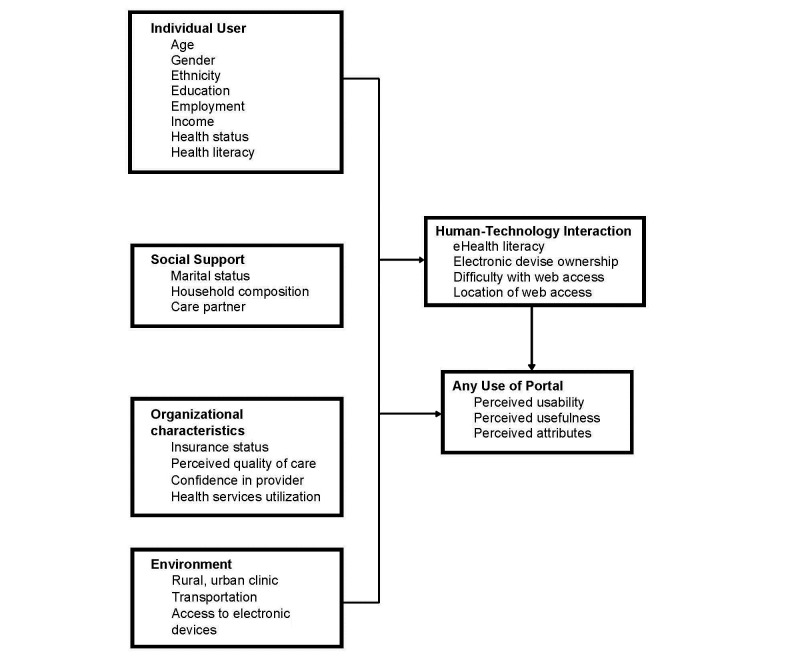
Background: Patient portals can improve patient communication with providers, provide patients with greater health information access, and help improve patient decision making, if they are used. Because research on factors facilitating and limiting patient portal utilization has not been conceptually based, no leverage points have been indicated for improving utilization.
Objective: The primary objective for this analysis was to use a conceptual framework to determine potentially modifiable factors affecting patient portal utilization by older adults (aged 55 years and older) who receive care at clinics that serve low income and ethnically diverse communities. The secondary objective was to delineate how patient portal utilization is associated with perceived usefulness and usability.
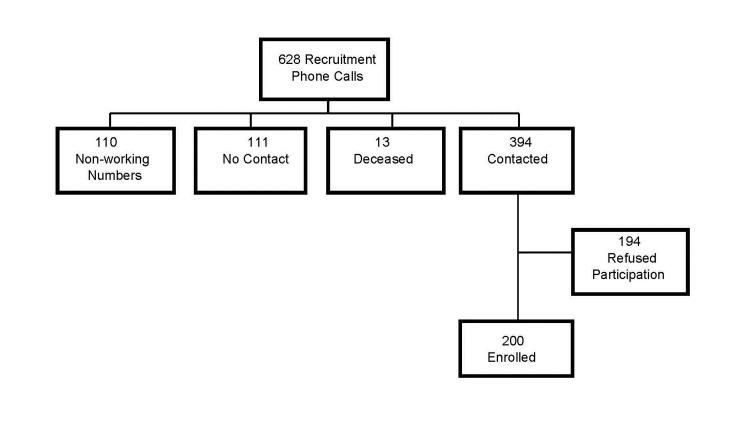
Methods: Patients from one urban and two rural clinics serving low income patients were recruited and completed interviewer-administered questionnaires on patient portal utilization.
Results: A total of 200 ethnically diverse patients completed questionnaires, of which 41 (20.5%) patients reported utilizing portals. Education, social support, and frequent Internet utilization improve the odds of patient portal utilization; receiving health care at a rural clinic decreases the odds of portal utilization.
Conclusions: Leverage points to address disparities in patient portal utilization include providing training for older adults in patient portal utilization, involving spouses or other care partners in this training, and making information technology access available at public places in rural and urban communities.
Keywords: aging; electronic health records; electronic personal health information management; health disparities; rural health.
©Thomas A Arcury, Sara A Quandt, Joanne C Sandberg, David P Miller Jr, Celine Latulipe, Xiaoyan Leng, Jenifer W Talton, Kathryn P Melius, Alden Smith, Alain G Bertoni. Originally published in JMIR Medical Informatics (http://medinform.jmir.org), 14.11.2017.
Conflict of interest statement
Conflicts of Interest: None declared.
Figures
References
-
- Bates DW, Bitton A. The future of health information technology in the patient-centered medical home. Health Aff (Millwood) 2010 Apr;29(4):614–21. doi: 10.1377/hlthaff.2010.0007. http://content.healthaffairs.org/cgi/pmidlookup?view=long&pmid=20368590 - DOI - PubMed
-
- Carter EL, Nunlee-Bland G, Callender C. A patient-centric, provider-assisted diabetes telehealth self-management intervention for urban minorities. Perspect Health Inf Manag. 2011;8:1b. http://europepmc.org/abstract/MED/21307985 - PMC - PubMed
-
- Herrin J, da Graca B, Nicewander D, Fullerton C, Aponte P, Stanek G, Cowling T, Collinsworth A, Fleming NS, Ballard DJ. The effectiveness of implementing an electronic health record on diabetes care and outcomes. Health Serv Res. 2012 Aug;47(4):1522–40. doi: 10.1111/j.1475-6773.2011.01370.x. doi: 10.1111/j.1475-6773.2011.01370.x. - DOI - PMC - PubMed
Grants and funding
LinkOut - more resources
Full Text Sources
Other Literature Sources
