Novel Predictors of Breast Cancer Survival Derived from miRNA Activity Analysis
- PMID: 29138345
- PMCID: PMC6103440
- DOI: 10.1158/1078-0432.CCR-17-0996
Novel Predictors of Breast Cancer Survival Derived from miRNA Activity Analysis
Abstract
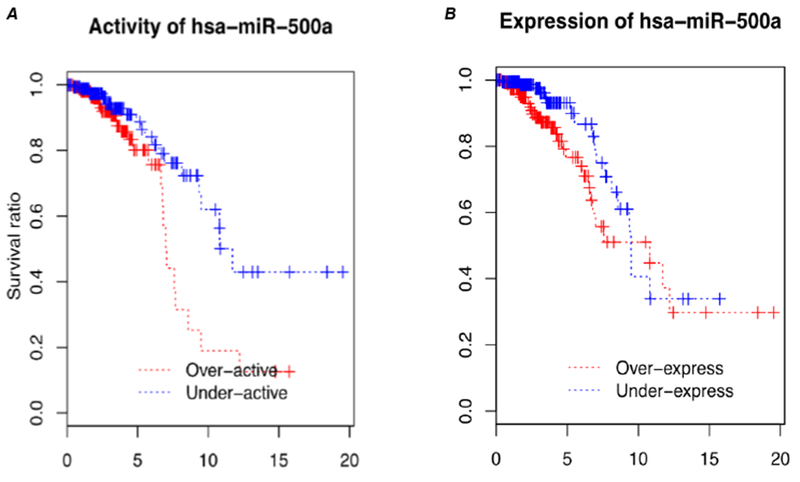
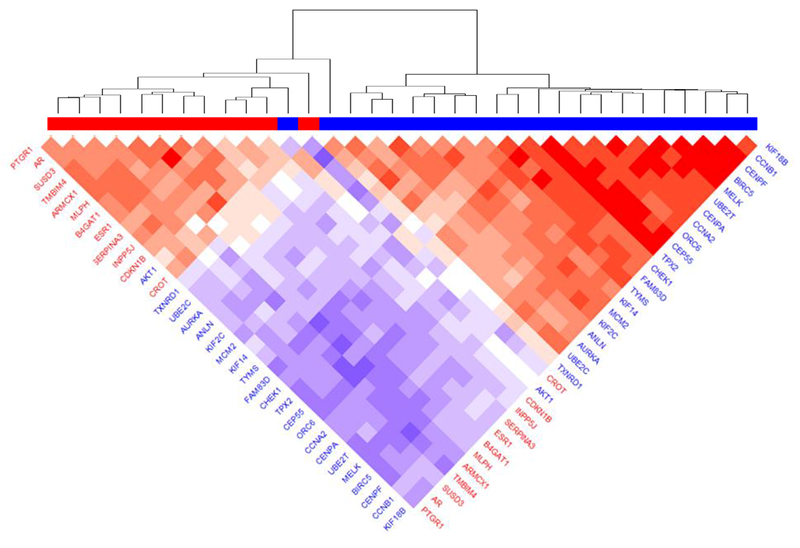
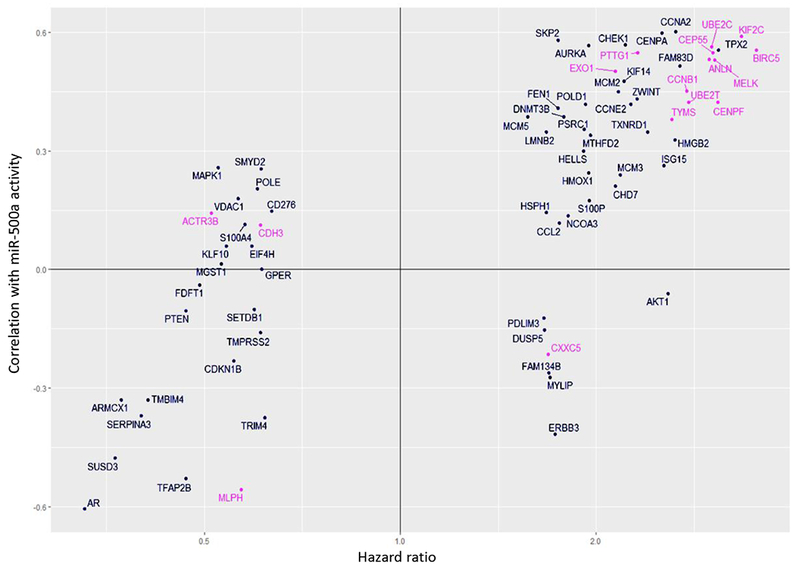
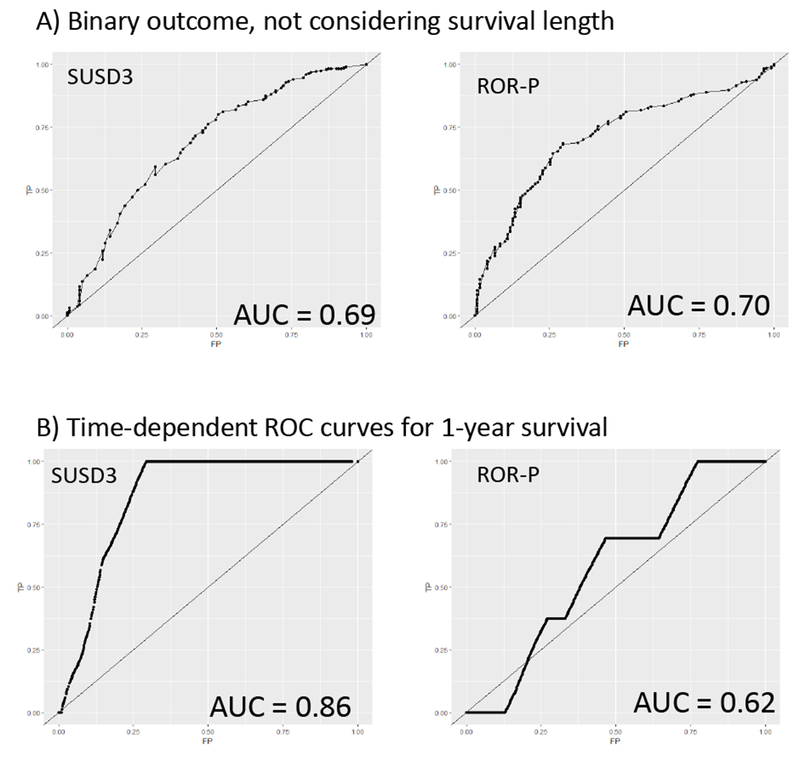
Purpose: Breast cancer is among the leading causes of cancer-related death; discovery of novel prognostic markers is needed to improve outcomes. Combining systems biology and epidemiology, we investigated miRNA-associated genes and breast cancer survival in a well-characterized population-based study.Experimental Design: A recently developed algorithm, ActMiR, was used to identify key miRNA "activities" corresponding to target gene degradation, which were predictive of breast cancer mortality in published databases. We profiled miRNA-associated genes in tumors from our well-characterized population-based cohort of 606 women with first primary breast cancer. Cox proportional hazards models were used to estimate HRs and 95% confidence intervals (CI), after 15+ years of follow-up with 119 breast cancer-specific deaths.Results: miR-500a activity was identified as a key miRNA for estrogen receptor-positive breast cancer mortality using public databases. From a panel of 161 miR-500a-associated genes profiled, 73 were significantly associated with breast cancer-specific mortality (FDR < 0.05) in our population, among which two clusters were observed to have opposing directions of association. For example, high level of SUSD3 was associated with reduced breast cancer-specific mortality (HR = 0.3; 95% CI, 0.2-0.4), whereas the opposite was observed for TPX2 (HR = 2.7; 95% CI, 1.8-3.9). Most importantly, we identified set of genes for which associations with breast cancer-specific mortality were independent of known prognostic factors, including hormone receptor status and PAM50-derived risk-of-recurrence scores. These results are validated in independent datasets.Conclusions: We identified novel markers that may improve prognostic efficiency while shedding light on molecular mechanisms of breast cancer progression. Clin Cancer Res; 24(3); 581-91. ©2017 AACR.
©2017 American Association for Cancer Research.
Conflict of interest statement
Disclosure of Potential Conflicts of Interest:
The authors have no competing financial interests to declare
Figures

References
-
- Gingras I, Desmedt C, Ignatiadis M, Sotiriou C. CCR 20th Anniversary Commentary: Gene-Expression Signature in Breast Cancer--Where Did It Start and Where Are We Now? Clinical cancer research : an official journal of the American Association for Cancer Research. 2015. November 01;21(21):4743–6. - PubMed
-
- Hyams DM, Schuur E, Angel Aristizabal J, Bargallo Rocha JE, Cabello C, Elizalde R, et al. Selecting postoperative adjuvant systemic therapy for early stage breast cancer: A critical assessment of commercially available gene expression assays. Journal of surgical oncology. 2017. February 17. - PMC - PubMed
-
- Smith IE, Yeo B, Schiavon G. The optimal duration and selection of adjuvant endocrine therapy for breast cancer: how long is enough? American Society of Clinical Oncology educational book American Society of Clinical Oncology Meeting 2014:e16–24. - PubMed
-
- National Comprehensive Cancer Network. NCCN Guidelines. Breast Cancer (Version 2.2016). [cited 2017 Feb 6]; Available from: https://www.nccn.org/professionals/physician_gls/pdf/breast.pdf.
-
- Prat A, Lluch A, Turnbull AK, Dunbier AK, Calvo L, Albanell J, et al. A PAM50-Based Chemoendocrine Score for Hormone Receptor-Positive Breast Cancer with an Intermediate Risk of Relapse. Clinical cancer research : an official journal of the American Association for Cancer Research. 2016. November 30. - PMC - PubMed
Publication types
MeSH terms
Substances
Grants and funding
LinkOut - more resources
Full Text Sources
Other Literature Sources
Medical
Miscellaneous