


Adding high-intensity interval training to conventional training modalities: optimizing health-related outcomes during chemotherapy for breast cancer: the OptiTrain randomized controlled trial
- PMID: 29139007
- PMCID: PMC5847033
- DOI: 10.1007/s10549-017-4571-3
Adding high-intensity interval training to conventional training modalities: optimizing health-related outcomes during chemotherapy for breast cancer: the OptiTrain randomized controlled trial
Abstract
Purpose: Exercise training is an effective and safe way to counteract cancer-related fatigue (CRF) and to improve health-related quality of life (HRQoL). High-intensity interval training has proven beneficial for the health of clinical populations. The aim of this randomized controlled trial was to compare the effects of resistance and high-intensity interval training (RT-HIIT), and moderate-intensity aerobic and high-intensity interval training (AT-HIIT) to usual care (UC) in women with breast cancer undergoing chemotherapy. The primary endpoint was CRF and the secondary endpoints were HRQoL and cancer treatment-related symptoms.
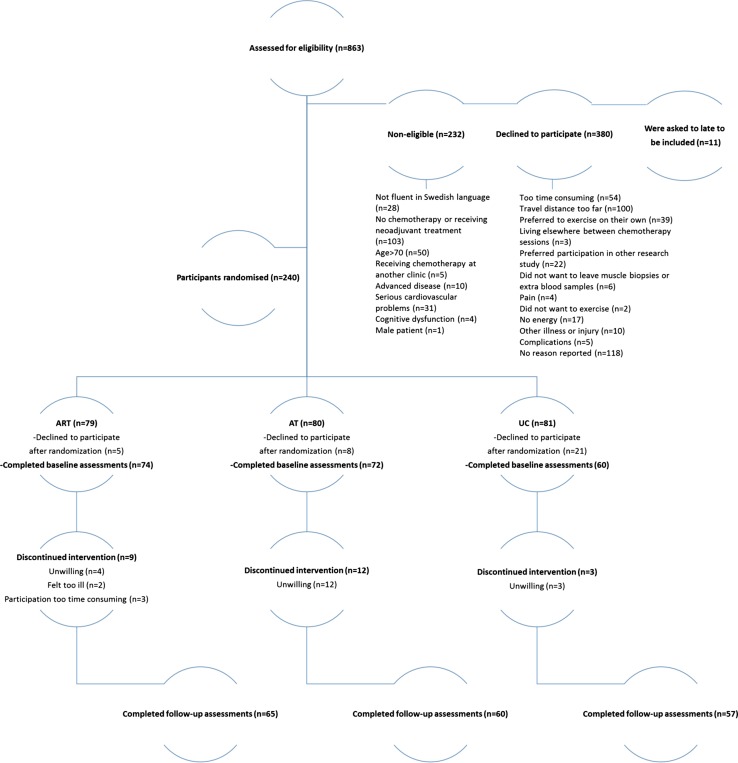
Methods: Two hundred and forty women planned to undergo chemotherapy were randomized to supervised RT-HIIT, AT-HIIT, or UC. Measurements were performed at baseline and at 16 weeks. Questionnaires included Piper Fatigue Scale, EORTC-QLQ-C30, and Memorial Symptom Assessment Scale.
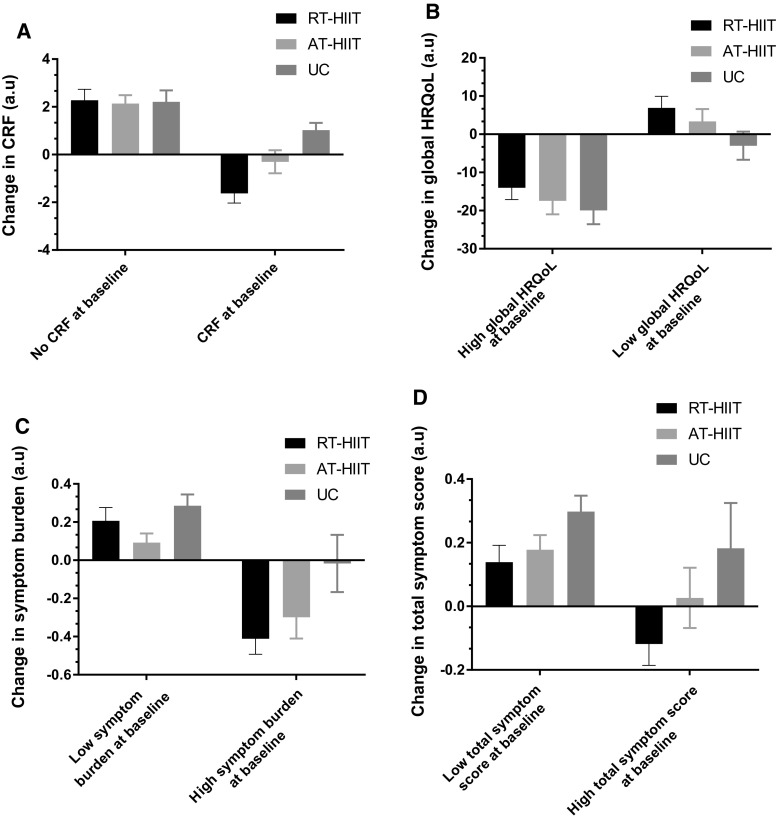
Results: The RT-HIIT group was superior to UC for CRF: total CRF (p = 0.02), behavior/daily life (p = 0.01), and sensory/physical (p = 0.03) CRF. Role functioning significantly improved while cognitive functioning was unchanged for RT-HIIT compared to declines shown in the UC group (p = 0.04). AT-HIIT significantly improved emotional functioning versus UC (p = 0.01) and was superior to UC for pain symptoms (p = 0.03). RT-HIIT reported a reduced symptom burden, while AT-HIIT remained stable compared to deteriorations shown by UC (p < 0.01). Only RT-HIIT was superior to UC for total symptoms (p < 0.01).
Conclusions: 16 weeks of resistance and HIIT was effective in preventing increases in CRF and in reducing symptom burden for patients during chemotherapy for breast cancer. These findings add to a growing body of evidence supporting the inclusion of structured exercise prescriptions, including HIIT, as a vital component of cancer rehabilitation.
Trial registration: Clinicaltrials.gov Registration Number: NCT02522260.
Keywords: Breast cancer; Chemotherapy; Concurrent training; Health-related quality of life; High-intensity interval training; Symptom burden.
Conflict of interest statement
Availability of data and material
The datasets used and/or analyzed during the current study are available from the corresponding author on reasonable request.
Conflict of interest
The authors declare that they have no conflict of interest.
Ethical approval
All procedures performed in studies involving human participants were in accordance with the ethical standards of the institutional and/or national research committee and with the 1964 Helsinki declaration and its later amendments or comparable ethical standards.
Figures
References
-
- Peto R, Davies C, Godwin J, Gray R, Pan HC, Clarke M, Cutter D, Darby S, McGale P, Taylor C, Wang YC, Bergh J, Di Leo A, Albain K, Swain S, Piccart M, Pritchard K. Comparisons between different polychemotherapy regimens for early breast cancer: meta-analyses of long-term outcome among 100,000 women in 123 randomised trials. Lancet (Lond, Engl) 2012;379(9814):432–444. doi: 10.1016/S0140-6736(11)61625-5. - DOI - PMC - PubMed
Publication types
MeSH terms
Substances
Associated data
Grants and funding
LinkOut - more resources
Full Text Sources
Other Literature Sources
Medical
